Everform Pharma · Research perspectives
What are the potential risks of retatrutide?
Side effects, overlapping risks and the limits of current evidence.
What clinical trials show, what other medicines tell us, and where uncertainty remains.

What could go wrong—and what could make it worse?
Retatrutide has attracted attention for its effects on body weight and glucose regulation. An equally important question deserves a clear answer: what are its potential risks, and what might increase them?
The clearest findings from published trials are gastrointestinal side effects and increases in heart rate. Other concerns involve the circumstances surrounding use: medicines that lower blood glucose, stimulants that affect cardiovascular function, and fluid loss that may become more serious when eating and drinking are reduced.
Some effects have been observed directly in human trials; others are potential complications inferred from physiology or related medicines. This article explains how those risks connect, and where the evidence remains incomplete.
Why three-receptor activity matters
Retatrutide activates GLP-1, GIP and glucagon receptors, influencing appetite, glucose regulation and energy metabolism. Its overall effect cannot be understood by looking at one receptor alone.
Glucagon can increase glucose production by the liver, but retatrutide lowered average blood glucose in a published diabetes trial. Its glucagon activity should not be presented as an automatic safeguard against hypoglycaemia. [2]
The safety question is how this combined response interacts with someone’s existing medicines, underlying health and ability to maintain adequate nutrition and hydration.
Gastrointestinal effects: when a common side effect becomes a wider problem
Gastrointestinal adverse events were the most common side effects in the phase 2 obesity trial. They were generally mild to moderate and dose-related. These are direct observations in people. [1]
Nausea, vomiting or diarrhoea matter for more than comfort. Persistent symptoms may make it difficult to eat or drink adequately, creating a pathway from an initially manageable side effect to reduced intake and dehydration.
Someone taking a diuretic may have less tolerance for additional fluid loss. Kidney disease or a prescribed fluid restriction can further change the assessment. Retatrutide should not simply be described as a powerful clinical diuretic: the more defensible concern is the combination of gastrointestinal losses, reduced intake and other causes of fluid depletion. Related medicine information describes kidney injury associated with volume depletion. [6]
Blood glucose: why other medicines change the picture
Retatrutide’s glucose-lowering effect makes existing diabetes treatment relevant. Insulin and sulfonylureas can cause hypoglycaemia; reduced food intake may further complicate their effects. Approved incretin-based medicine information warns about hypoglycaemia with these combinations, although it does not establish the precise risk for retatrutide. [6]
The concern is not that retatrutide inevitably causes dangerous hypoglycaemia. It is that an existing treatment may have been established around different eating patterns and glucose requirements.
Corticosteroids introduce a different problem. Prednisone can raise glucose and make diabetes harder to control. This can make the overall response more difficult to interpret, rather than proving a unique harmful interaction. [4]
Glucose may be pushed in different directions by different medicines. Retatrutide’s glucagon activity does not remove the need for individual assessment.
Heart rate: overlapping effects deserve attention
Retatrutide increased heart rate in the phase 2 obesity trial, with the increase peaking during the study before declining. An increase in average heart rate is not the same as proof of a dangerous arrhythmia. It does, however, make other cardiovascular influences relevant. [1]
Phentermine is a sympathomimetic medicine with recognised cardiovascular effects. Its prescribing information states that the safety and effectiveness of combining it with other weight-management products have not been established. [7]
Stimulant-containing supplements introduce similar questions, although their ingredients and effects vary. A caffeinated pre-workout and a multi-ingredient product containing yohimbine should not be treated as identical exposures. [8]
Excess thyroid hormone can independently cause a racing heart and other complications. This includes untreated hyperthyroidism or excessive replacement, rather than appropriately prescribed thyroid replacement as a whole. [5]
The potential risk pathway is overlapping cardiovascular effects. The size of any additional risk remains uncertain because these combinations have not all been adequately studied.
Alcohol and pancreatic concerns: serious risks need precise wording
Heavy alcohol use is a recognised cause of pancreatitis. Gallstones are another common cause. This makes alcohol history relevant when assessing pancreatic symptoms. [9]
However, stimulating insulin release is not itself evidence that a compound “overworks” or damages the pancreas. A warning for a related medicine also does not establish a proven combined effect between retatrutide and alcohol. [6]
The defensible conclusion is that heavy alcohol use adds an established pancreatic risk, while the specific interaction remains insufficiently characterised. Severe or persistent abdominal pain—particularly with vomiting or pain extending to the back—requires prompt medical assessment and should not be dismissed as a routine gastrointestinal effect.
What remains uncertain?
Trials identify adverse events under defined conditions. They cannot immediately establish every uncommon complication, long-term outcome or interaction with medicines and supplements.
There is also a distinction between a compound studied in a clinical trial and material obtained outside it. Published findings do not verify the identity, concentration, purity or suitability of independently sourced products.
As of 21 November 2026, retatrutide remains investigational and has not received regulatory approval. [3]
An interaction that has not been demonstrated is not necessarily harmless; equally, a plausible mechanism is not proof that harm will occur.
What does this mean for retatrutide’s potential risks?
Gastrointestinal effects can reduce intake and contribute to dehydration. Glucose lowering becomes more consequential alongside medicines that already cause hypoglycaemia. Heart-rate changes make other cardiovascular influences relevant. Heavy alcohol use and existing conditions add risks that cannot be assessed from the compound alone.
Retatrutide’s potential risks depend on both its own effects and the physiological demands already present. A scientific assessment needs to consider that whole picture, while remaining clear about where direct evidence ends.
This is why a complete medication and supplement history, relevant medical conditions and persistent symptoms matter more than a universal list of seven things to avoid. Prescribed medicines should not be stopped or changed on the basis of this article.
References
[4] DailyMed. Prednisone tablets: prescribing information. ↗
[5] DailyMed. Levothyroxine sodium tablets: prescribing information. ↗
[7] DailyMed. Phentermine hydrochloride: prescribing information. ↗
This article does not establish that retatrutide is safe or appropriate for any individual. Do not stop or change prescribed medicines based on this information. Individual symptoms and medicine combinations require assessment by a qualified healthcare professional.
Retatrutide in the Everform catalogue
Find the research material discussed in this article and review its product information in the Everform Pharma catalogue.
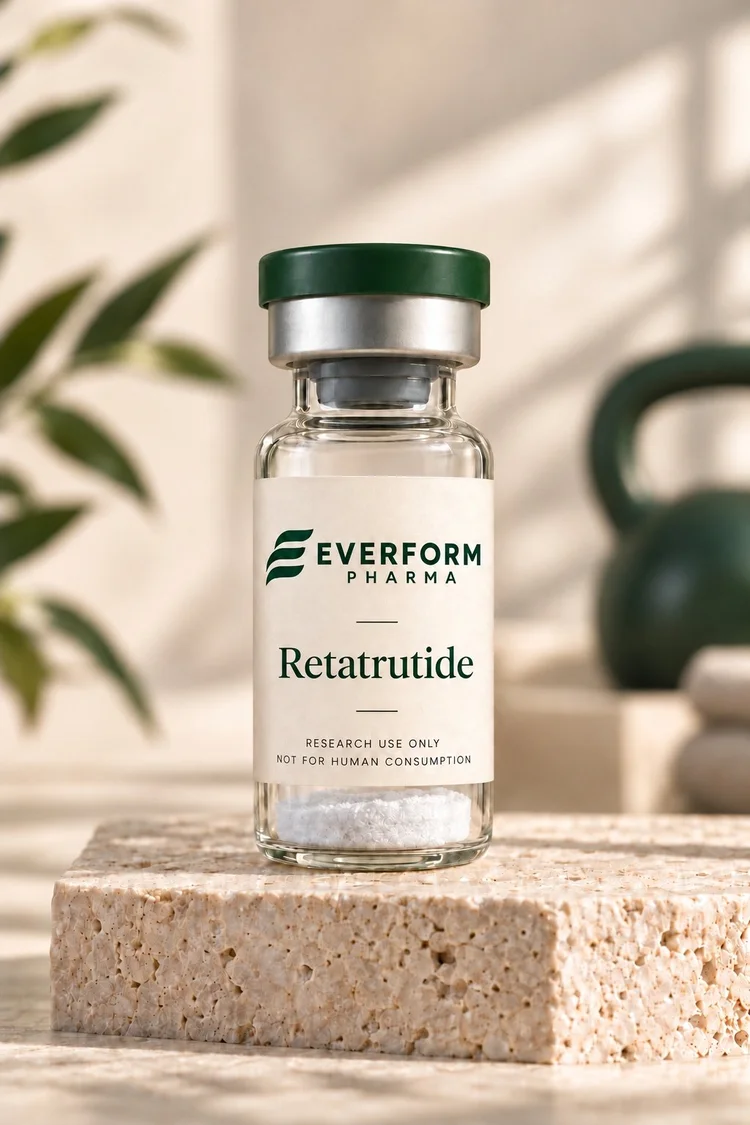
Retatrutide · 20 mg
A research peptide investigated for its activity at GIP, GLP-1 and glucagon receptors. The article above discusses potential risks and evidence limitations; it does not establish the safety or suitability of this catalogue product for human use.
The labelled 20 mg is vial content, not a recommended dose.
View Retatrutide in the catalogue →Clinical studies concern the investigational compound under defined trial conditions. They do not validate the identity, quality or clinical suitability of a particular catalogue product. For laboratory research only. Not for human or veterinary use.