Science & Insights / Healthy ageing
Peptides and Healthy Ageing
What the research really shows.

Peptides are attracting attention across research into metabolism, recovery, brain health and ageing. Some have become medicines for specific conditions. Others remain experimental, with findings drawn mainly from cells and animals.
A peptide can influence a biological pathway associated with ageing without demonstrating that it helps people live longer or remain healthier.
At Everform Pharma in Da Nang, Vietnam, our approach to educational product information begins with a simple question: what did the research actually test—and what can it reasonably tell us?
Why peptides interest ageing researchers
Peptides are short chains of amino acids. Many act as biological signals, helping cells coordinate processes such as hormone release, metabolism and responses to stress.
Ageing involves several interacting processes, including changes in mitochondrial function, cellular senescence and communication between tissues. Researchers are investigating whether particular peptides can influence these processes.
However, influencing a mechanism is an early step. Establishing a meaningful benefit requires evidence about the specific compound, the population studied, the outcomes measured and its safety over time.
Mitochondrial peptides: energy and communication
Mitochondria help cells produce usable energy. They also participate in signalling, making them an important focus of ageing research.
MOTS-c: metabolic regulation and physical performance
MOTS-c is a mitochondrial-derived peptide investigated for its role in metabolic regulation. A foundational study reported effects on metabolic pathways in cells and improved insulin sensitivity in mouse models. These findings established a research rationale, rather than a demonstrated human longevity benefit. [1]
A later study found that administered MOTS-c improved physical performance in mice. Its human component examined changes in naturally occurring MOTS-c following exercise in ten young men; it did not establish that administering MOTS-c improves human exercise capacity. [2]
A substance responding to exercise inside the body does not automatically become an effective substitute for exercise when supplied externally.
Humanin: investigating cellular protection
Humanin attracted attention after researchers reported protection against certain Alzheimer’s-related toxic effects in neuronal cell models. The original work provided a potential route for investigating neuroprotection. It did not demonstrate prevention or treatment of Alzheimer’s disease in people. [3]
Research involving modified Humanin analogues also needs careful interpretation: changing a peptide’s structure can change its biological behaviour. Findings about one analogue should not automatically be attributed to another.
SS-31: a specific medical approval
SS-31, also known as elamipretide, illustrates how mitochondrial research can progress into a medicine for a defined disease.
In September 2025, the US FDA granted accelerated approval to Forzinity, an elamipretide medicine for Barth syndrome in patients weighing at least 30 kg. Approval was based on improvements in knee extensor muscle strength, with a confirmatory trial required to establish clinical benefit. [4]
This approval applies to a particular medicinal product and indication. It does not establish SS-31 as a general anti-ageing intervention or make a laboratory research vial equivalent to the approved medicine.
Senescent cells: promising targets, complex biology
Cellular senescence describes a state in which cells stop dividing. Researchers are exploring whether selectively removing certain senescent cells could improve tissue function.
FOXO4-DRI is an experimental peptide studied for disrupting an interaction between FOXO4 and p53, encouraging apoptosis—programmed cell death—in senescent cells.
A 2017 study reported effects in cell experiments and mouse models, including improvements in selected measures of tissue function. These findings support further investigation; they do not establish human rejuvenation or a proven longevity treatment. [5]
The research challenge involves identifying which cells to target, under what circumstances, and with what consequences.
Recovery research: tissue models and human outcomes
BPC 157 is frequently discussed in connection with tendon and soft-tissue research.
One primary study examined rat tendon explants and tendon-derived fibroblasts. It reported increased tissue outgrowth, improved cell survival under experimental stress and greater cell migration. These are useful mechanistic observations, but they are not evidence of faster recovery from an injury in a person. [6]
The same principle applies to combinations marketed as recovery “stacks”. Evidence about individual ingredients cannot, by itself, establish the effectiveness or safety of the combination. A blend requires its own research. Claims of synergy need direct testing.
Gut research: what a human trial can establish
GLP-2 is a gut-related hormone. Research involving its analogue teduglutide provides an example of a study with a clearly defined clinical outcome.
A randomised trial in 86 adults with short bowel syndrome and intestinal failure investigated whether teduglutide could reduce dependence on parenteral support—nutrition and fluids supplied intravenously. The study reported more responders with teduglutide than with placebo: 63% versus 30%. [7]
This evidence concerns a specific condition and measurable outcome. It does not demonstrate that GLP-2 analogues improve the microbiome, reverse ageing or enhance gut health in otherwise healthy people.
The population studied is part of the finding, not a detail that can be removed from it.
Growth hormone signalling: more is not automatically better
Peptides that stimulate growth hormone signalling often appear in discussions about body composition and ageing. Yet ageing biology does not support the assumption that increasing a growth-related signal must improve long-term health.
Researchers studying an Ecuadorian population with inherited growth hormone receptor deficiency reported markedly reduced occurrence of cancer and diabetes. This observational evidence concerns a rare lifelong genetic condition; it does not prove that increasing growth hormone causes the opposite outcomes. [8]
It does show why short-term changes in a hormone level or physical measurement cannot establish long-term longevity benefits.
Klotho: a protein and its fragments are different interventions
Klotho is another prominent subject in ageing research. A landmark study found that genetically increasing Klotho expression extended lifespan in mice. [9]
However, genetic overexpression of a protein is a different intervention from administering a short peptide fragment associated with that protein.
Before transferring a claim between them, researchers must establish that the fragment reproduces the relevant biological effects, reaches the appropriate tissues and has an acceptable safety profile.
The research, at a glance
| Research area | Evidence discussed | What it does not establish |
|---|---|---|
| MOTS-c | Cell and mouse experiments; endogenous exercise response in a small human study. [1][2] | Benefits from administering MOTS-c to humans or human lifespan extension. |
| Humanin | Neuronal cell models of Alzheimer’s-related toxicity. [3] | Prevention or treatment of Alzheimer’s disease in people. |
| Elamipretide | Accelerated approval of Forzinity for a defined Barth syndrome population. [4] | General anti-ageing efficacy or equivalence of research products. |
| FOXO4-DRI | Cell and mouse studies. [5] | Human rejuvenation or established long-term safety. |
| BPC 157 | Rat tendon explants and cultured fibroblasts. [6] | Faster injury recovery in people. |
| Teduglutide | Randomised human trial in short bowel syndrome with intestinal failure. [7] | General gut or longevity benefits in healthy people. |
This table summarises the cited evidence; it is not an efficacy ranking or a treatment recommendation.
How to read a peptide claim
A useful research claim should make its boundaries visible. Before accepting a headline, ask:
- What was studied? The exact peptide, an analogue, a protein or a mixture?
- Where was it studied? Cultured cells, animals or people?
- What changed? A molecular marker, a symptom, physical function or survival?
- What was the comparison? Placebo, another intervention or no control?
- What remains unknown? Long-term outcomes, reproducibility and adverse effects?
Personal experiences can generate research questions, but they cannot reliably separate a compound’s effects from expectations, natural recovery or other changes happening at the same time.
Product documentation answers a different set of questions. A certificate of analysis may help assess the reported characteristics of a research material; it does not establish clinical effectiveness or suitability for human use.
Peptide science offers compelling questions about how cells communicate, respond to stress and maintain function. Its progress depends on keeping promising mechanisms, experimental findings and established clinical benefits clearly distinguished.
References
4. US FDA. FDA grants accelerated approval to first treatment for Barth syndrome. 2025. ↗
9. Kurosu H, et al. Suppression of aging in mice by the hormone Klotho. Science, 2005. ↗
From the article / Explore the catalogue
Explore the compounds behind the research
Discover Everform catalogue entries related to the article, with the research context and its limitations alongside each product. Inclusion is not a recommendation for personal use or evidence that an Everform product produces the outcomes reported in a study.
Mitochondrial signalling
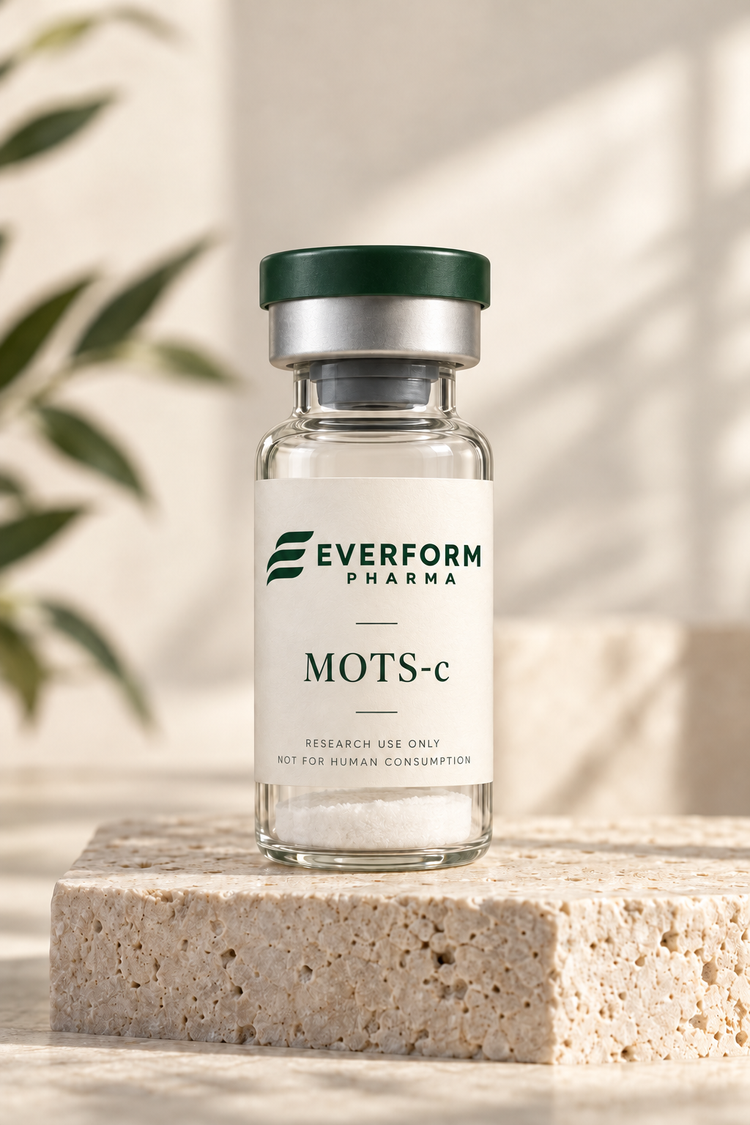
MOTS-c Labelled vial amount: 20 mg
Connection to the findings The article examines MOTS-c research into metabolic regulation and physical performance in experimental models, alongside a small human study measuring naturally occurring MOTS-c after exercise.
What remains unproven An exercise-related change in endogenous MOTS-c does not demonstrate benefits from administering it. The cited studies do not establish human lifespan extension or an alternative to exercise.
Revisit the research and references ↑ Explore MOTS-c →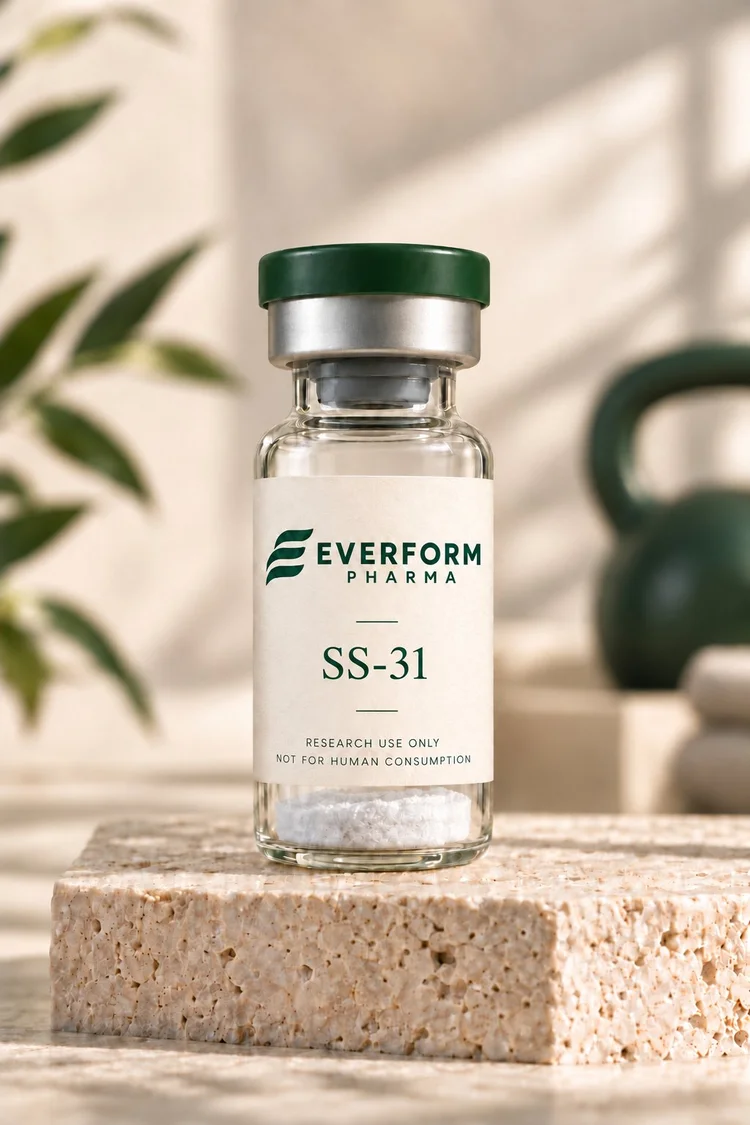
Mitochondrial research
SS-31 Labelled vial amount: 10 mg
Connection to the findings The article discusses elamipretide and the accelerated US approval of Forzinity for a defined Barth syndrome population, illustrating a specific clinical application of mitochondrial research.
What the approval means Approval applies to the authorised medicine and indication. It does not apply to this Everform research product, establish equivalence to Forzinity or demonstrate general anti-ageing benefits.
Revisit the approval and its limits ↑ Explore SS-31 →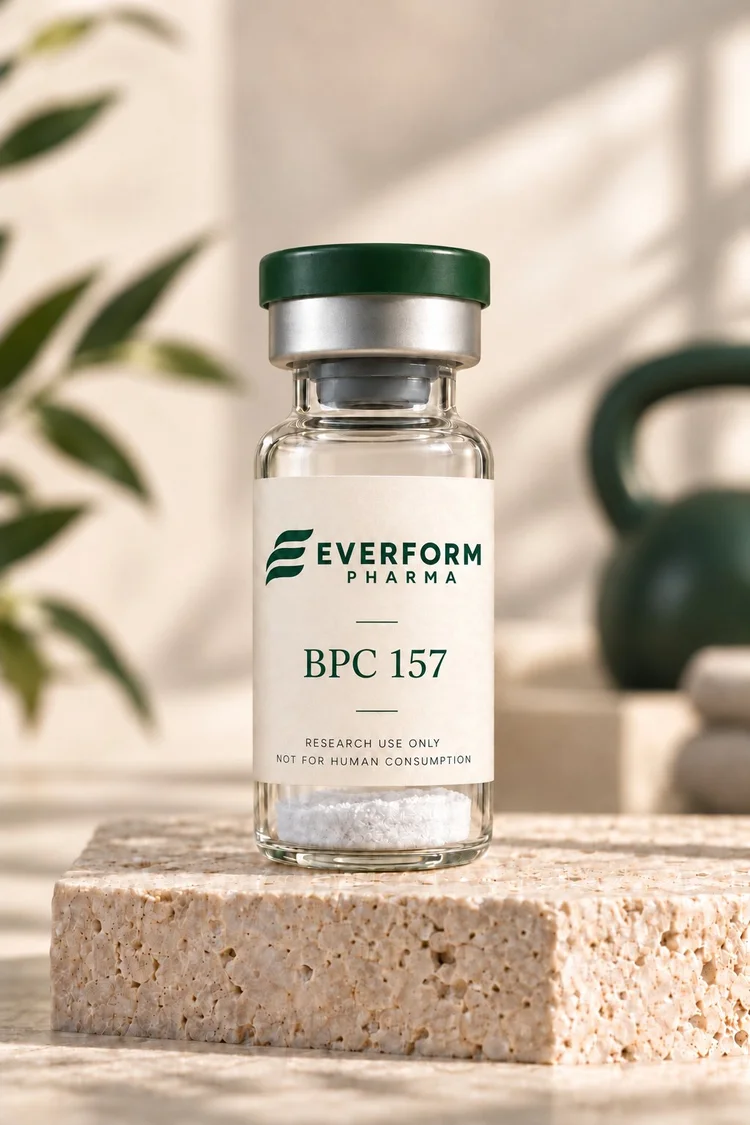
Tendon and cellular models
BPC 157 Labelled vial amount: 10 mg
Connection to the findings The cited research examined rat tendon explants and tendon-derived fibroblasts, reporting effects on tissue outgrowth, cell survival under experimental stress and cell migration.
What remains unproven These experimental findings do not establish faster injury recovery in people. They also do not demonstrate the safety, effectiveness or synergy of combinations containing BPC 157.
Revisit the recovery research ↑ Explore BPC 157 →