Metabolic research
Weight Loss & Weight Management
Weight regulation involves more than the food we eat. Hormonal signals help coordinate hunger, fullness, blood glucose and how the body uses energy.
Peptide research is advancing our understanding of these signals, with particular interest in GLP-1, GIP and glucagon receptor pathways.
At Everform Pharma, this category brings together research compounds associated with the scientific study of weight regulation and metabolic function.

The Science Behind Weight Regulation

Appetite & Fullness
GLP-1 signalling plays a role in appetite and food intake. Research examines how this pathway influences hunger, feelings of fullness and eating behaviour.

Glucose Regulation
GLP-1 and GIP participate in the body’s response to food, including glucose-dependent insulin release. These pathways are central to research into the relationship between blood glucose and metabolic health.

Energy Balance
Energy balance reflects both energy intake and energy expenditure. Glucagon receptor activity adds another dimension to research into how the body mobilises and uses stored energy.

Body Composition
Changes in body weight can include changes in both fat mass and lean mass. Studying these separately helps researchers develop a more complete picture of weight-management outcomes.
Peptides in Focus
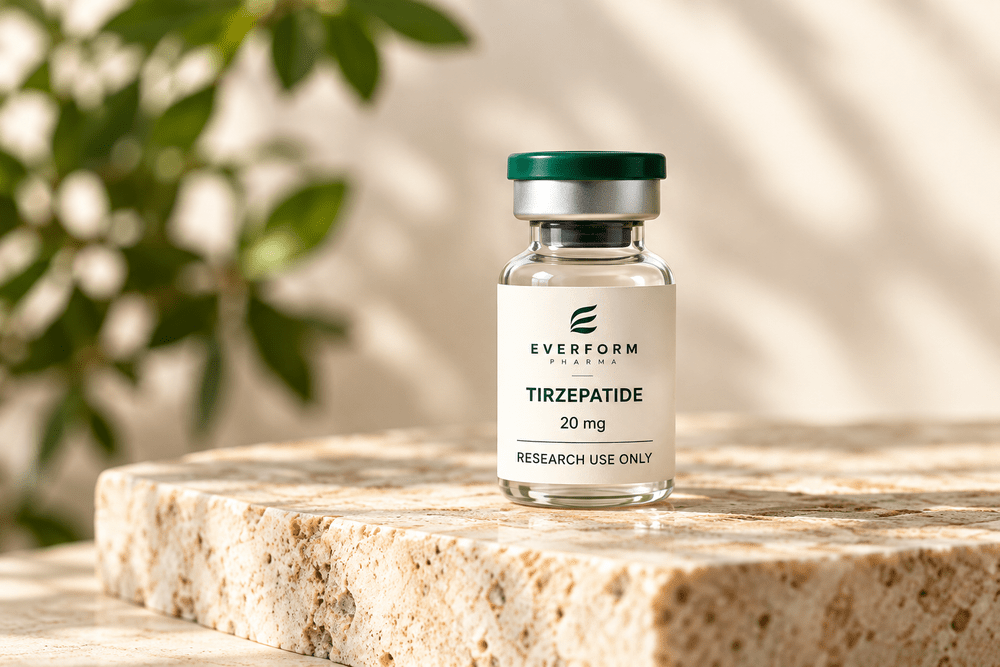
Tirzepatide
Dual GIP & GLP-1 Receptor Agonist
Tirzepatide activates two receptor pathways involved in appetite, food intake and glucose regulation: GIP and GLP-1.
Research overview
Its dual-receptor activity has made it an important subject in metabolic research. Approved prescription medicines containing tirzepatide have demonstrated weight-management benefits in clinical trials.
Those findings relate to the pharmaceutical formulations and treatment conditions studied. They do not establish equivalent safety, quality or effectiveness for research-use materials.
Areas of scientific interest
- Appetite and food-intake regulation
- Glucose-dependent insulin secretion
- Changes in body weight and body composition
- Metabolic outcomes associated with weight reduction
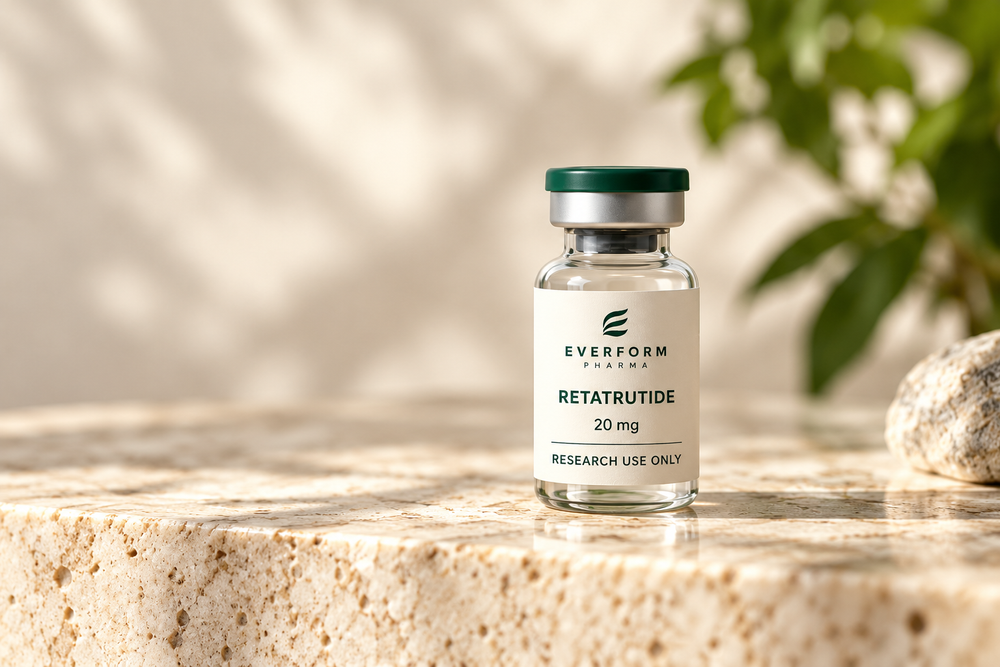
Retatrutide
Triple GIP, GLP-1 & Glucagon Receptor Agonist
Retatrutide is an investigational peptide that activates three receptors: GIP, GLP-1 and glucagon.
Research overview
By combining these targets within one molecule, researchers can investigate pathways associated with appetite, glucose regulation and energy expenditure.
Clinical trials are evaluating its effects on body weight and metabolic health. Retatrutide remains investigational and is not FDA-approved; its safety and effectiveness are still being assessed.
Areas of scientific interest
- Combined activity across three metabolic receptors
- Appetite and energy-intake regulation
- Glucose metabolism and energy expenditure
- Changes in body weight and body composition
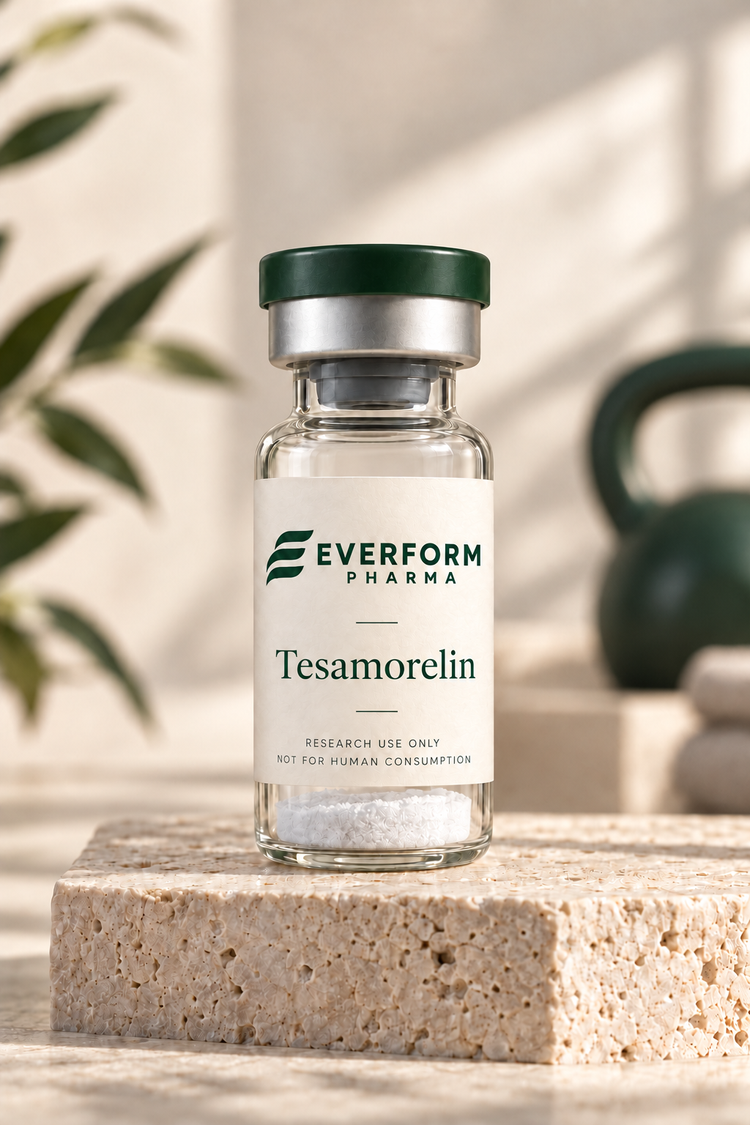
Tesamorelin
Growth hormone-releasing hormone analogue
A GHRH analogue studied in relation to growth hormone, IGF-1 and body composition.
Research overview
Studies in specific clinical populations and formulations cannot be assumed to apply to healthy athletes or laboratory research materials.
Areas of scientific interest
- Growth hormone release and IGF-1 response
- Reductions in visceral abdominal fat observed in adults with HIV-associated lipodystrophy
- Reductions in liver fat observed in adults with HIV and abdominal fat accumulation
Understanding the Evidence
A biological mechanism does not, by itself, establish a clinical benefit. Findings depend on the formulation and conditions studied.


Quality & Research Documentation
Clear documentation supports informed research decisions. Review product identity, batch details, storage requirements and available batch-specific Certificates of Analysis.
Analytical testing provides information about the sample tested. It does not establish clinical safety, therapeutic effectiveness or suitability for human use.
View Certificates of AnalysisFrequently Asked Questions
What are GLP-1–type peptides?
GLP-1–type peptides interact with signalling pathways involved in appetite, food intake and blood glucose regulation. Some act at the GLP-1 receptor alone, while others also target GIP or glucagon receptors.
What is the difference between semaglutide, tirzepatide and retatrutide?
Semaglutide activates GLP-1 receptors. Tirzepatide activates both GLP-1 and GIP receptors. Retatrutide is an investigational compound that activates GLP-1, GIP and glucagon receptors.
These differences create distinct research profiles. More receptor targets do not automatically mean greater safety or suitability.
Are Everform Pharma products approved weight-loss medicines?
No. Everform Pharma research products are supplied for laboratory research only. They are not approved medicines and are not intended for human or veterinary use.
Do published weight-loss results apply to research-use products?
No. Published clinical results relate to the specific pharmaceutical formulations, participants and conditions studied. They do not establish equivalent quality, safety or effectiveness for research-use materials.
Does activating these receptors only affect appetite?
No. These pathways also participate in glucose regulation and other metabolic processes. Their effects depend on the receptors involved and the conditions investigated.
Can these compounds be combined?
Combining compounds with overlapping receptor activity may introduce additional risks and complicate the interpretation of research findings. Everform Pharma does not provide recommendations for personal use, combinations or treatment protocols.
Does a Certificate of Analysis confirm safety for human use?
No. A Certificate of Analysis reports the analytical tests performed on a particular sample. Identity, purity or content testing does not establish clinical safety or suitability for injection.
What is the difference between purity and peptide content?
Purity describes the proportion of the measured material attributed to the target compound using a particular analytical method. Content measures how much of that compound is present.
A high purity percentage alone does not confirm the stated quantity in a vial.
Does high purity mean a product is sterile?
No. Purity and sterility are different properties and require different tests. A purity result does not establish the absence of microorganisms or bacterial endotoxins.
How should research materials be stored?
Follow the product-specific storage instructions and any supporting stability information. Storage requirements may differ between compounds and between dry and solution forms.
Where can I find batch-specific documentation?
Visit our Certificates of Analysis page and match the report’s product name and batch number to the material being reviewed. Contact Everform Pharma if you need help locating available documentation.
Does Everform Pharma provide dosing or administration advice?
No. We provide product information and research documentation, not personal dosing, reconstitution or administration instructions. Questions about medical weight management should be discussed with a qualified healthcare professional.
For laboratory research use only. Not for human or veterinary use.