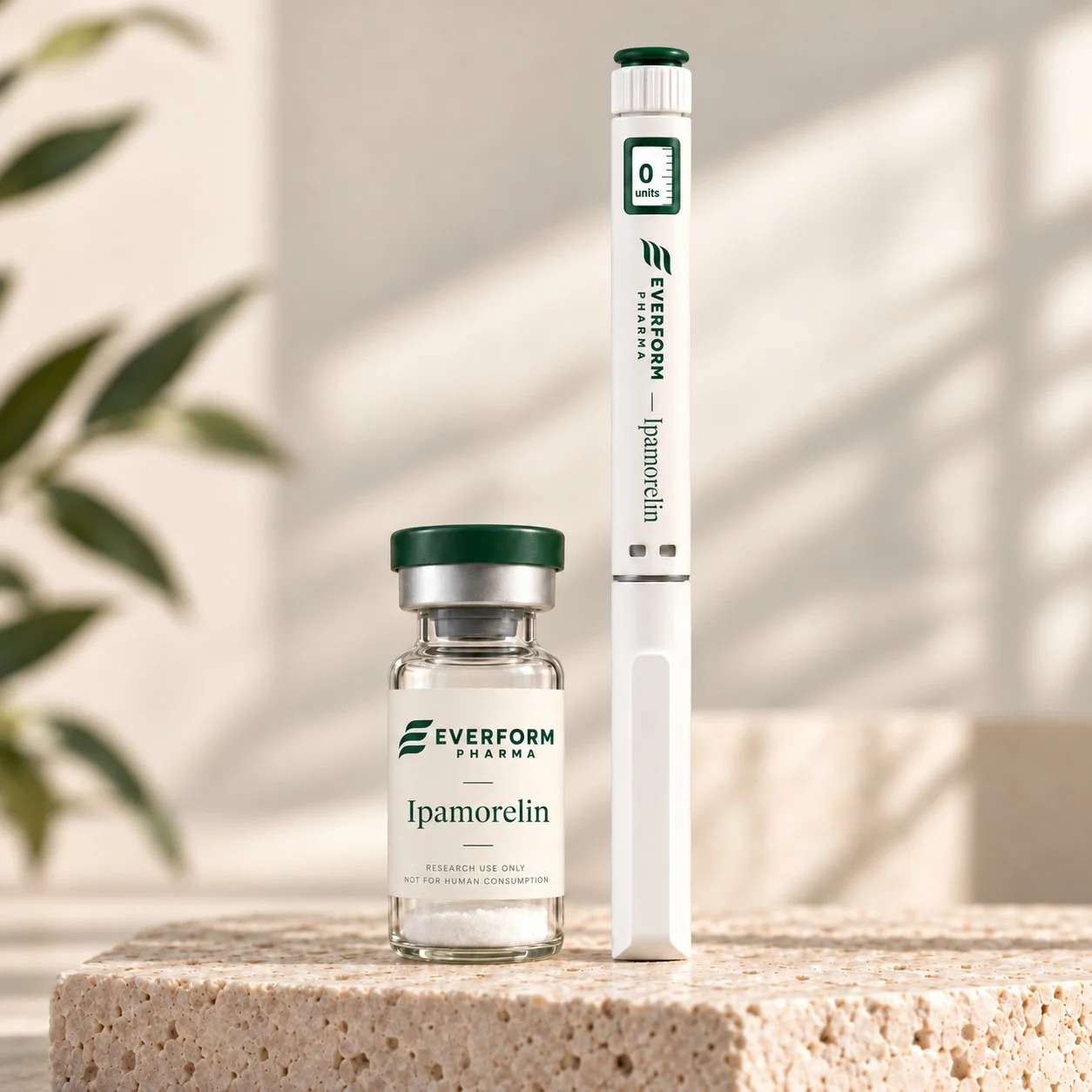
 Image 1 of 4
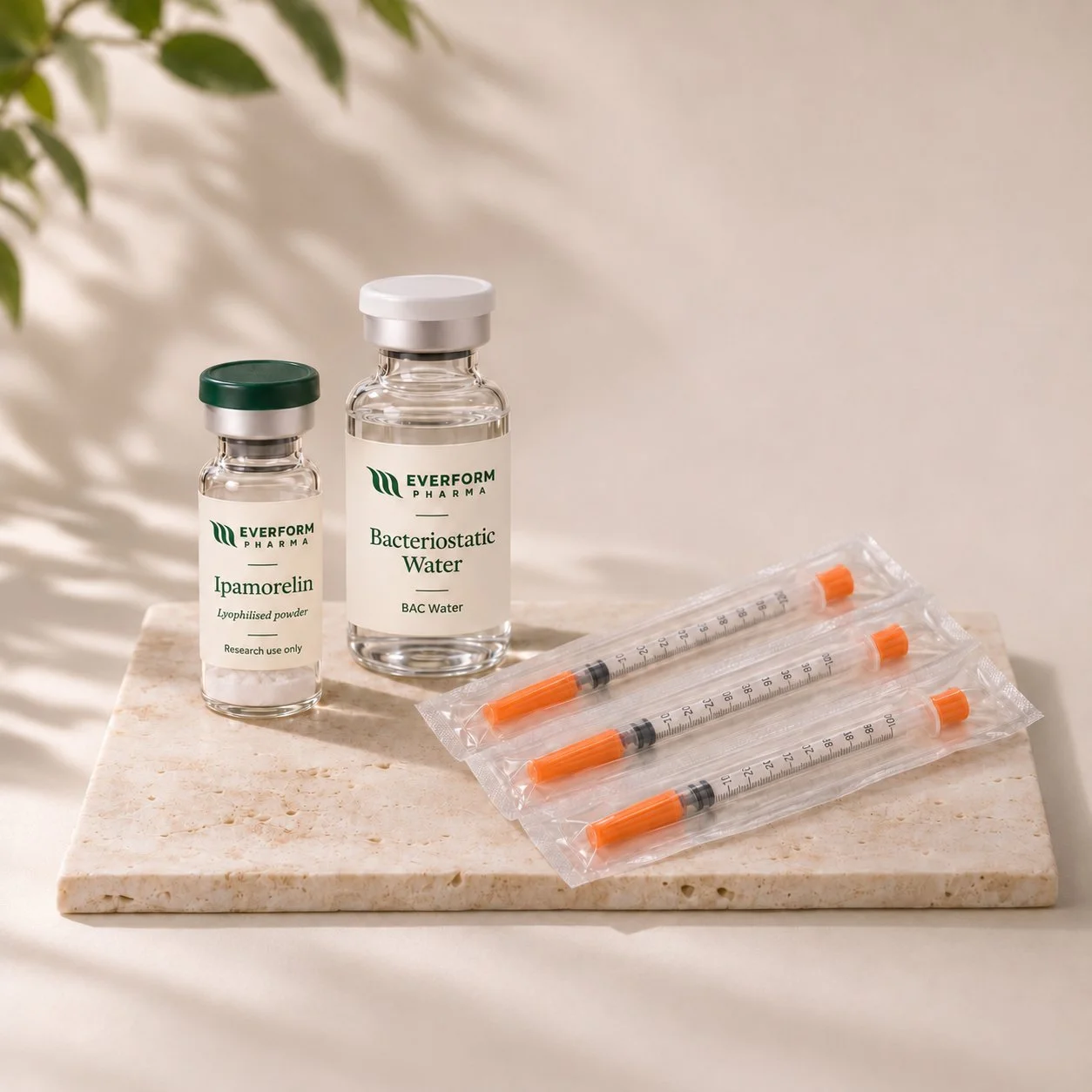
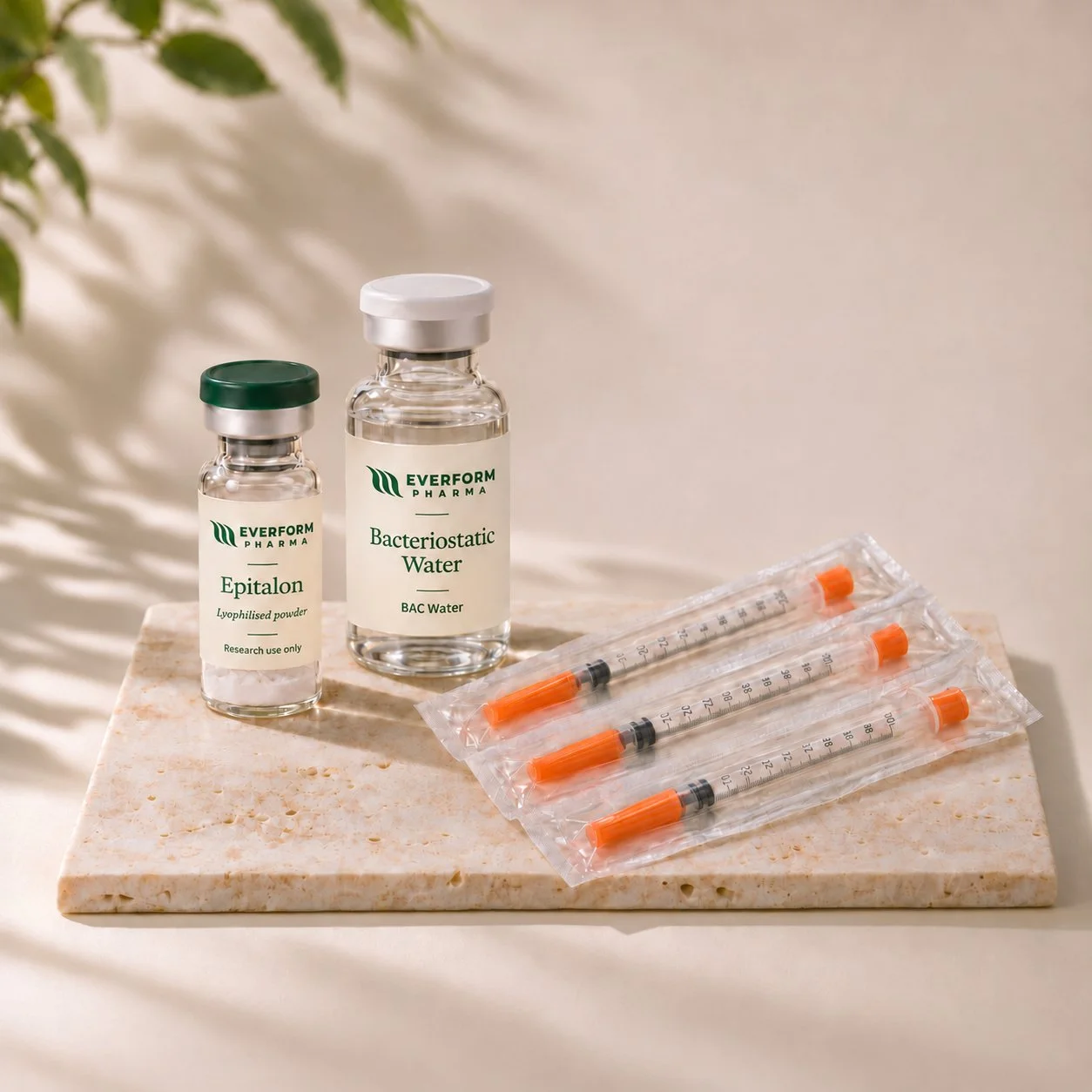 Image 2 of 4
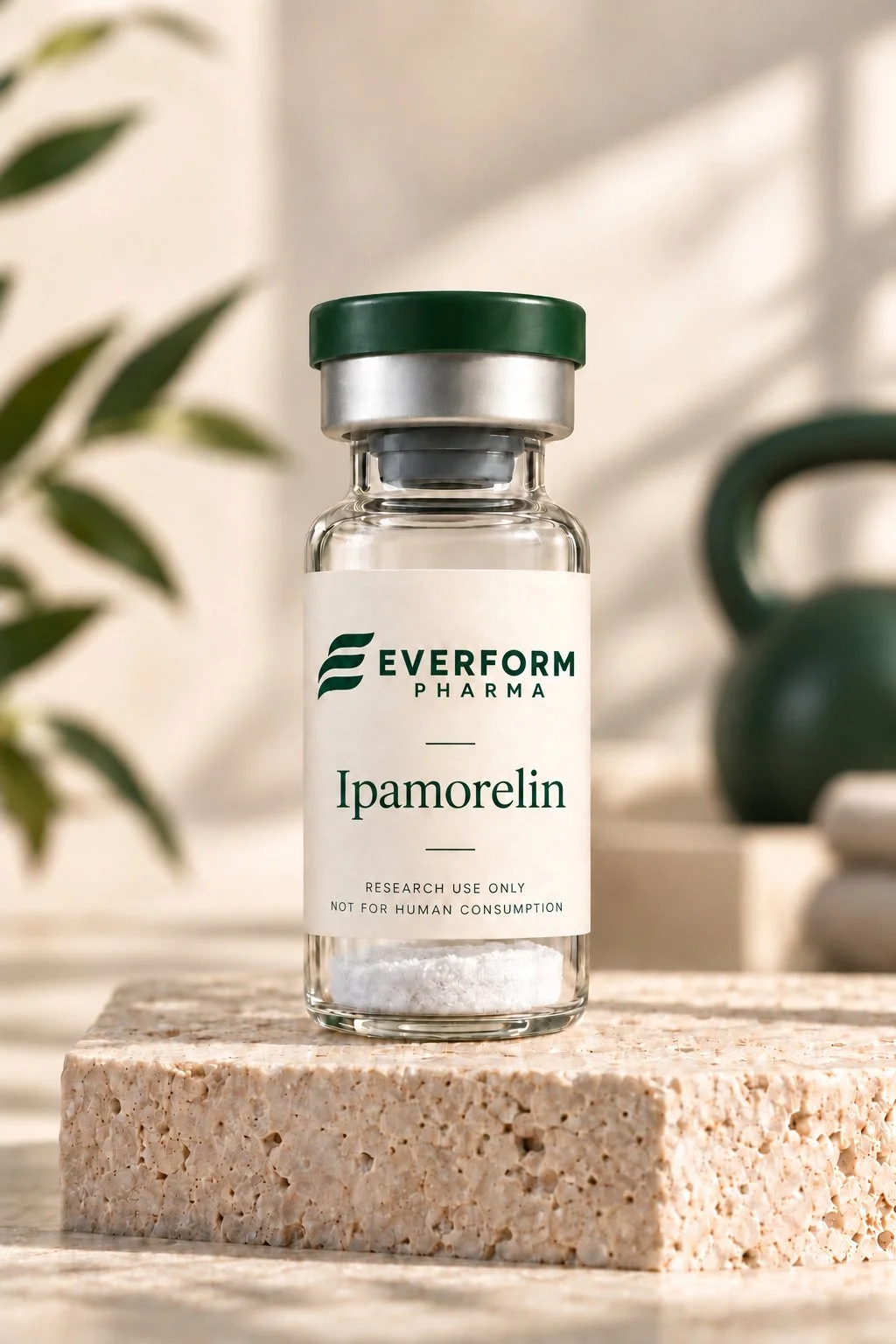
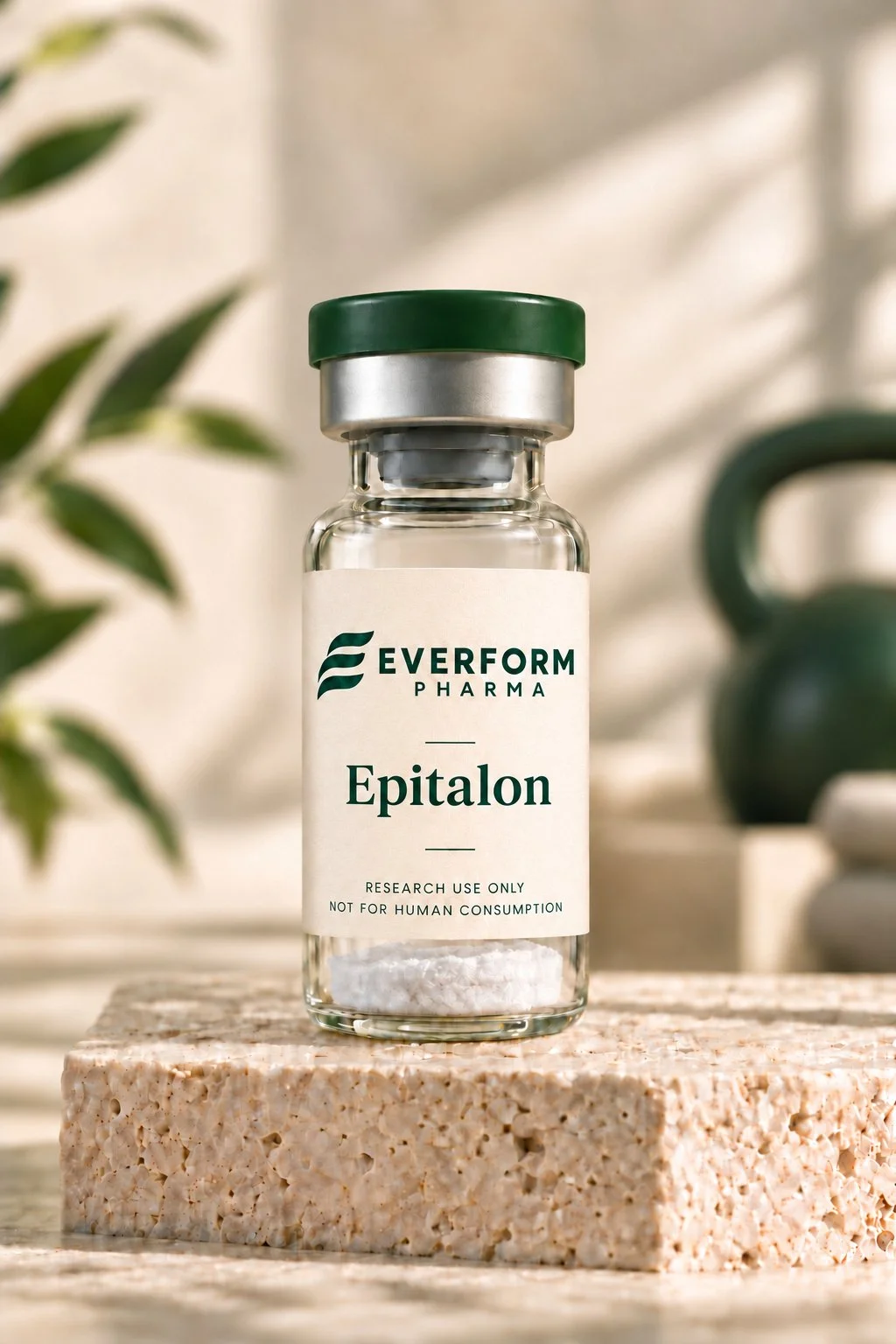 Image 3 of 4
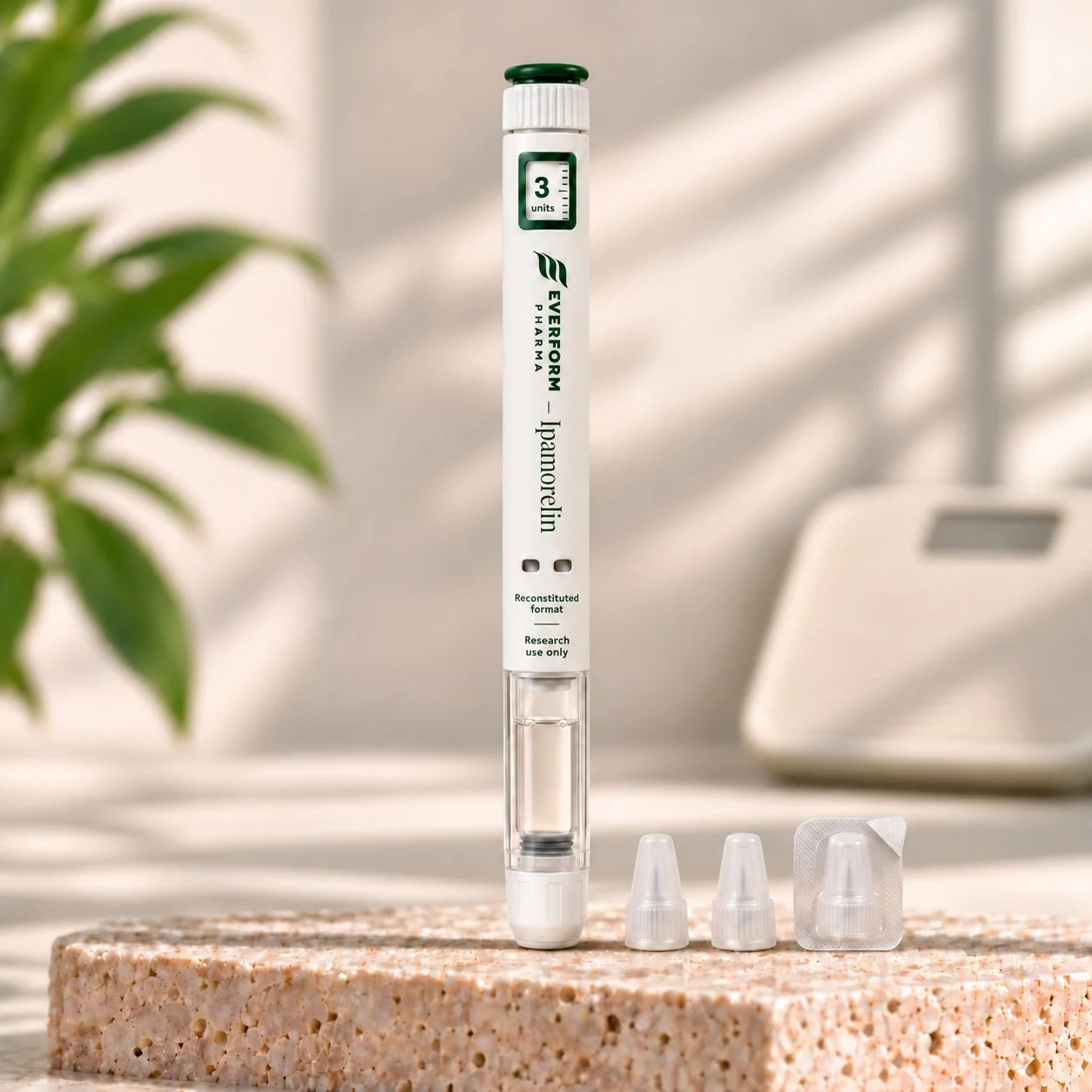
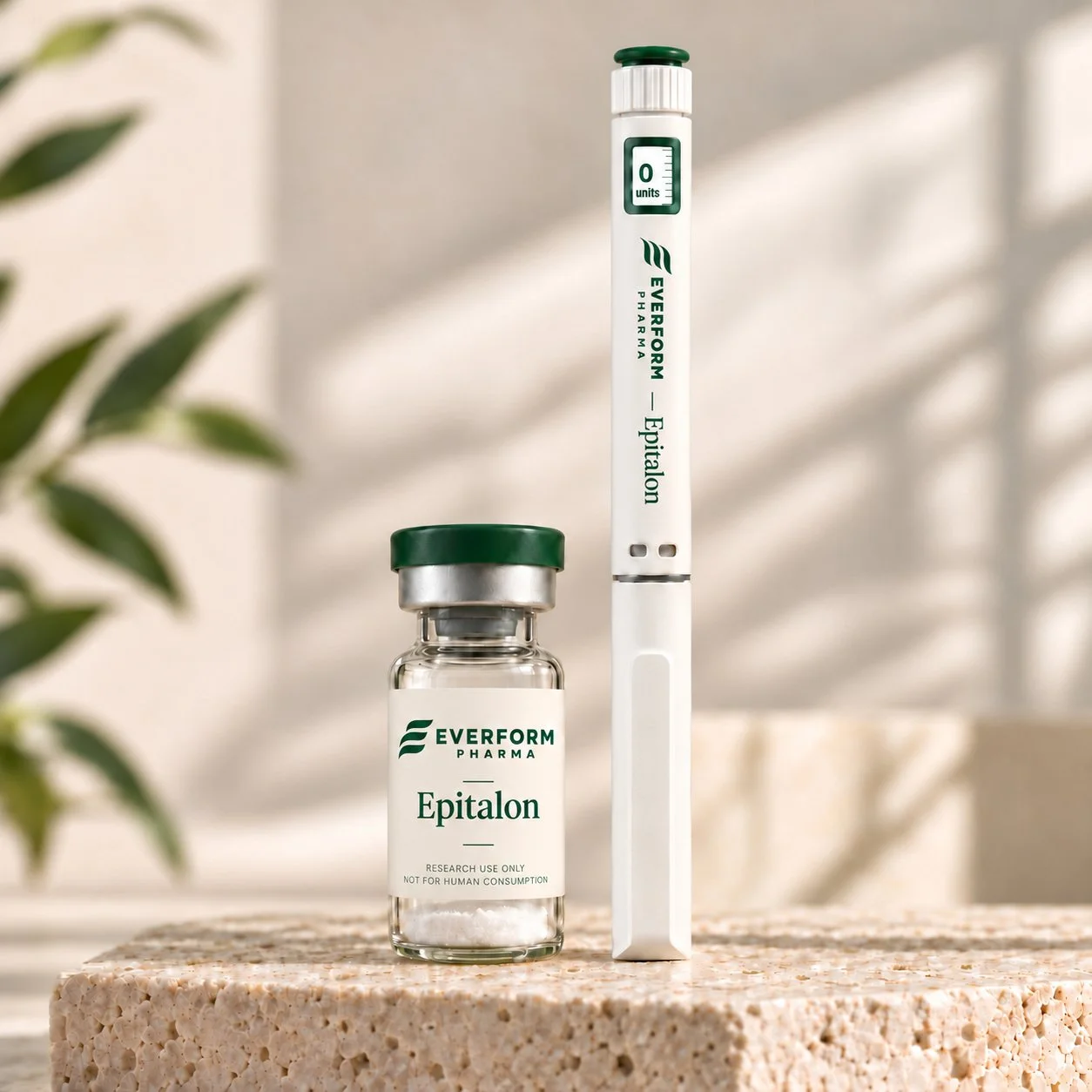 Image 4 of 4
Packaging & supply options
Your format, your way.
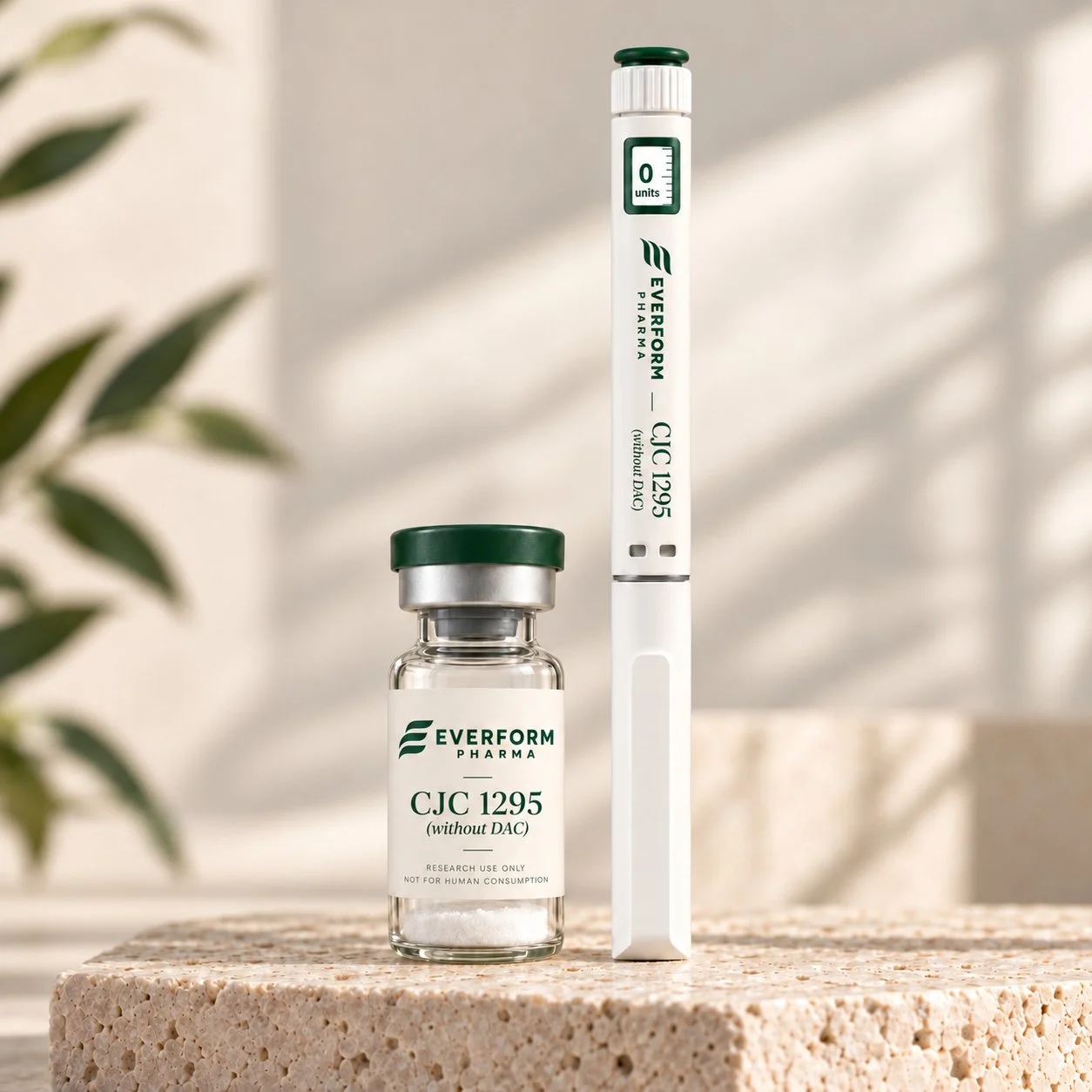
The same research peptide, with a choice of accessories and supply formats. Here’s what each option includes.
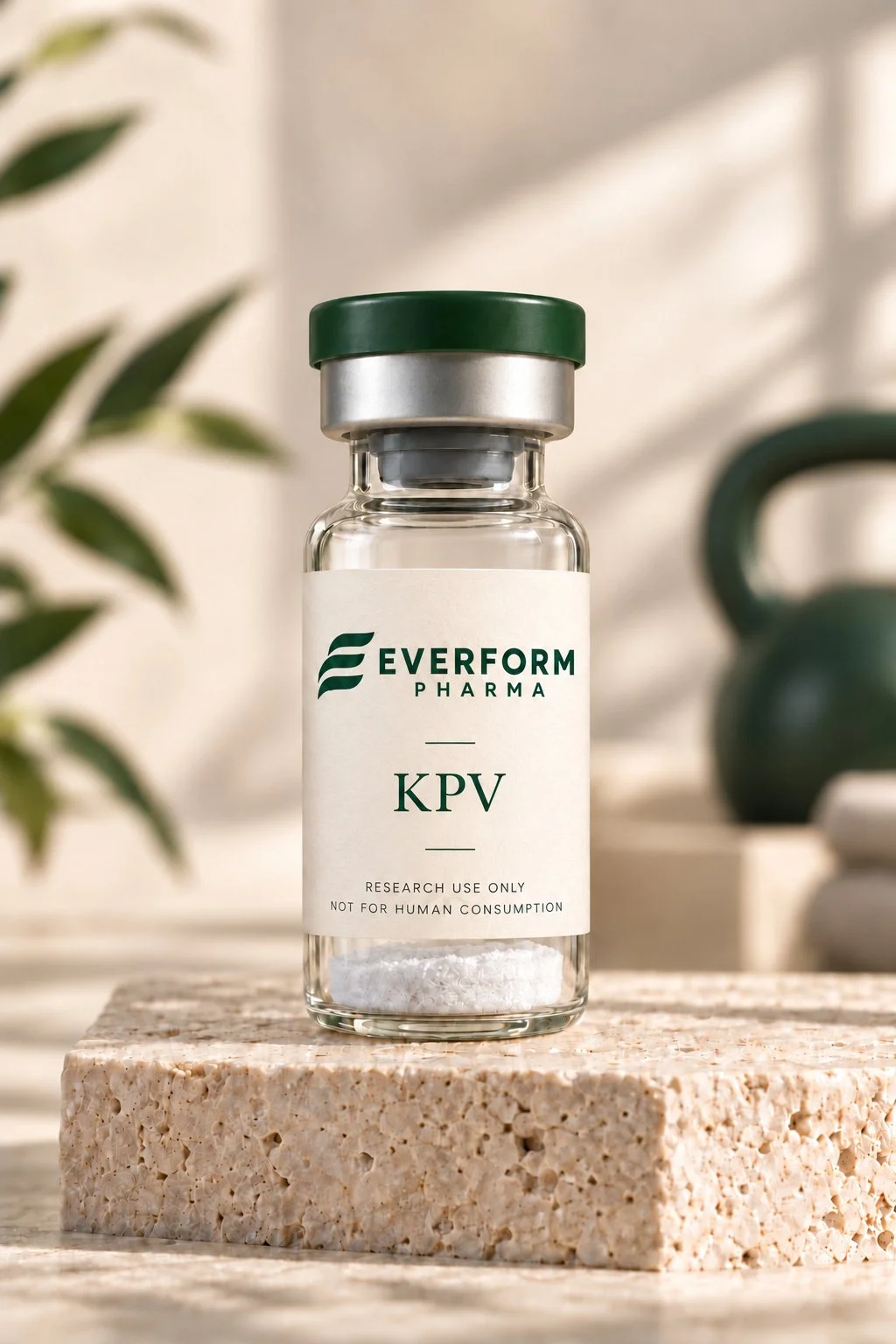
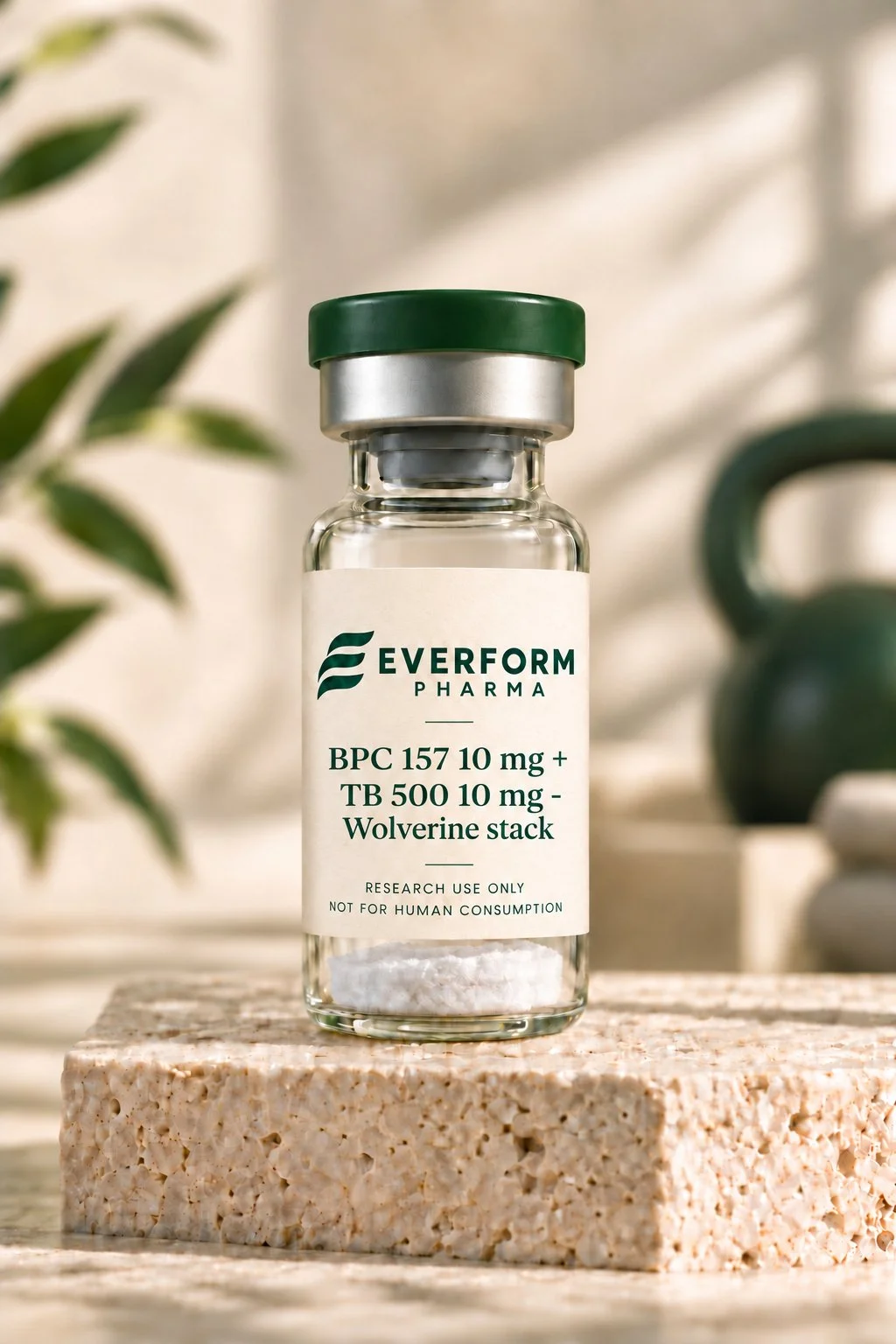
BAC water
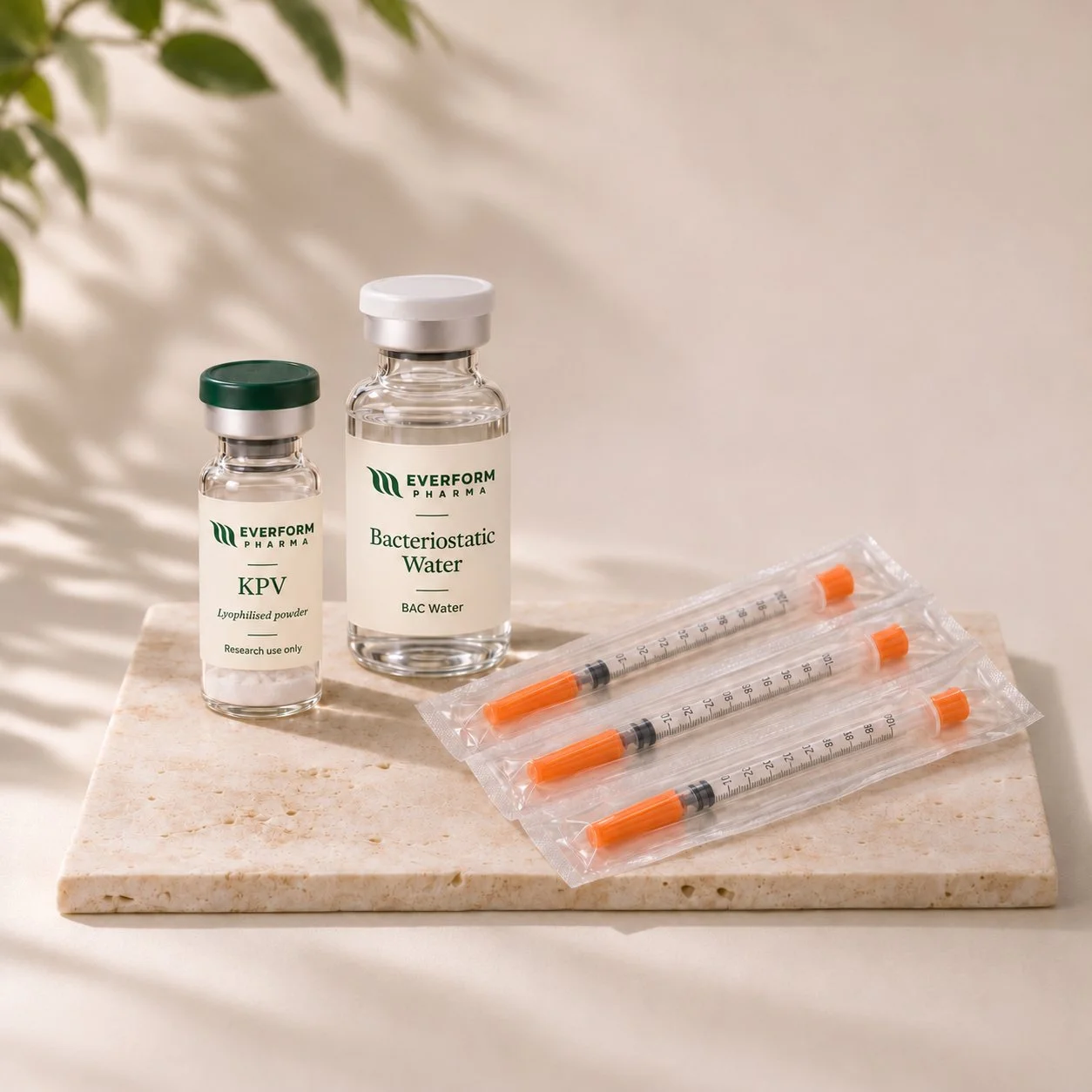
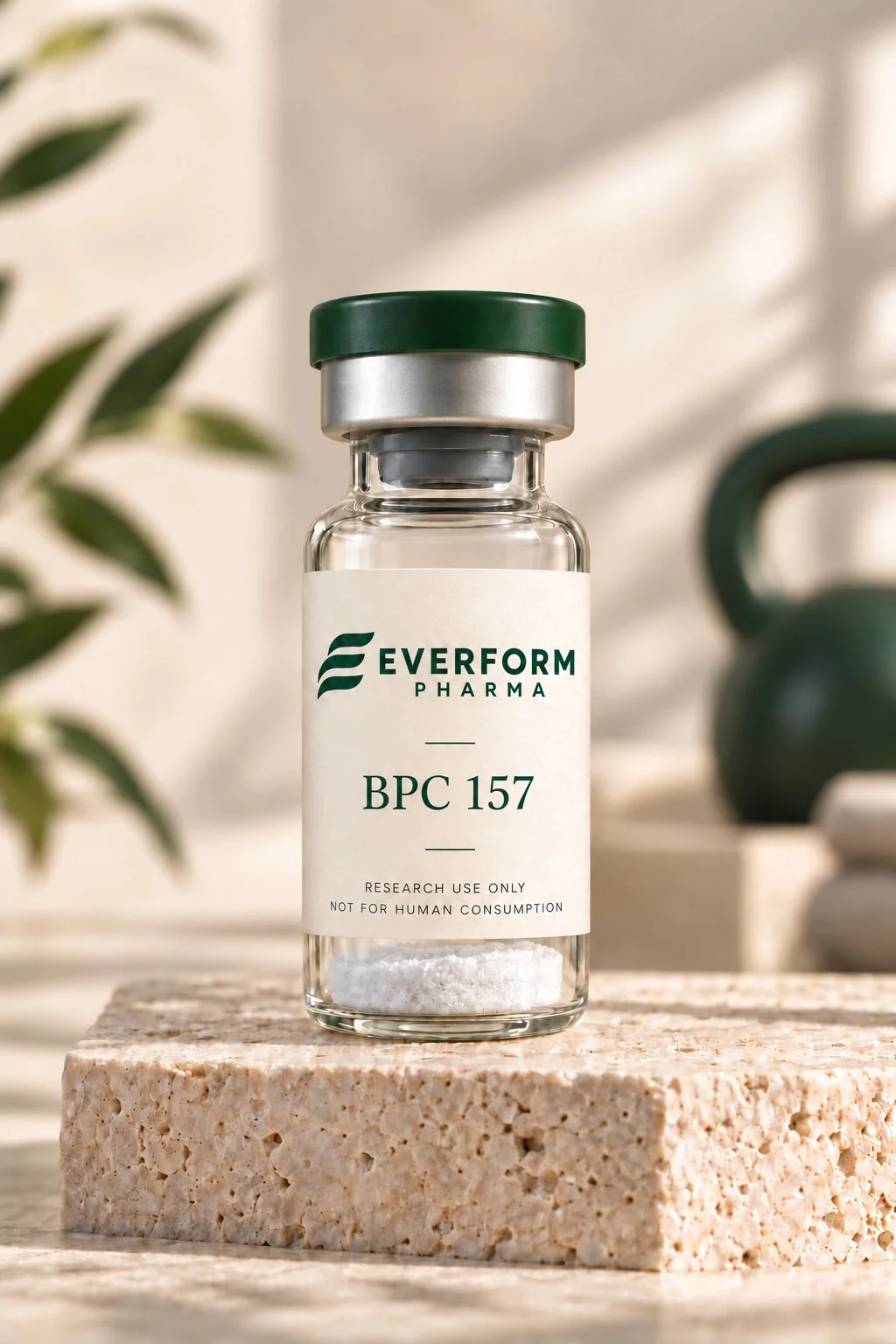
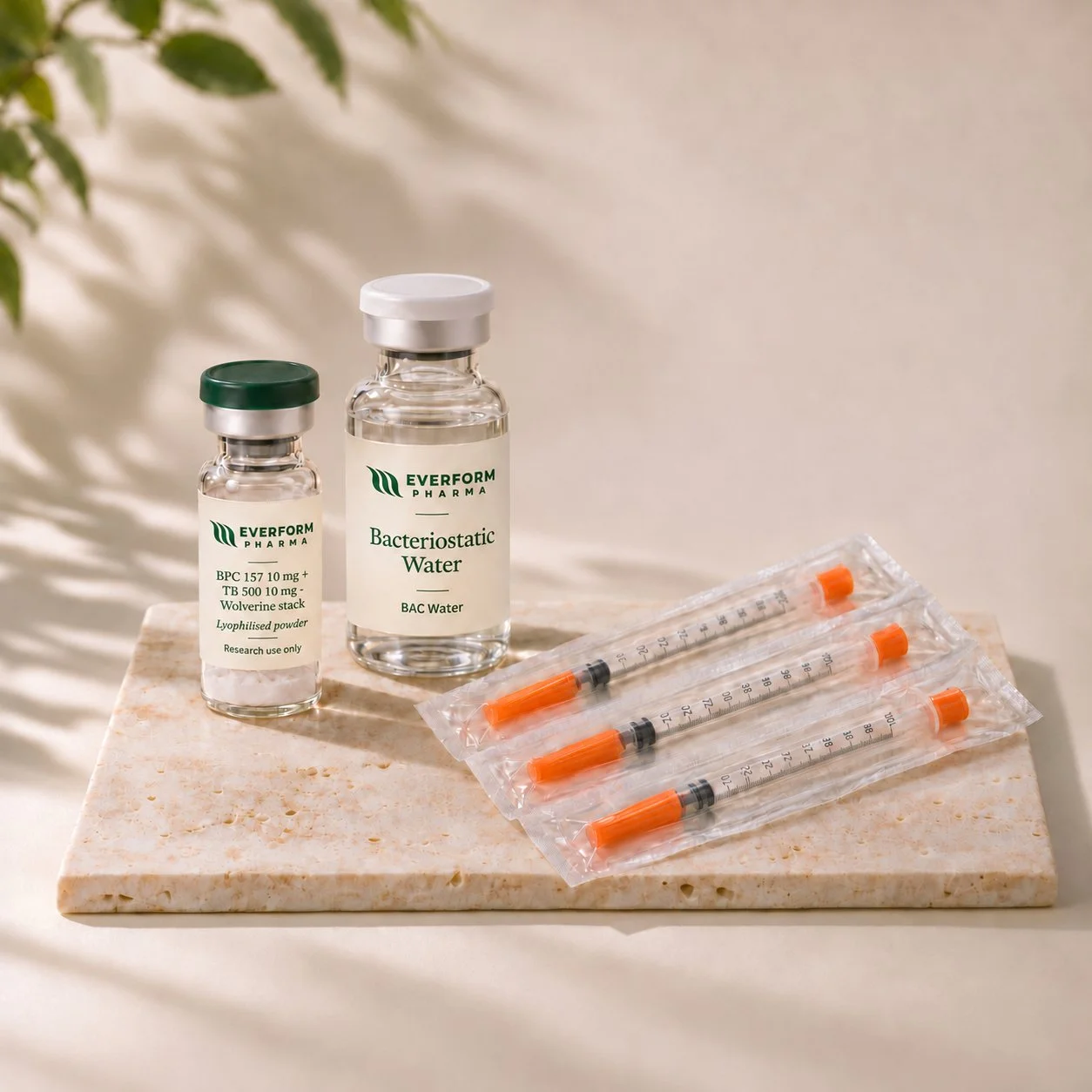
Vial kit
Lyophilised peptide vial with separately packaged, complimentary BAC water.
BAC water + syringes
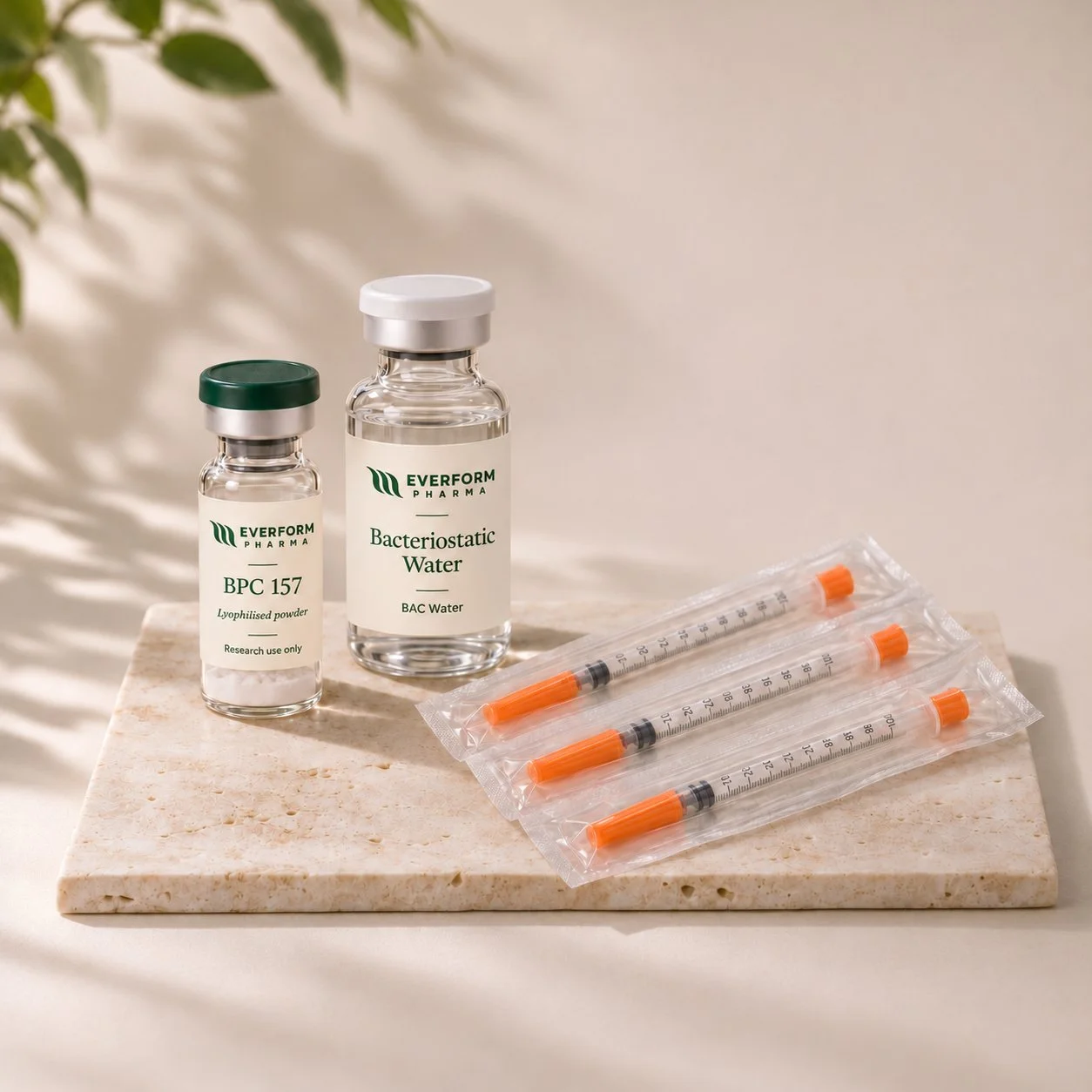
Syringe kit
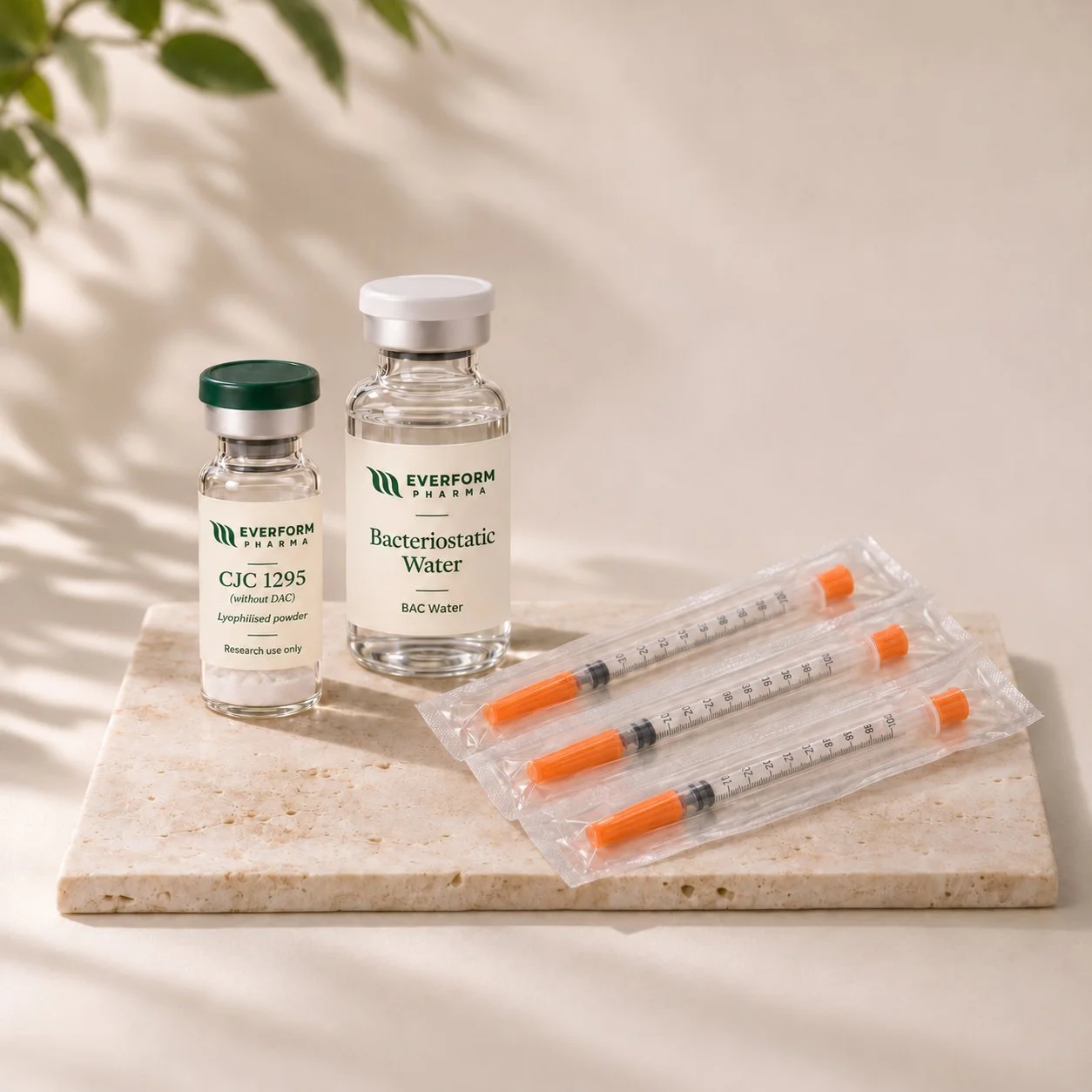
Lyophilised peptide vial, BAC water and syringes.
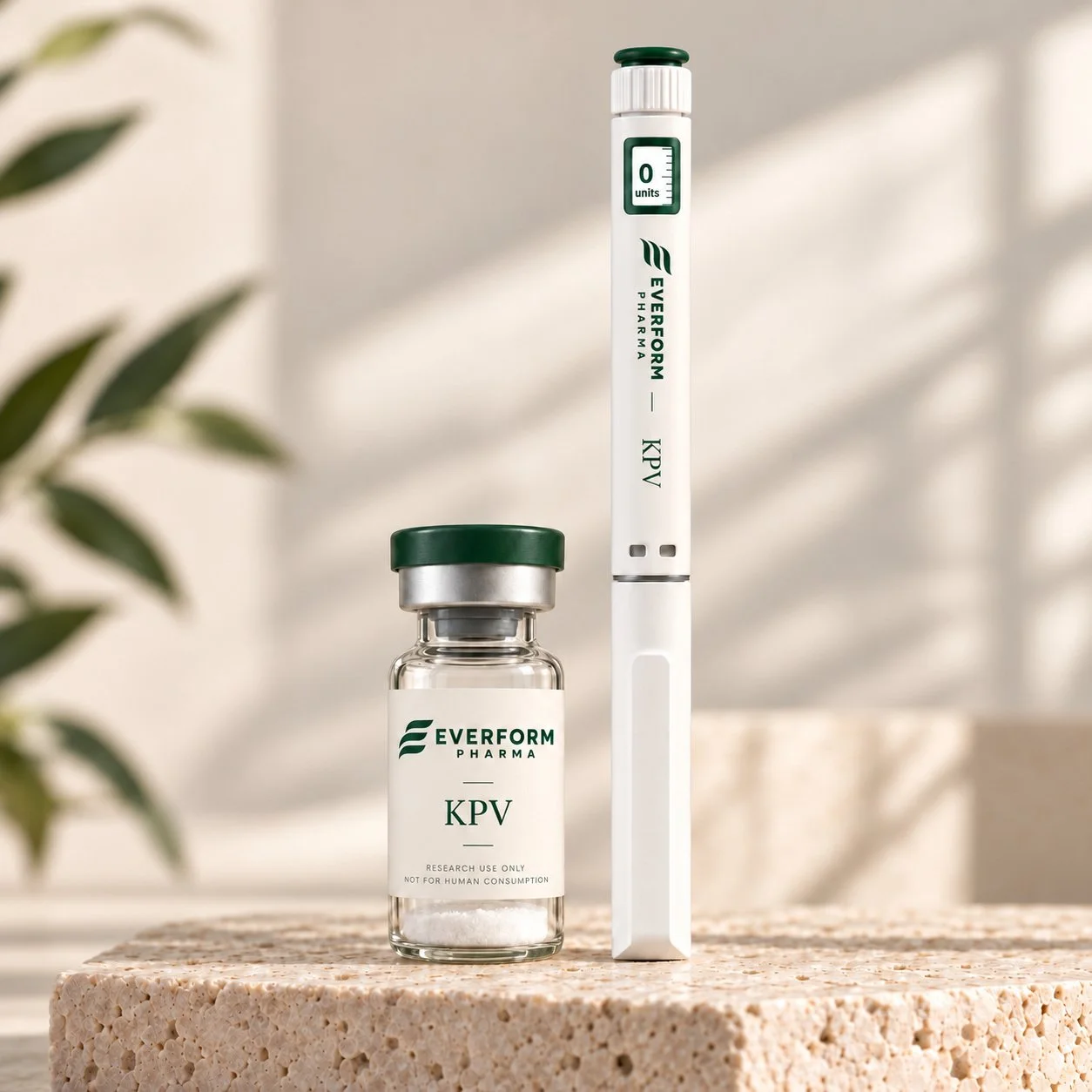
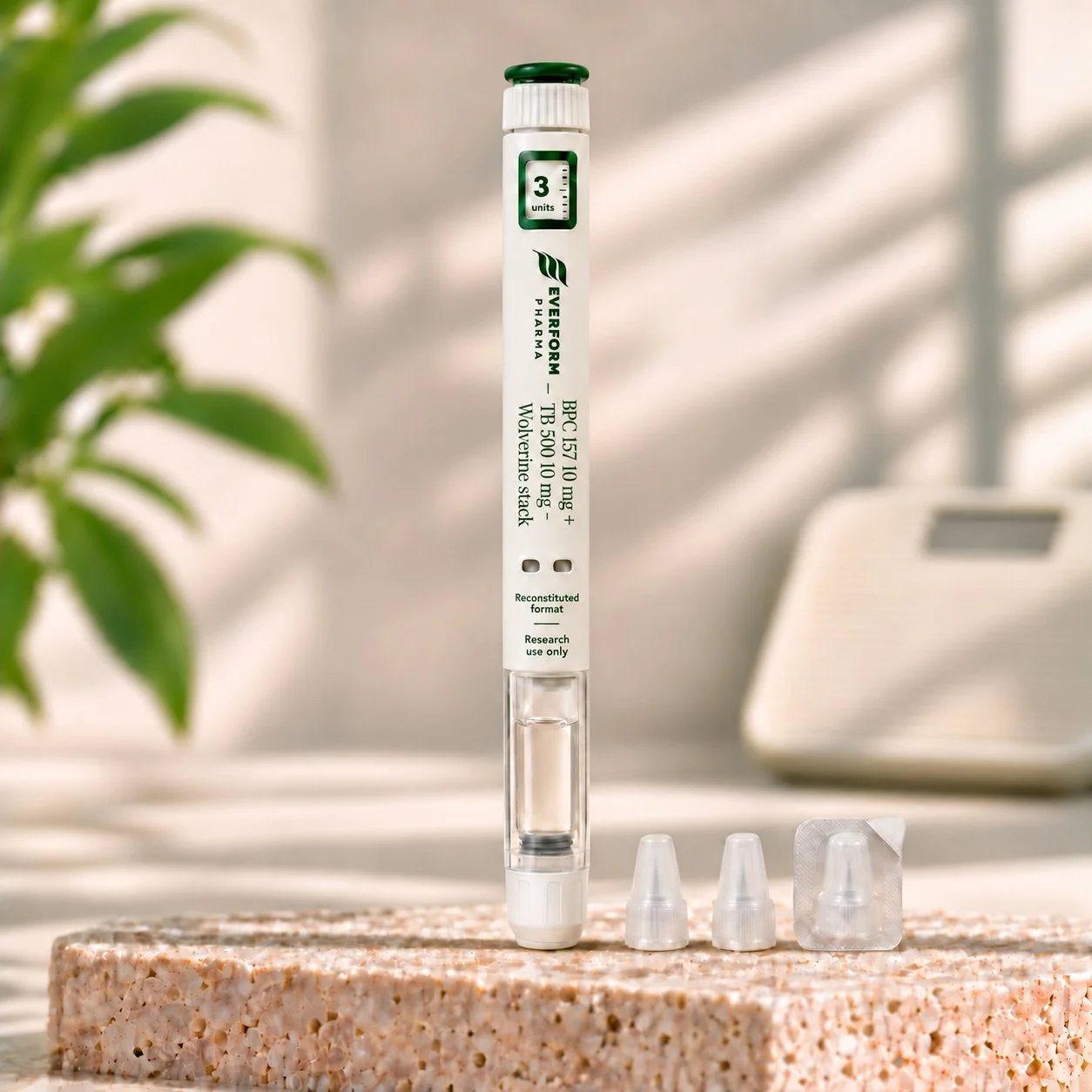
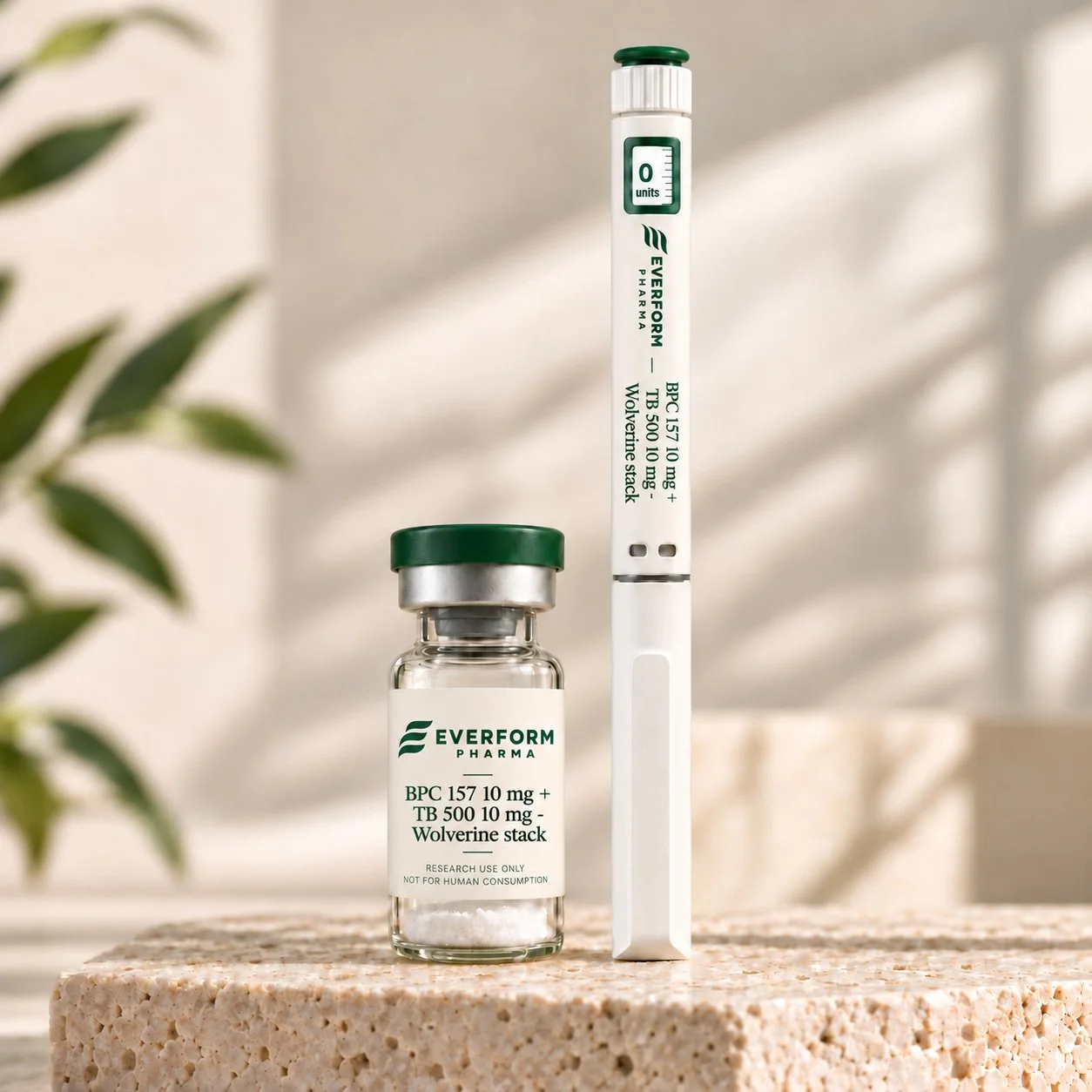
BAC water + pen
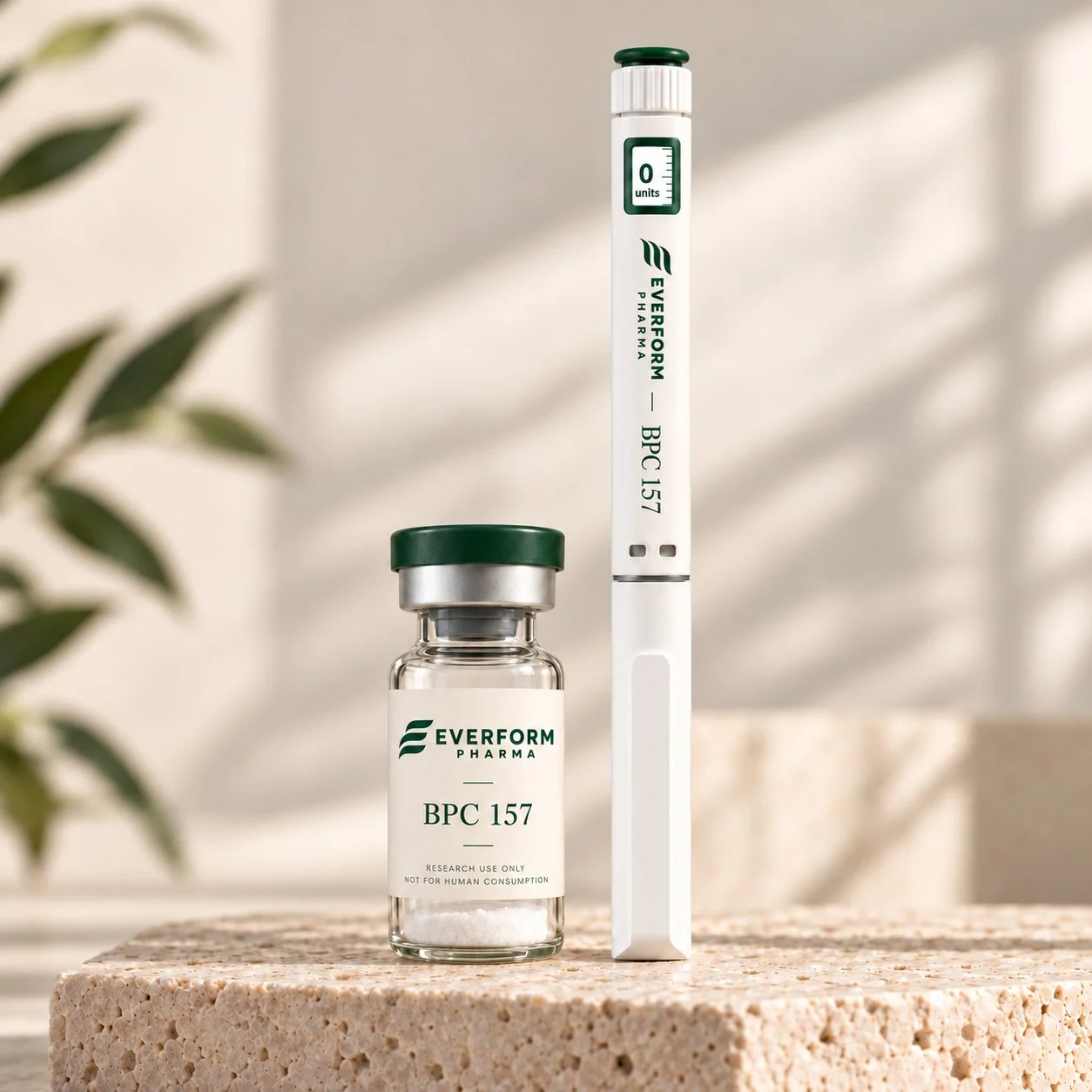
Injection pen kit
Lyophilised peptide vial, BAC water and an injection pen.
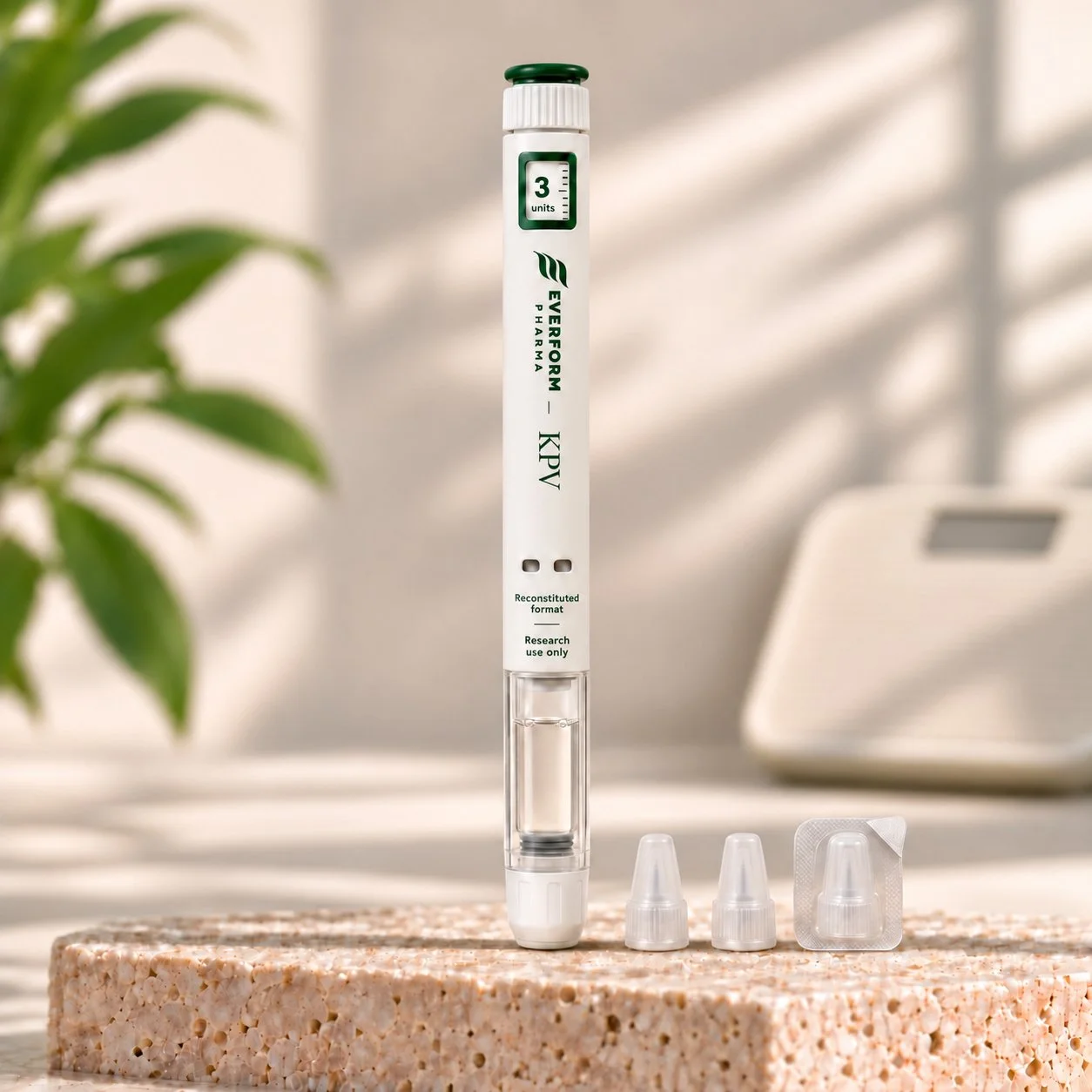
Pen + pen needles
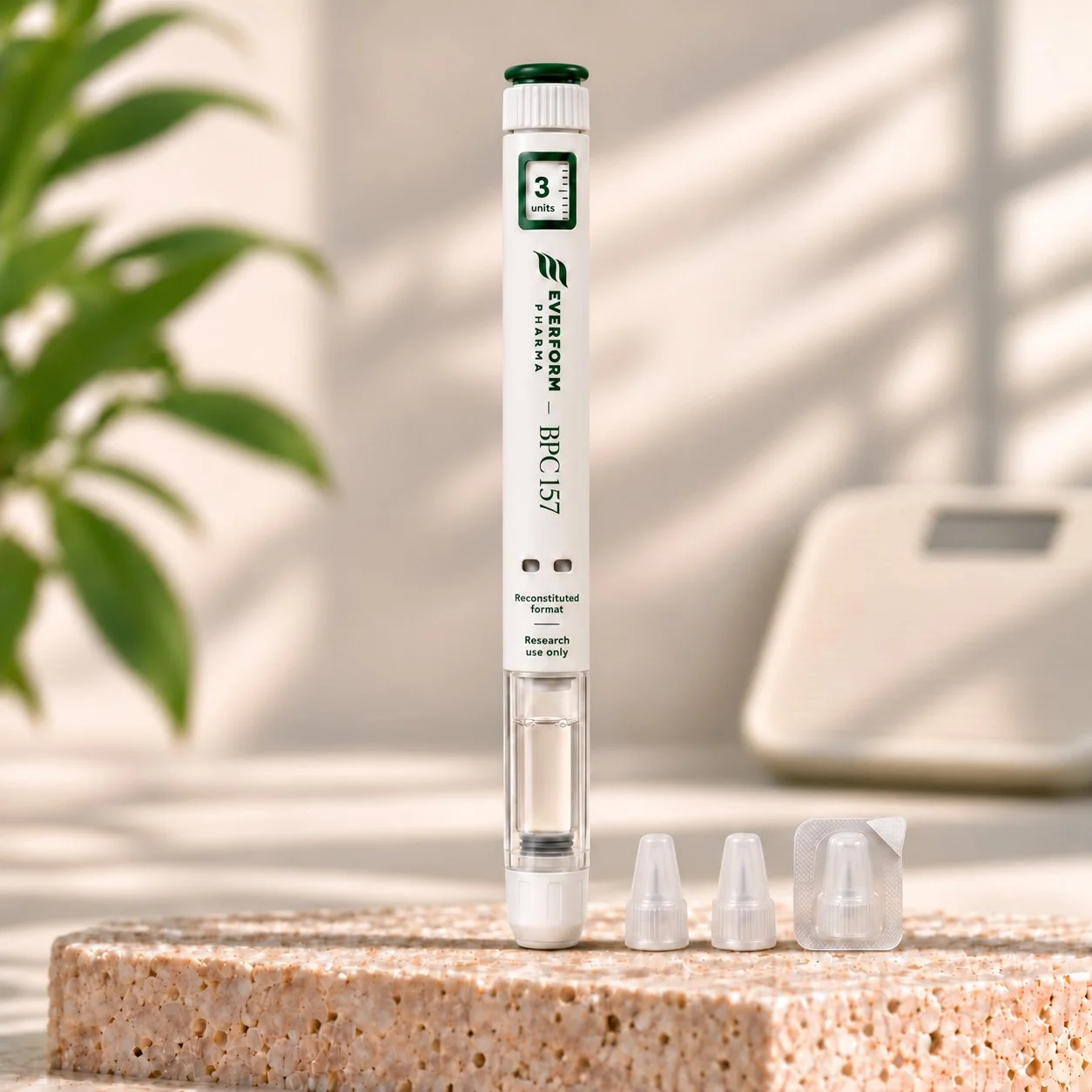
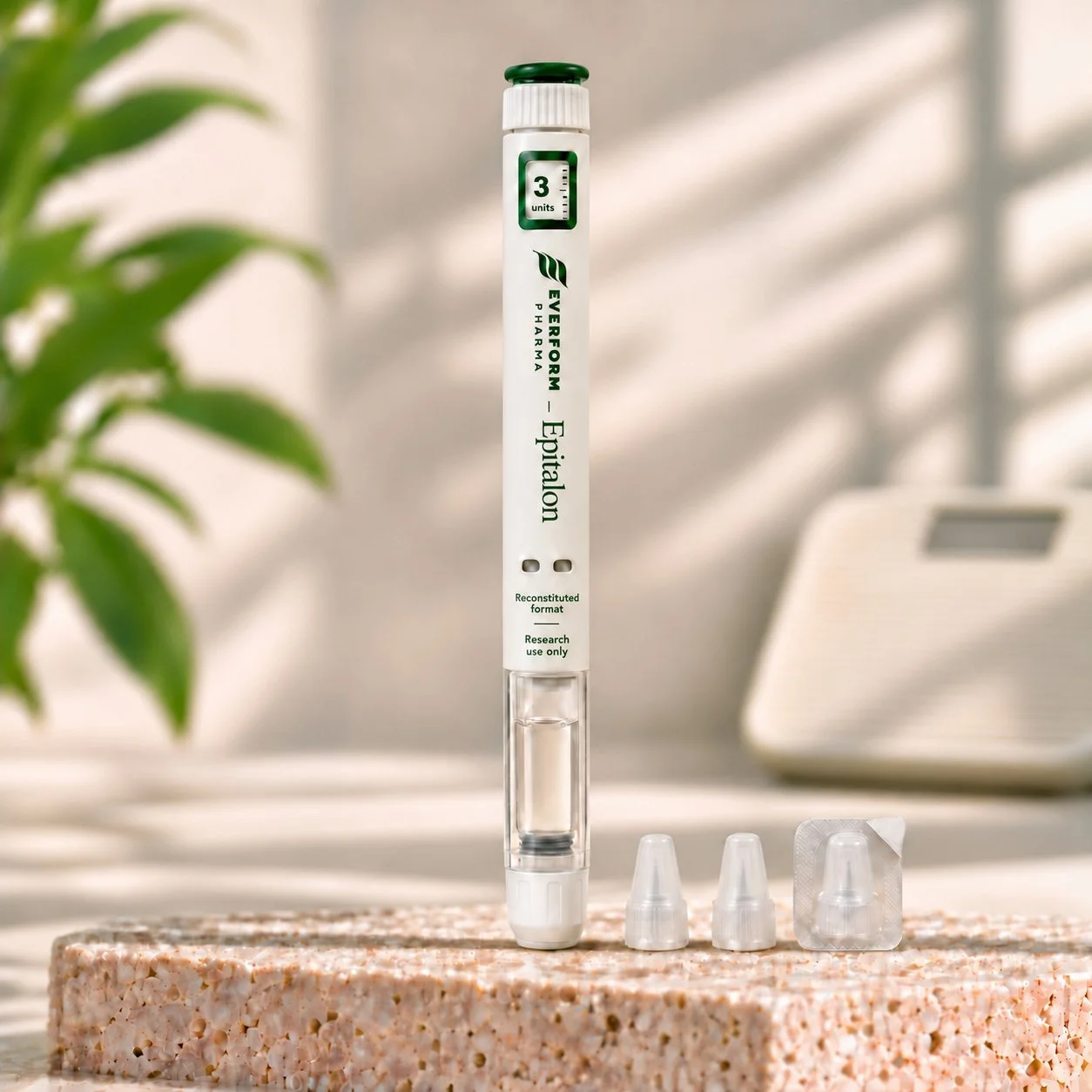
Reconstituted pen
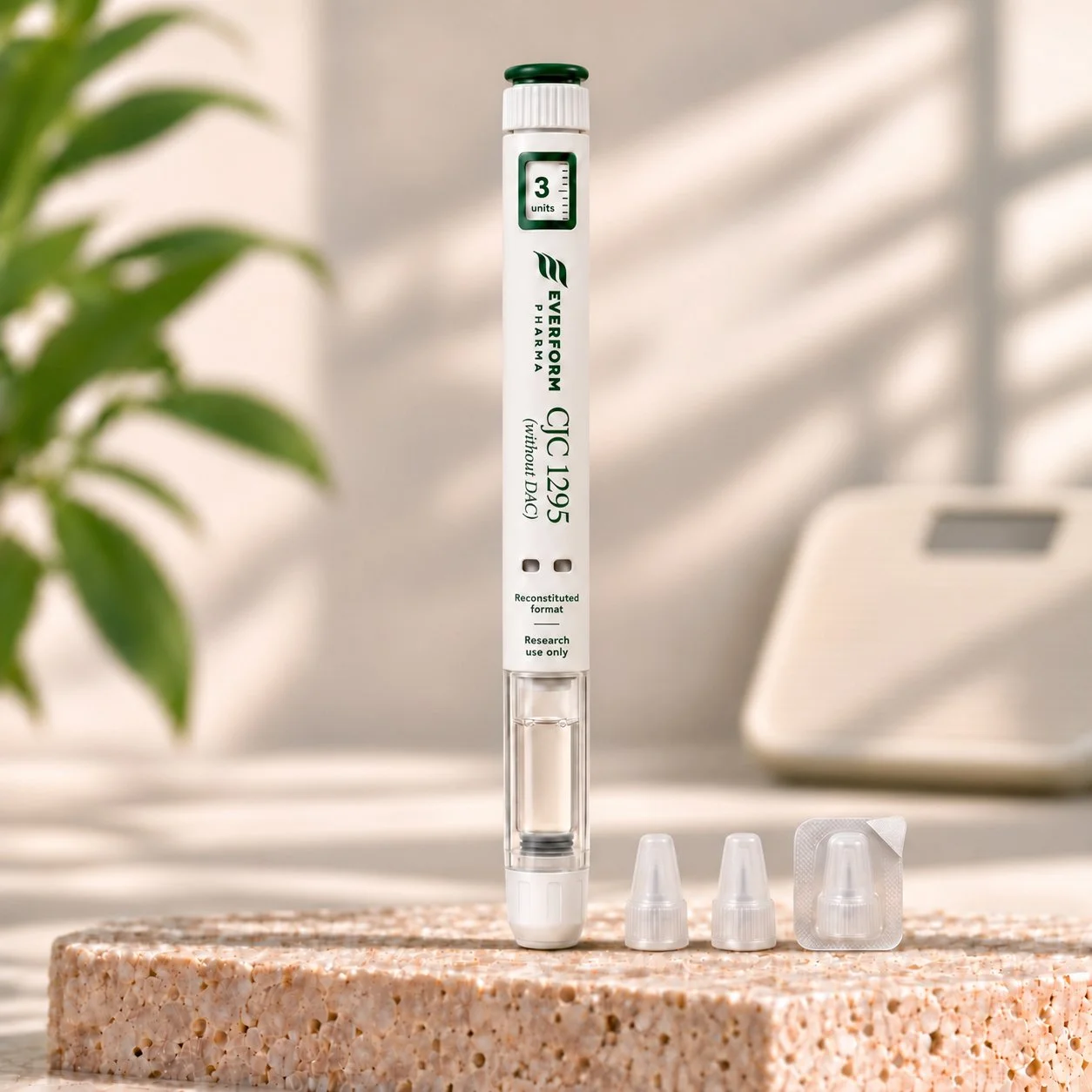
VIETNAM ONLYPeptide solution supplied in a pen at the stated concentration, with pen needles.
For laboratory research only. Not for human or veterinary use.
Everform Pharma · Cellular ageing research
Epitalon.
Exploring telomere biology.
A four-amino-acid peptide studied in telomere maintenance and experimental ageing models — with a clear distinction between laboratory findings and human outcomes.

What is Epitalon?
Epitalon, also written Epithalon in research publications, is a synthetic tetrapeptide with the sequence alanine–glutamate–aspartate–glycine, abbreviated AEDG. It has been investigated in cell cultures and animal models of ageing. [1] [2]
It is distinct from Epithalamin, a pineal-derived polypeptide preparation. Findings from studies of that extract should not be presented as direct evidence for synthetic Epitalon. The studies discussed here identify Epitalon or Epithalon as the material tested.
How it works
Telomeres are protective structures at chromosome ends. Research on Epitalon has examined telomerase, an enzyme involved in maintaining telomeric DNA, and changes in telomere length in cultured cells. A 2003 experiment reported telomerase activation and telomere elongation in human foetal fibroblasts. [1]
A 2025 cell study investigated telomerase-related responses in normal cell models and alternative lengthening of telomeres (ALT) in cancer cell models. Responses differed by cell type. The paper must be read with its published figure correction. [3] [4]
These are experimental observations, not proof of a beneficial whole-body effect. Longer telomeres in a culture dish do not establish longer human life or clinical safety.
TELOMERE MAINTENANCE
Examining chromosome-end biology and related enzyme activity in defined cell models.
EXPERIMENTAL AGEING
Testing biological markers and survival outcomes separately, rather than treating them as interchangeable.
Main research areas
| Research area | Evidence and limits |
|---|---|
| Telomerase and telomeres | Human-derived cells studied outside the body; this is not a human clinical trial. [1] |
| Cell-type differences | Normal and cancer cell lines showed different telomere-maintenance responses. Such experiments do not establish long-term safety in people. [3] [4] |
| Ageing and survival | A controlled study in female mice measured ageing markers, survival and spontaneous tumours. Results depend on the animal model and endpoint. [2] |
Human cells in a laboratory are not evidence of a clinical benefit in people. Animal survival findings cannot be converted into a predicted human lifespan gain.
What published findings show
Early cell-culture evidence: Khavinson and colleagues reported telomerase-related changes in cultured human foetal fibroblasts. This established a laboratory research question; it did not demonstrate rejuvenation in adults. [1]
Mouse survival evidence: Anisimov and colleagues compared two groups of 54 female Swiss-derived SHR mice. Average lifespan was unchanged. The authors reported increases in maximum lifespan and survival among the longest-lived animals, alongside changes in some ageing-related measures. Total spontaneous tumour incidence was not reduced. These mixed findings should be reported together. [2]
More recent cell research: Al-Dulaimi and colleagues reported telomere-length increases in normal and breast cancer cell models, with different associated pathways. Their experiments were conducted in two-dimensional cell cultures. A subsequent correction replaced Figures 1–3; it is linked below for transparent interpretation. [3] [4]
The cited studies do not establish that Everform Epitalon extends human lifespan, reverses ageing or prevents cancer. Cellular markers, animal survival and clinical outcomes answer different questions.
The Everform product, at a glance
Product labelEpitalon
Labelled vial amount10 mg
Vial formatLyophilised powder
Supply optionsCheck the current product selector
Everform Pharma is based in Da Nang, Vietnam. The labelled 10 mg describes vial content, not a recommended dose. Complimentary BAC water is included with every order.
Explore Your format, your way →
The full REF on the product should match the relevant documentation. The security sticker repeats the product identifier and should match the vial or pen; it is not a separate new ID. Follow the actual label for storage and expiry.
Identity, chromatographic purity and measured peptide content are different analytical results. Check what the relevant documentation actually measures; a purity percentage alone does not establish the amount in the vial or equivalence to a study material.
Common questions
Are Epitalon and Epithalon the same research name?
Both spellings appear in publications for the AEDG tetrapeptide. Confirm the supplied material’s identity in its documentation. [1] [2]
Is Epitalon the same as Epithalamin?
No. Epitalon is a defined synthetic tetrapeptide; Epithalamin is a different, pineal-derived preparation. Evidence should stay tied to the material studied.
Does telomere elongation prove an anti-ageing benefit?
No. A laboratory marker does not establish a clinical benefit, longer human life or long-term safety. [1] [3]
Did the mouse study increase average lifespan?
No. Average lifespan was unchanged in the cited study, although some late-survival measures increased. [2]
Does the 2025 paper have a correction?
Yes. The journal published replacement versions of Figures 1–3. Both the original study and correction are linked in the references. [3] [4]
Does 10 mg describe a recommended dose?
No. It is labelled vial content, not a dose, concentration, schedule or administration instruction.
References
Everform Pharma · Da Nang, Vietnam
Educational product information.
For laboratory research only.
Not for human or veterinary use.