 Image 1 of 4
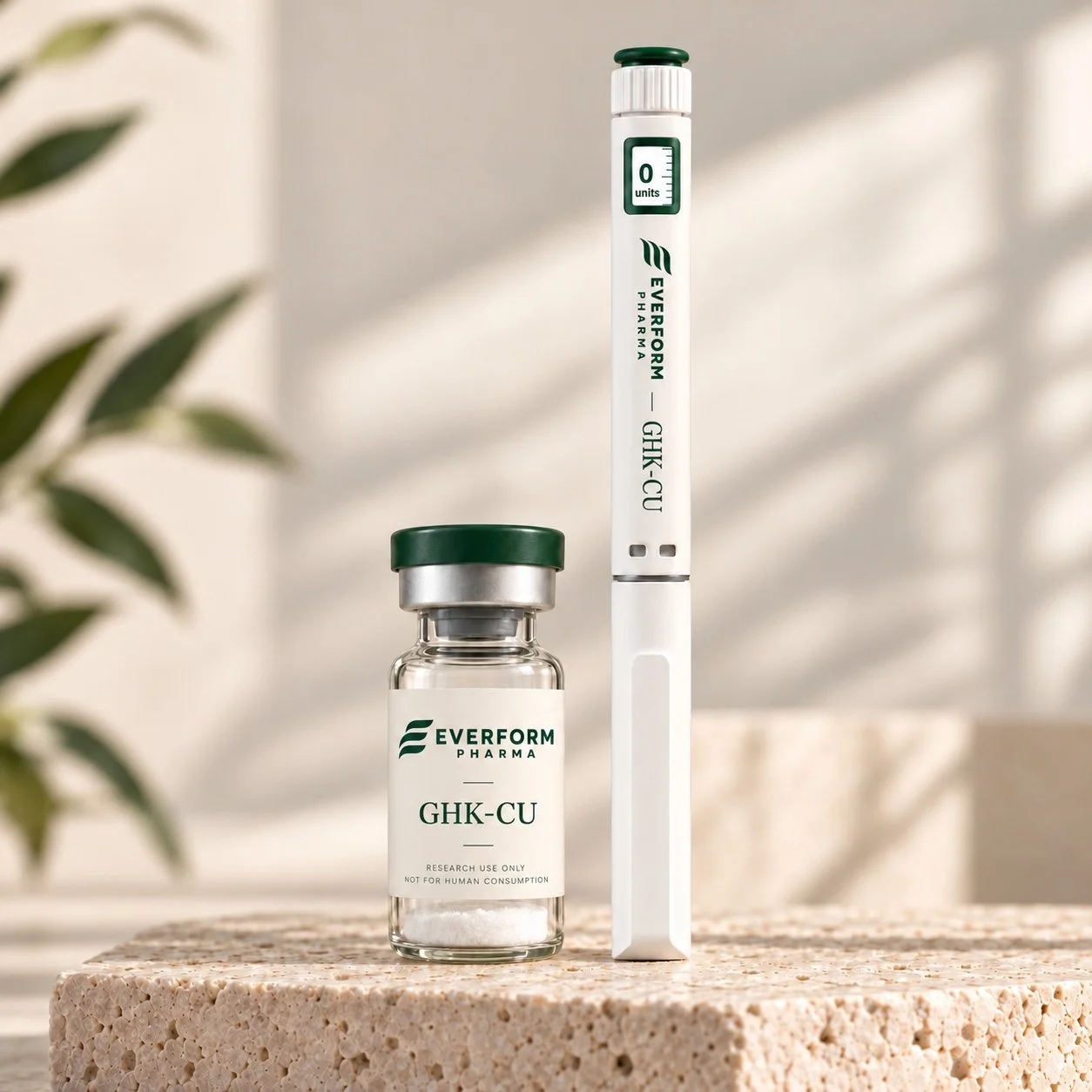 Image 2 of 4
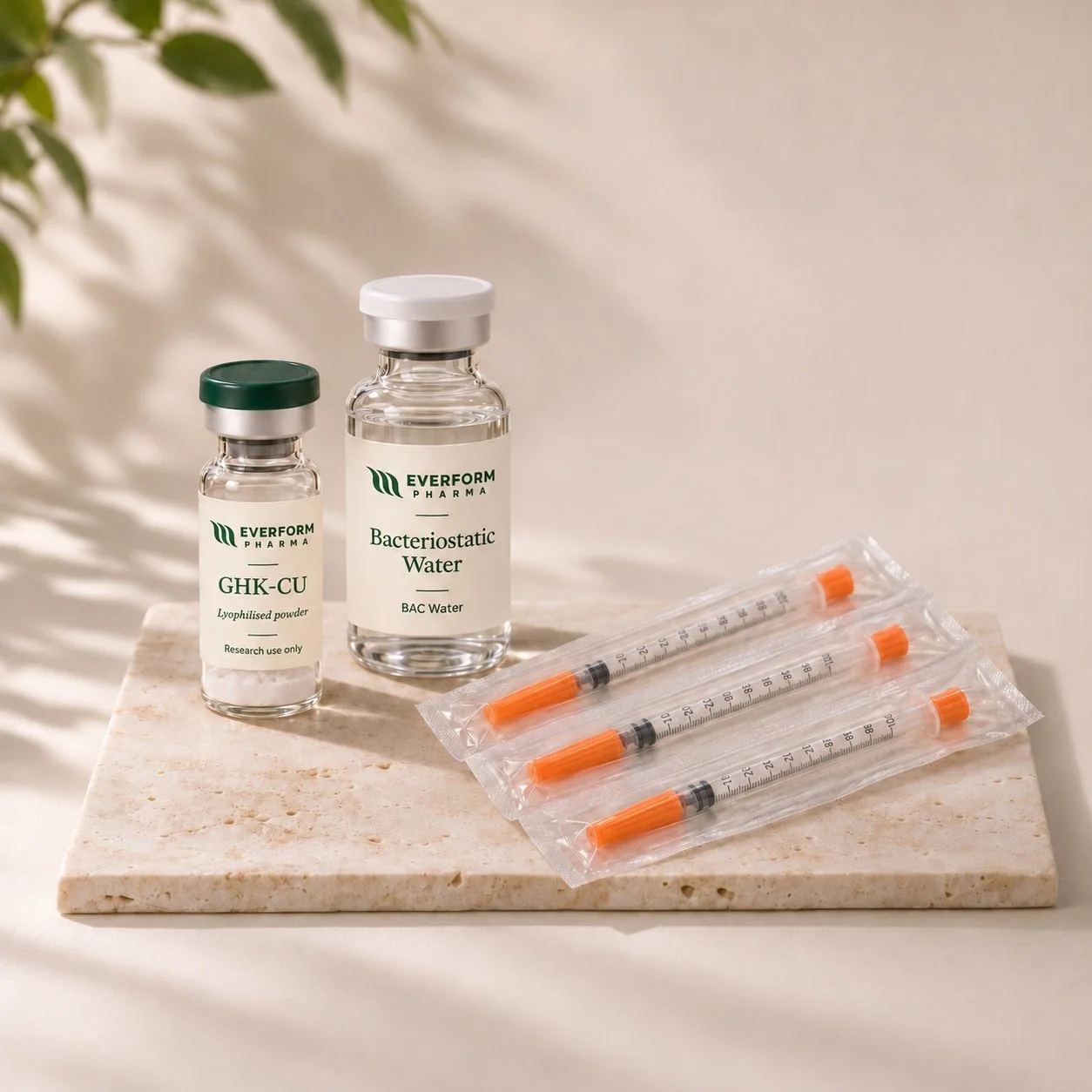 Image 3 of 4
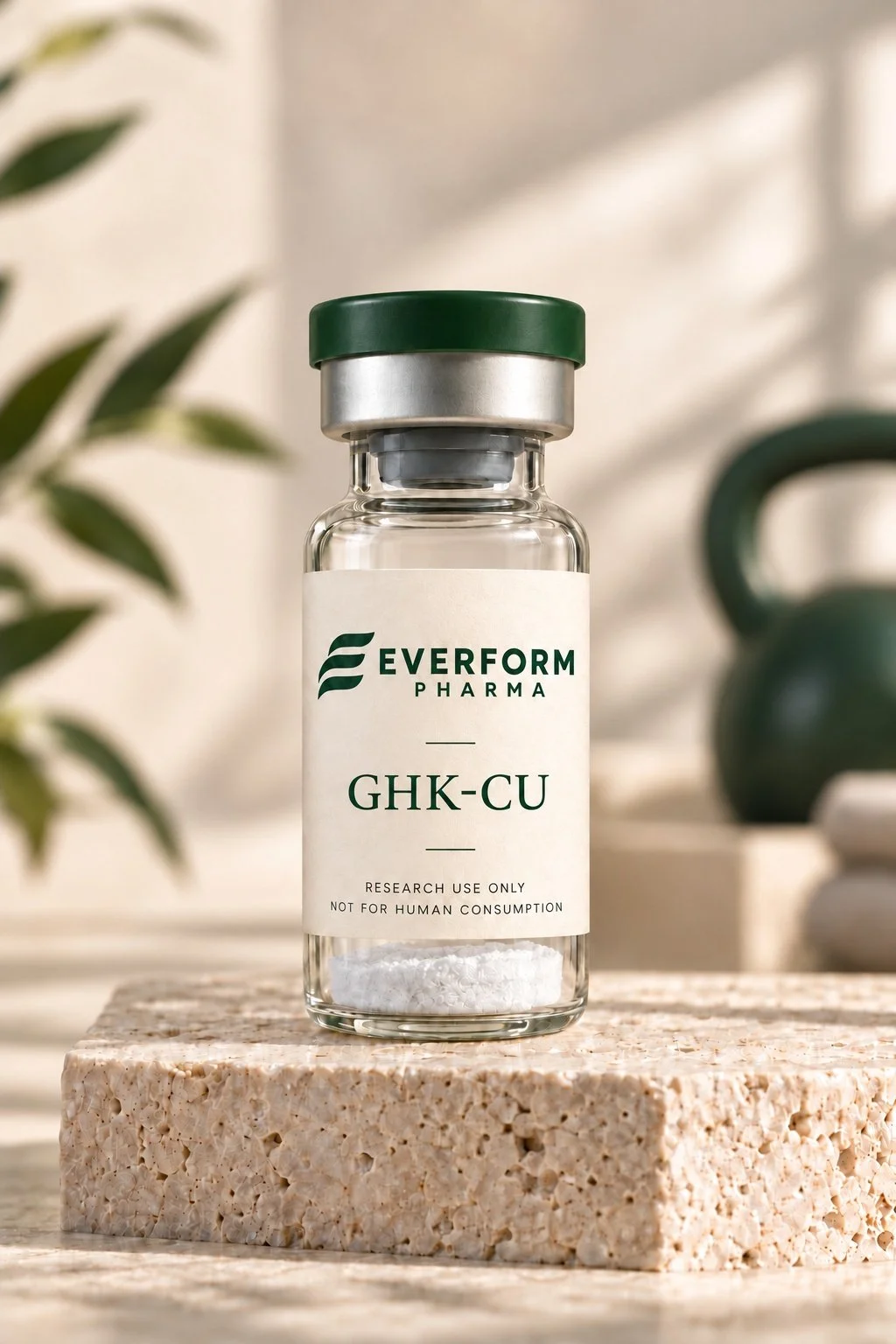 Image 4 of 4
Packaging & supply options
Your format, your way.
The same research peptide, with a choice of accessories and supply formats. Here’s what each option includes.
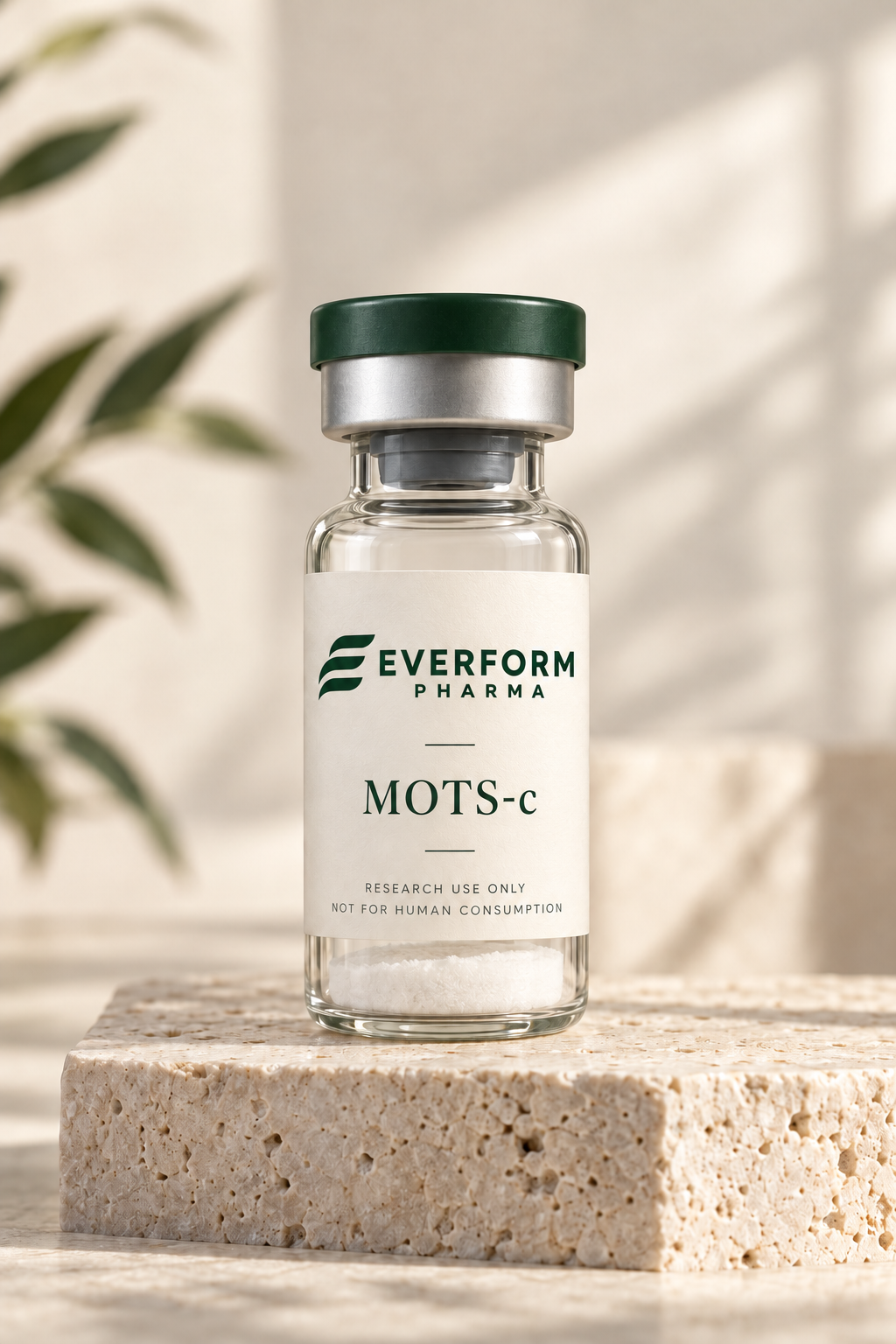
BAC water
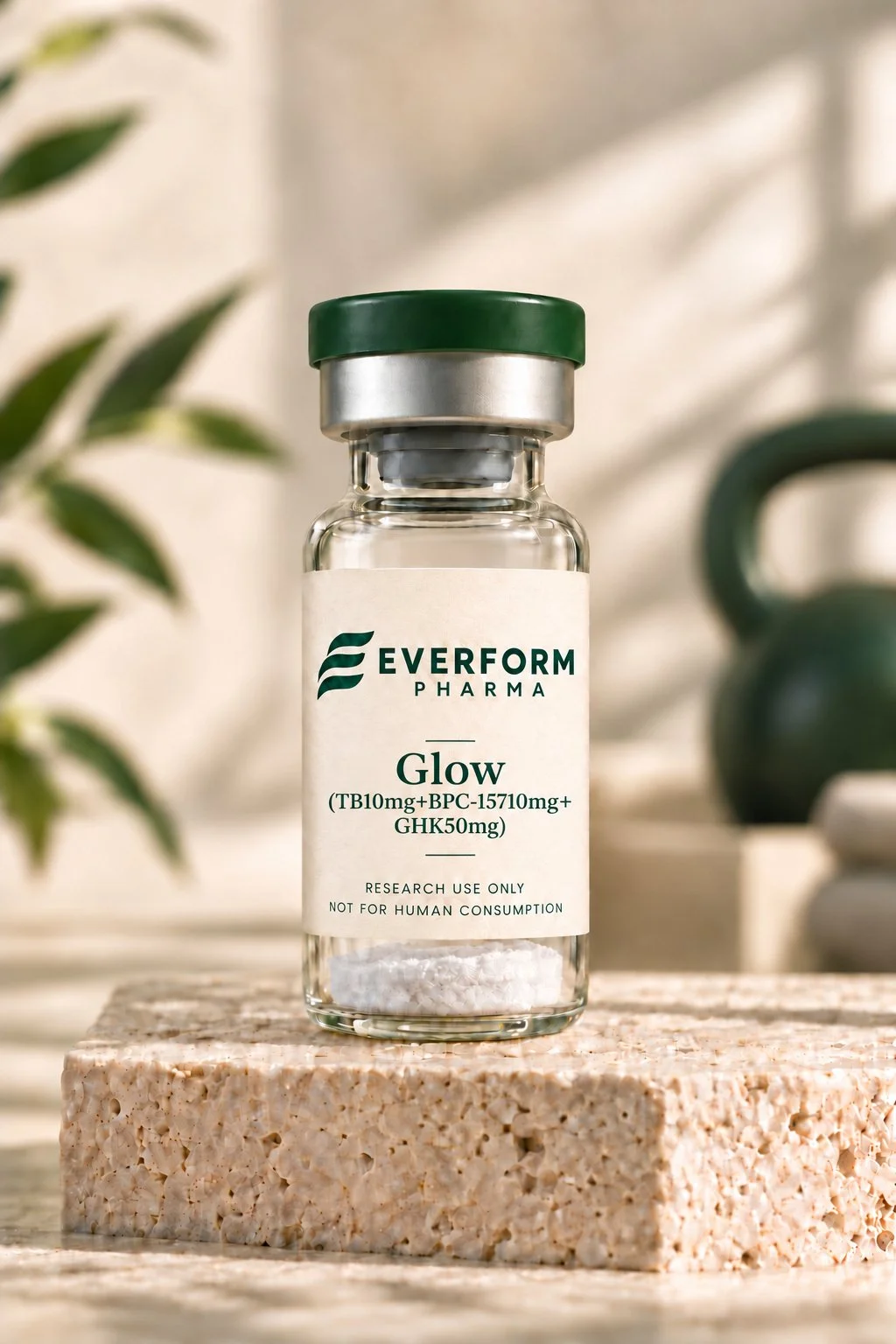
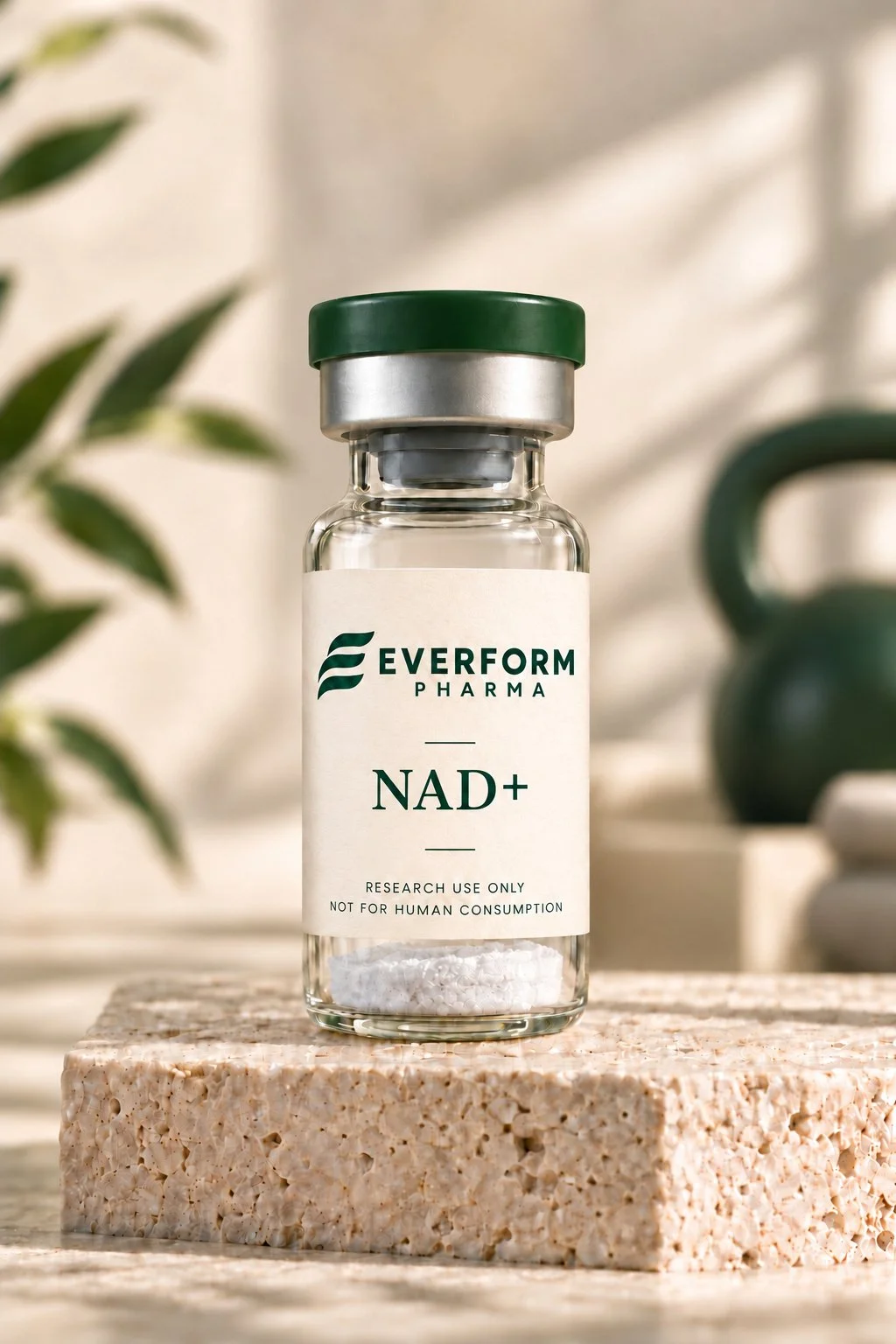
Vial kit
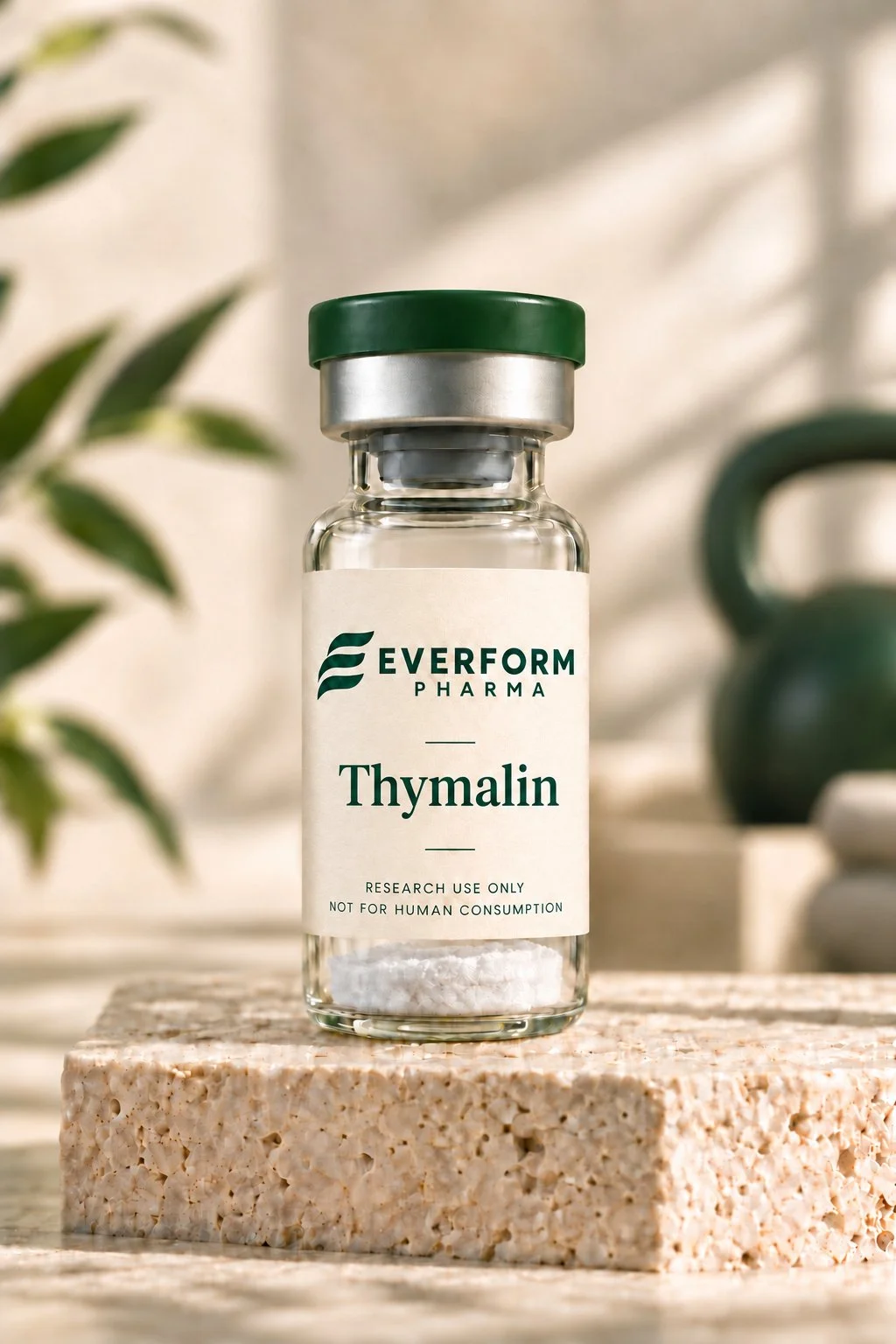
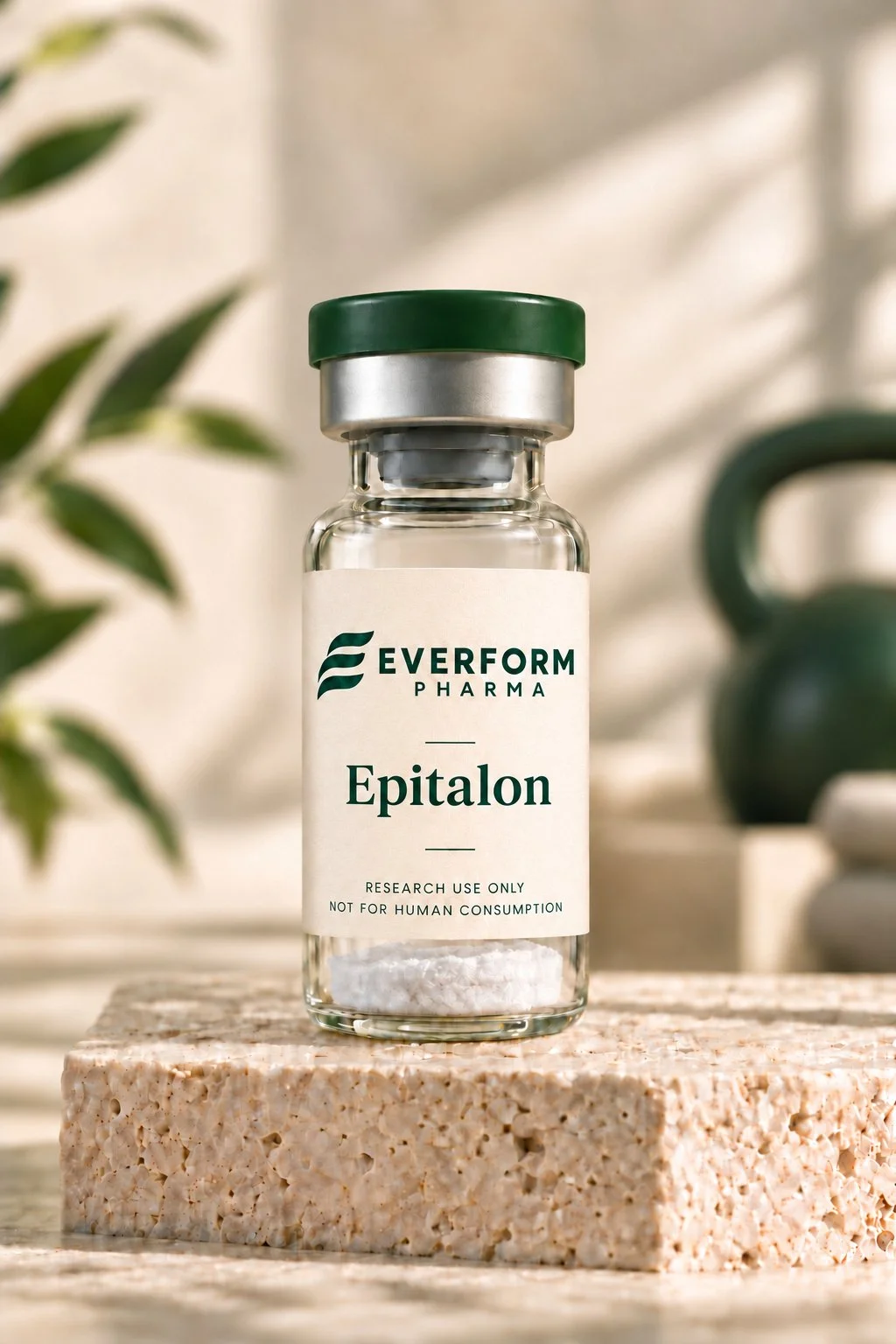
Lyophilised peptide vial with separately packaged, complimentary BAC water.
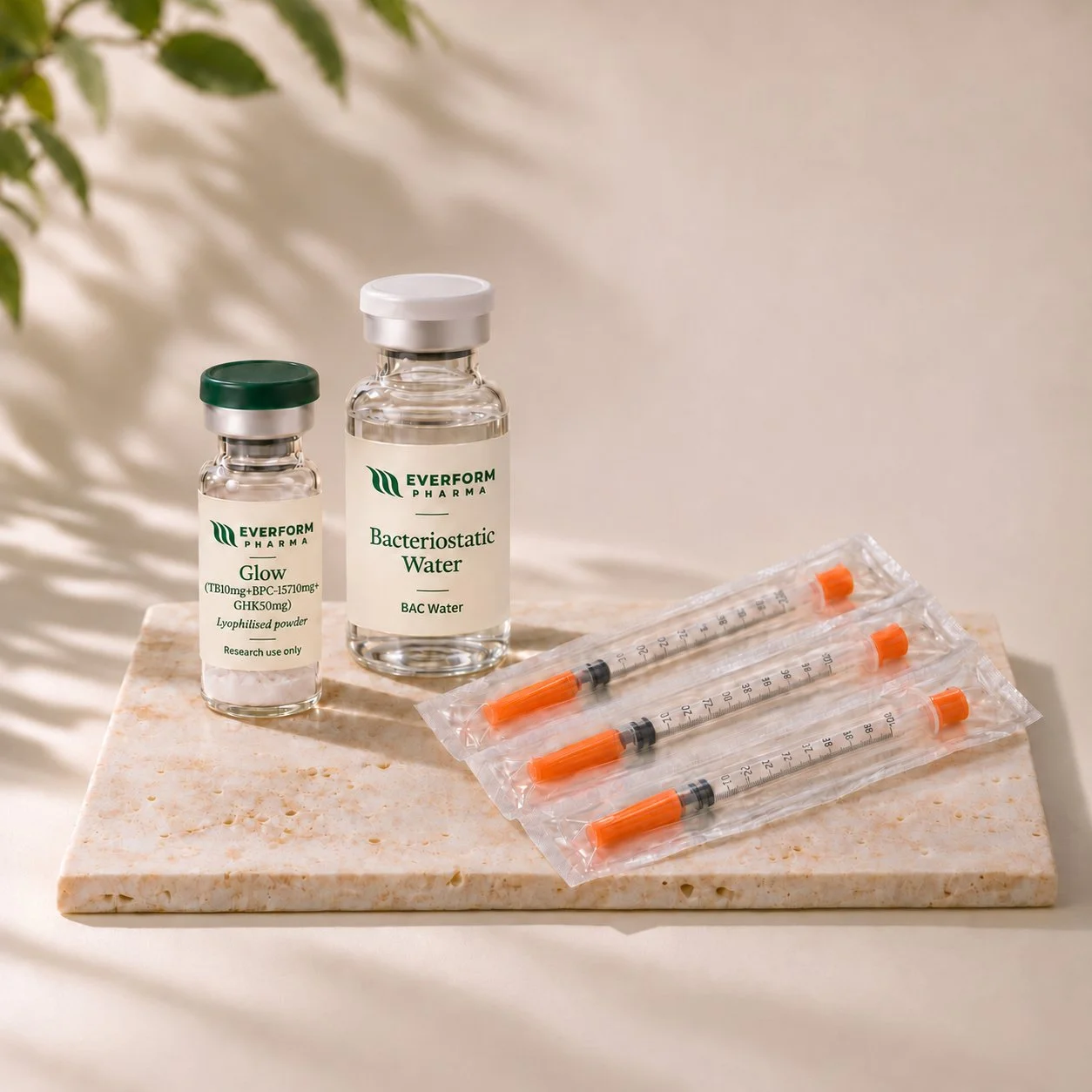
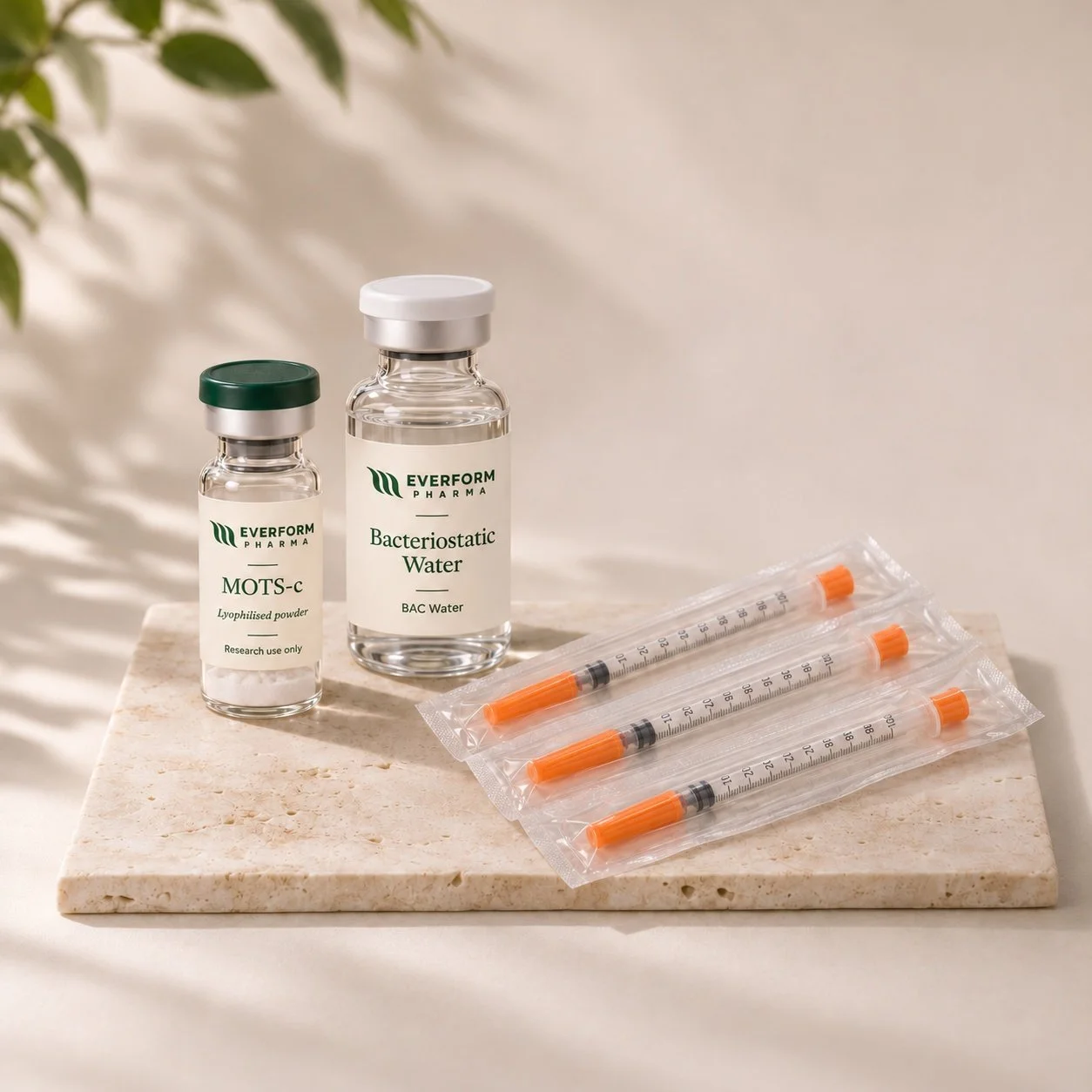
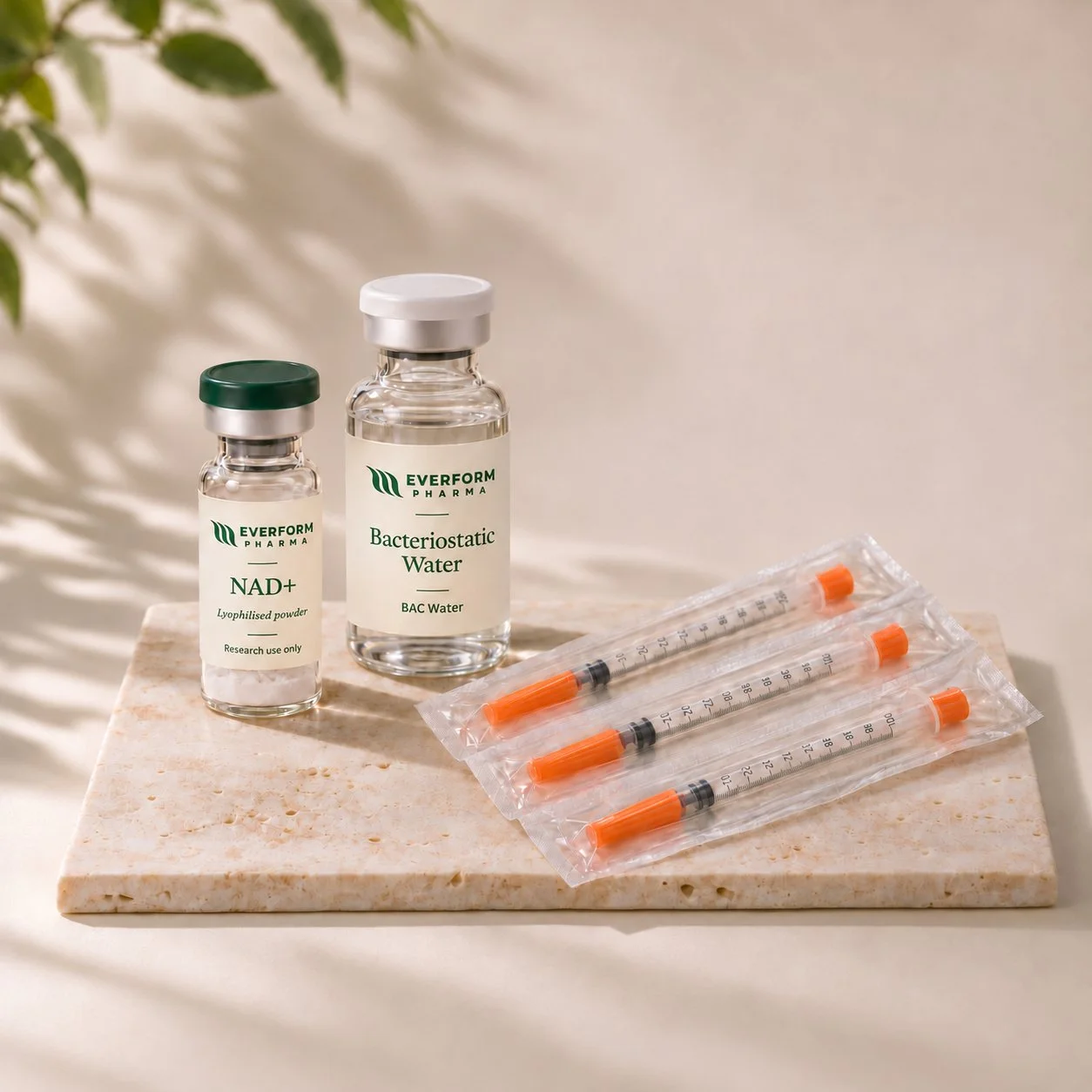
BAC water + syringes
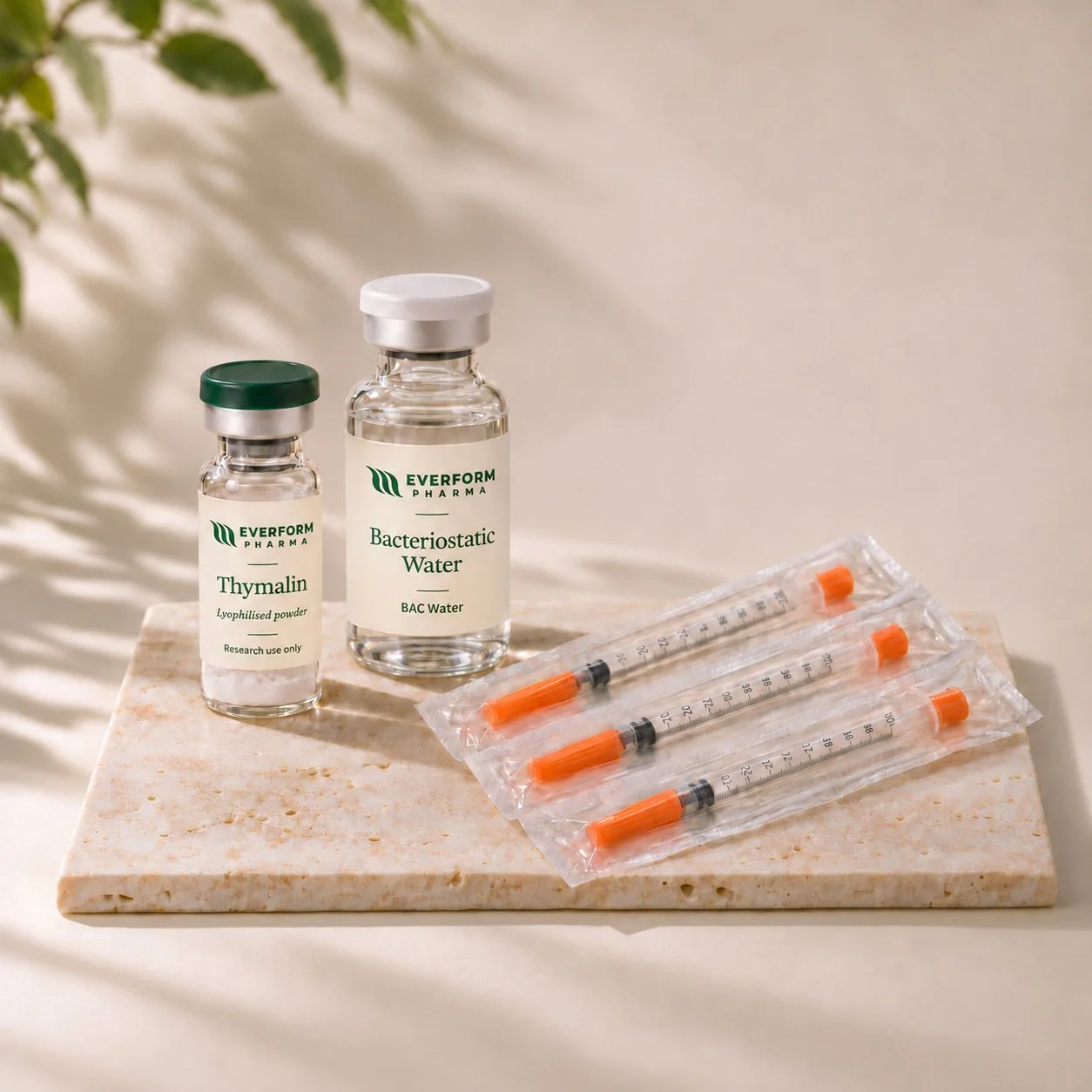
Syringe kit
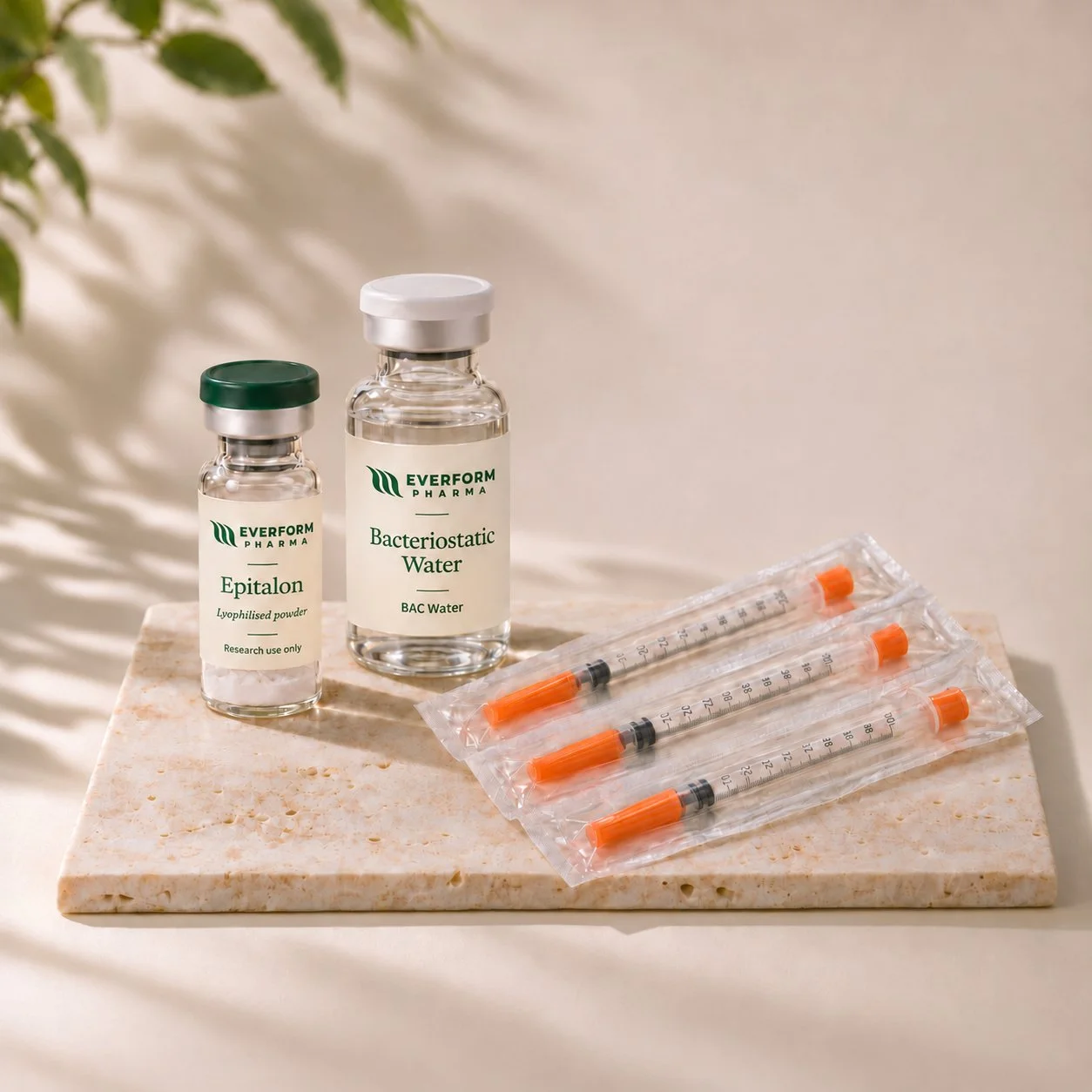
Lyophilised peptide vial, BAC water and syringes.
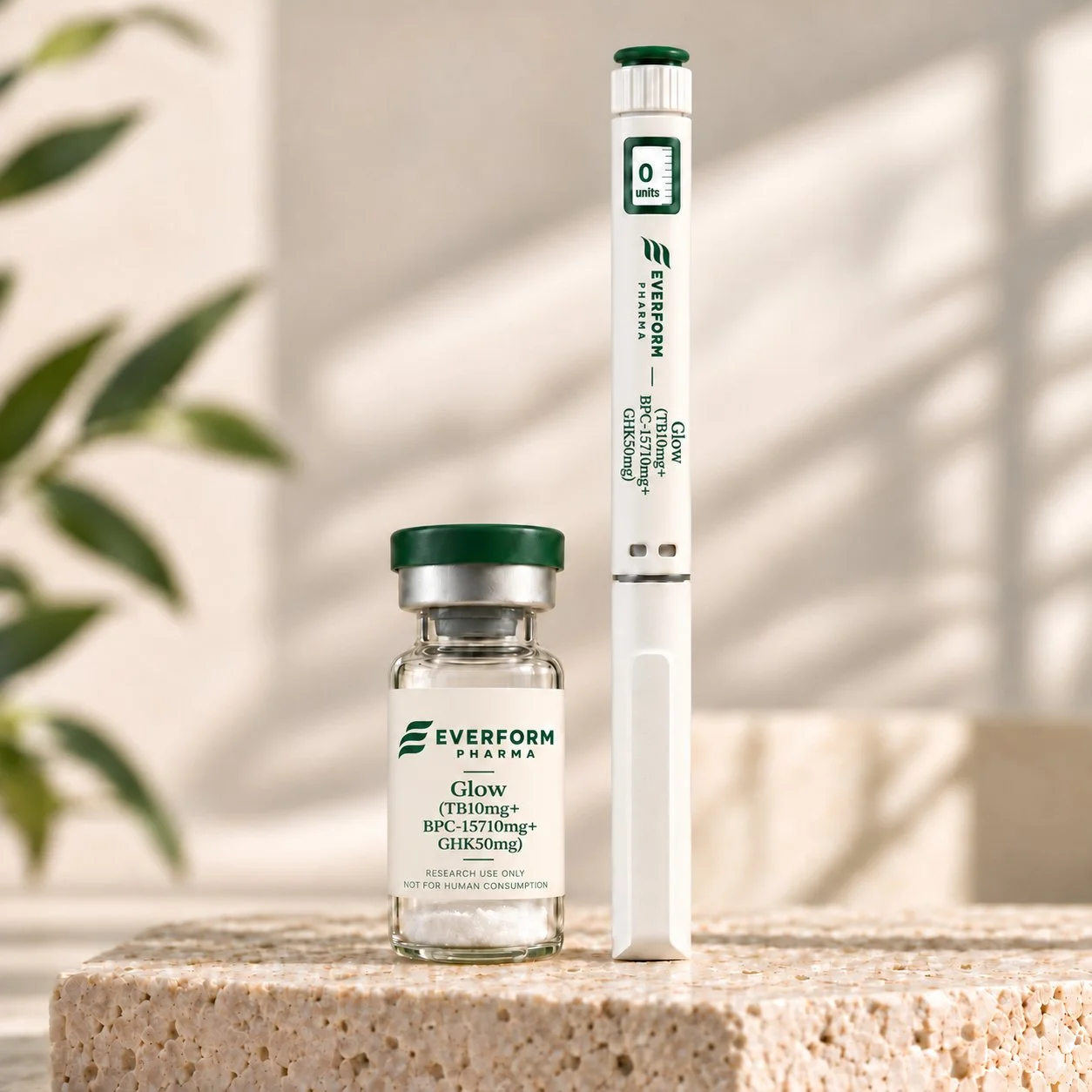
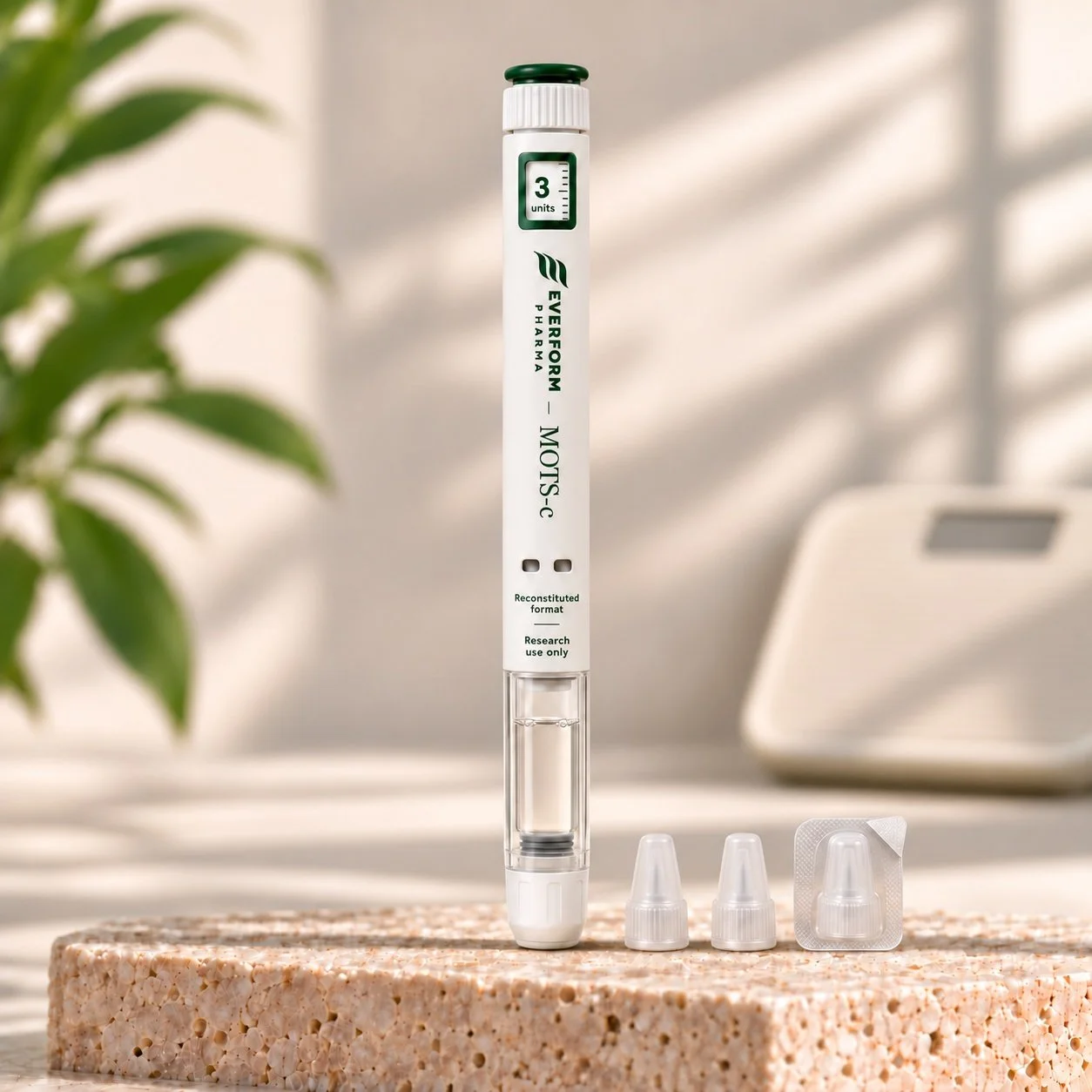
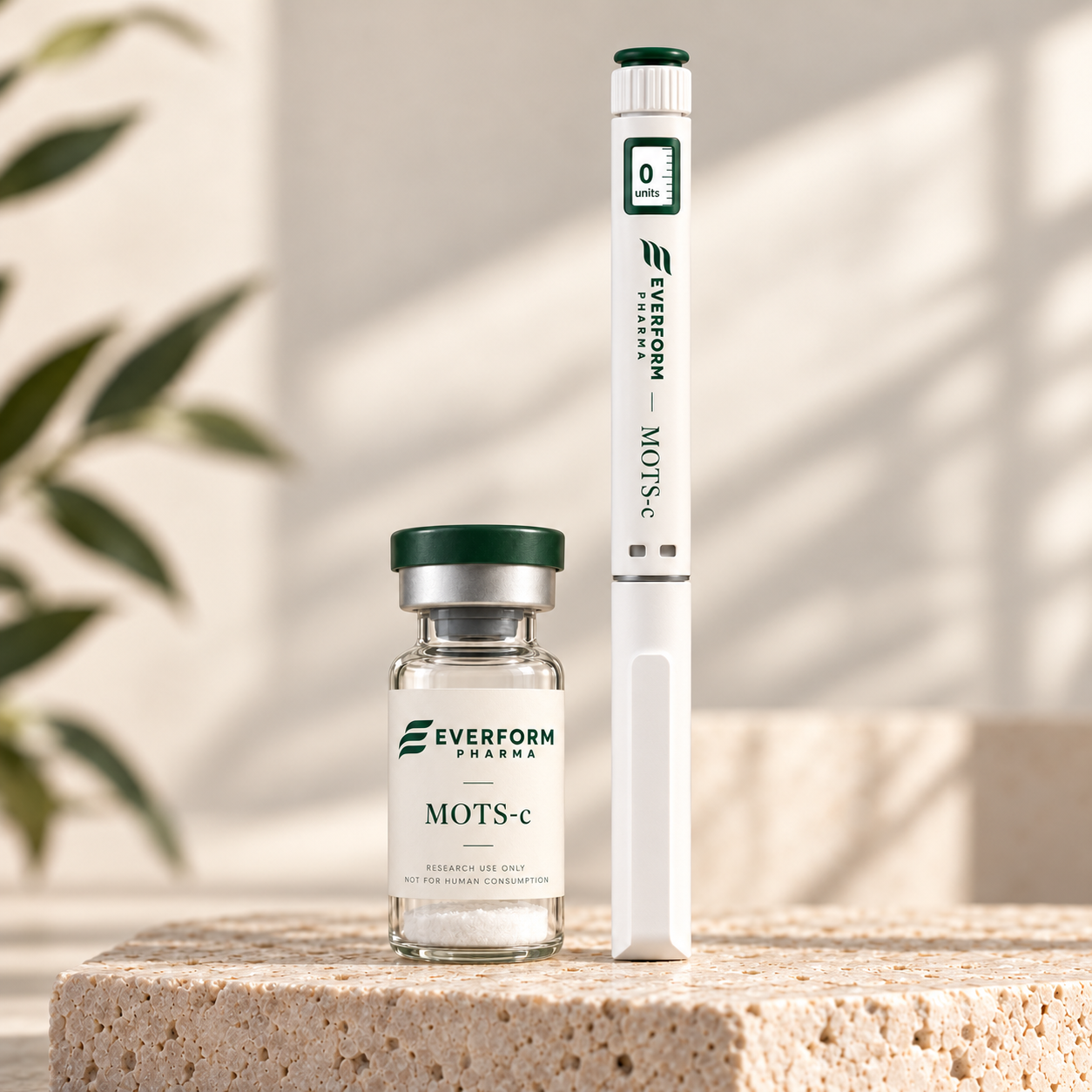
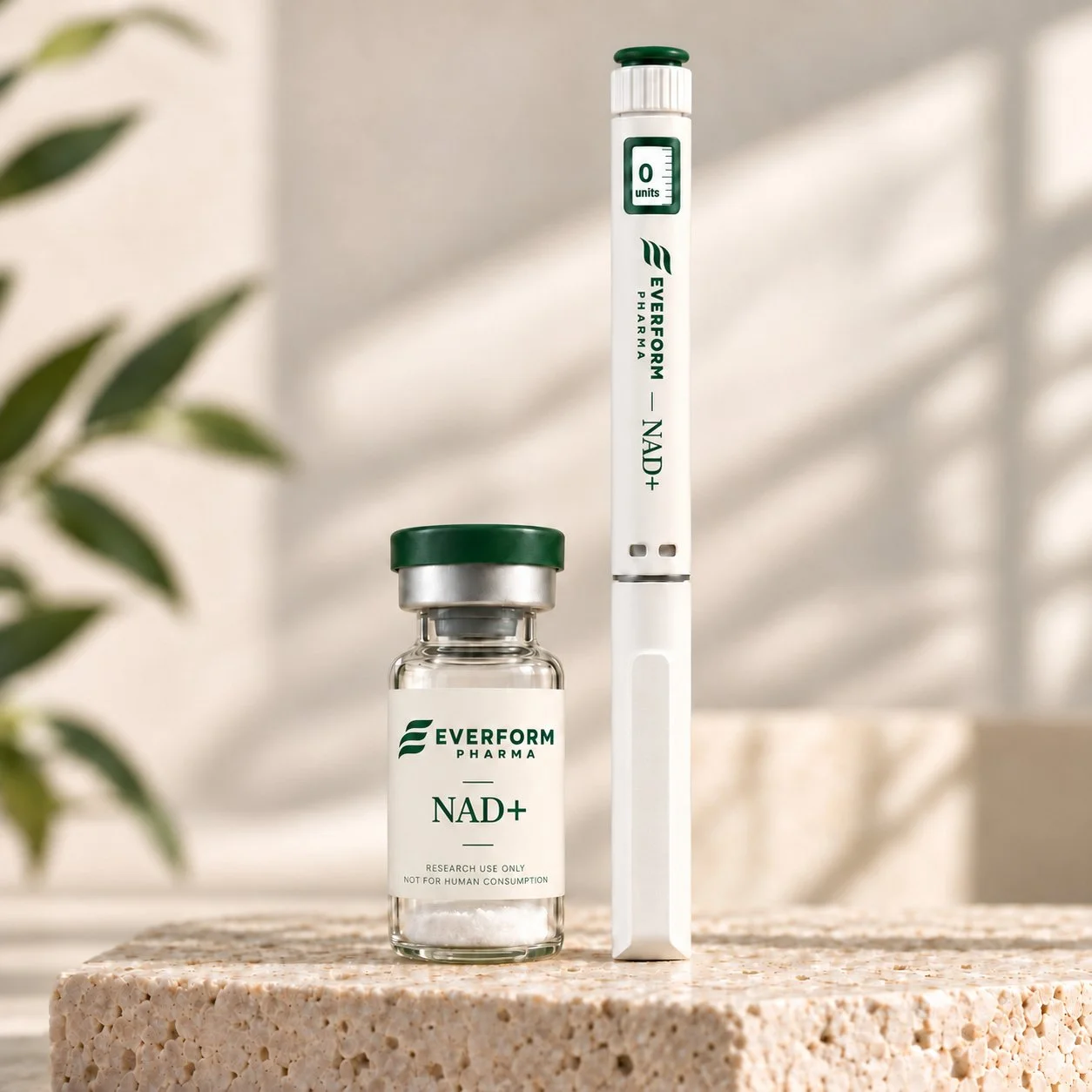
BAC water + pen
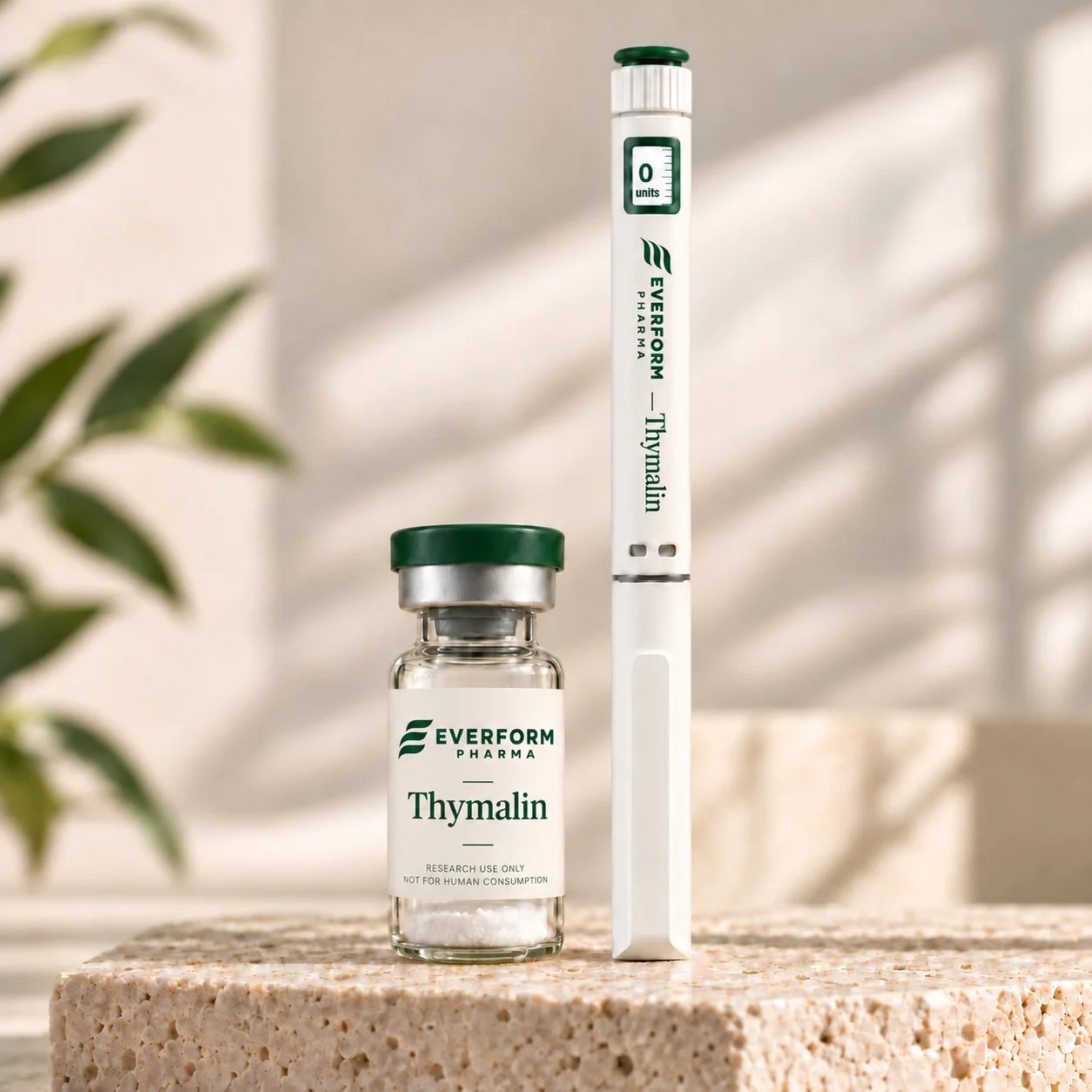
Injection pen kit
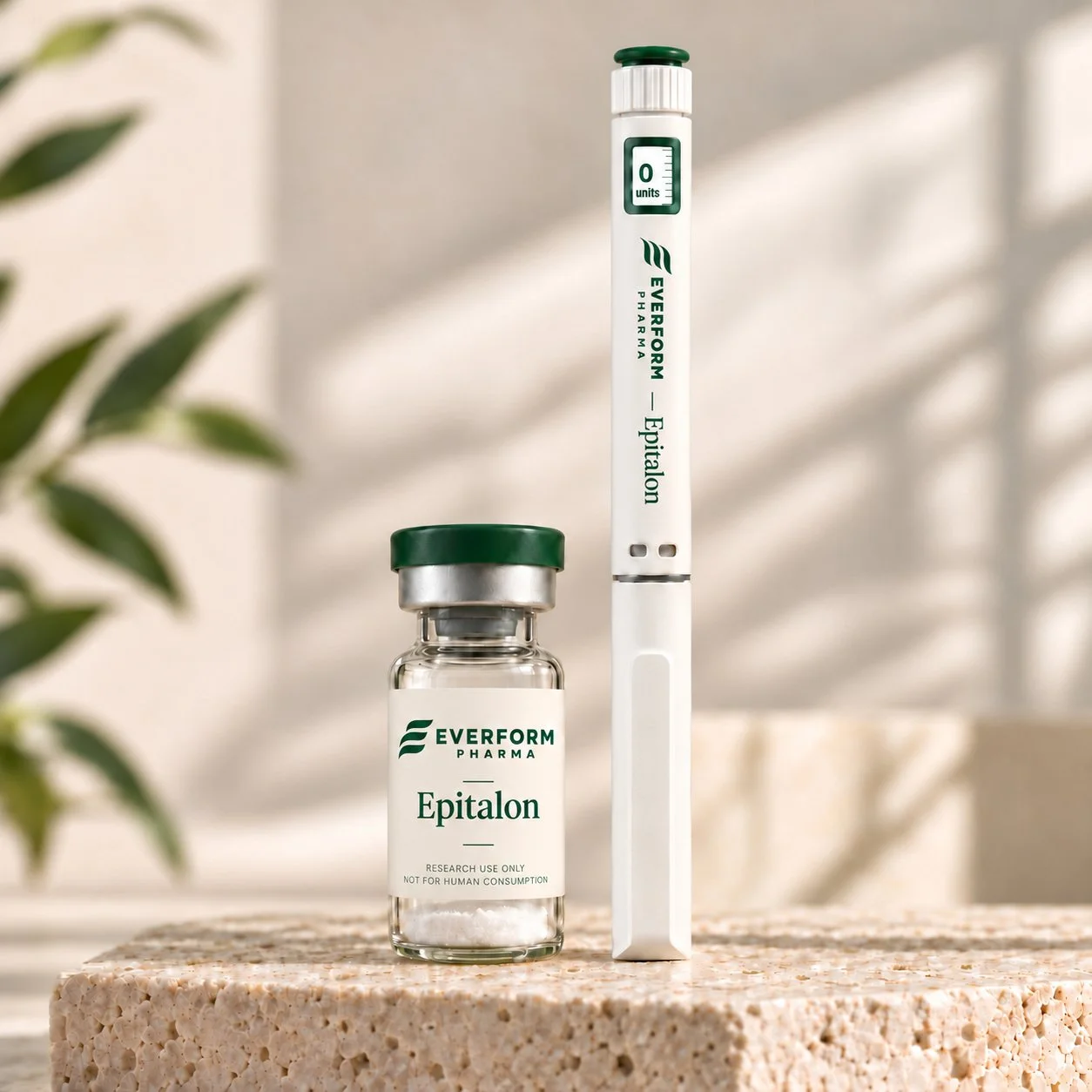
Lyophilised peptide vial, BAC water and an injection pen.
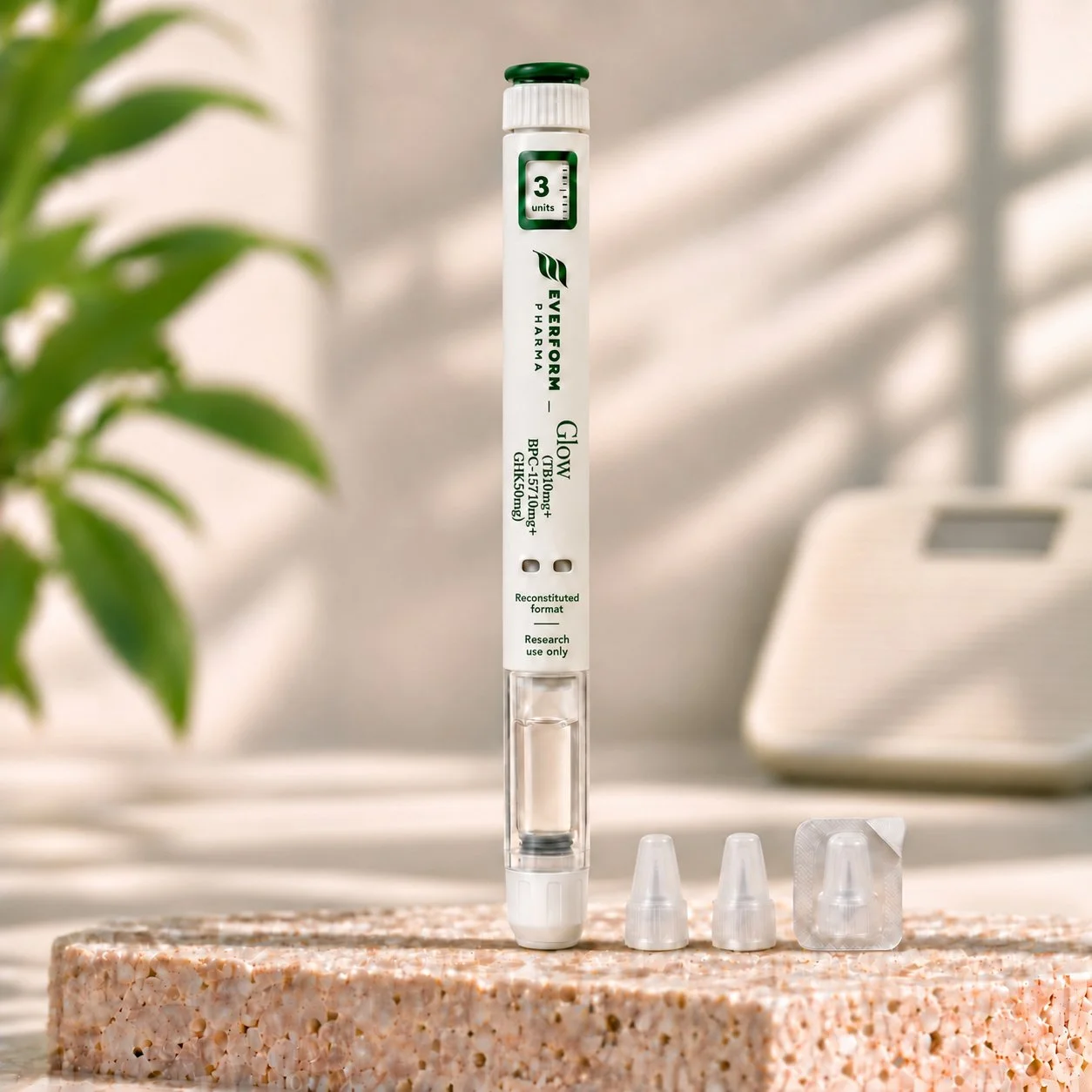
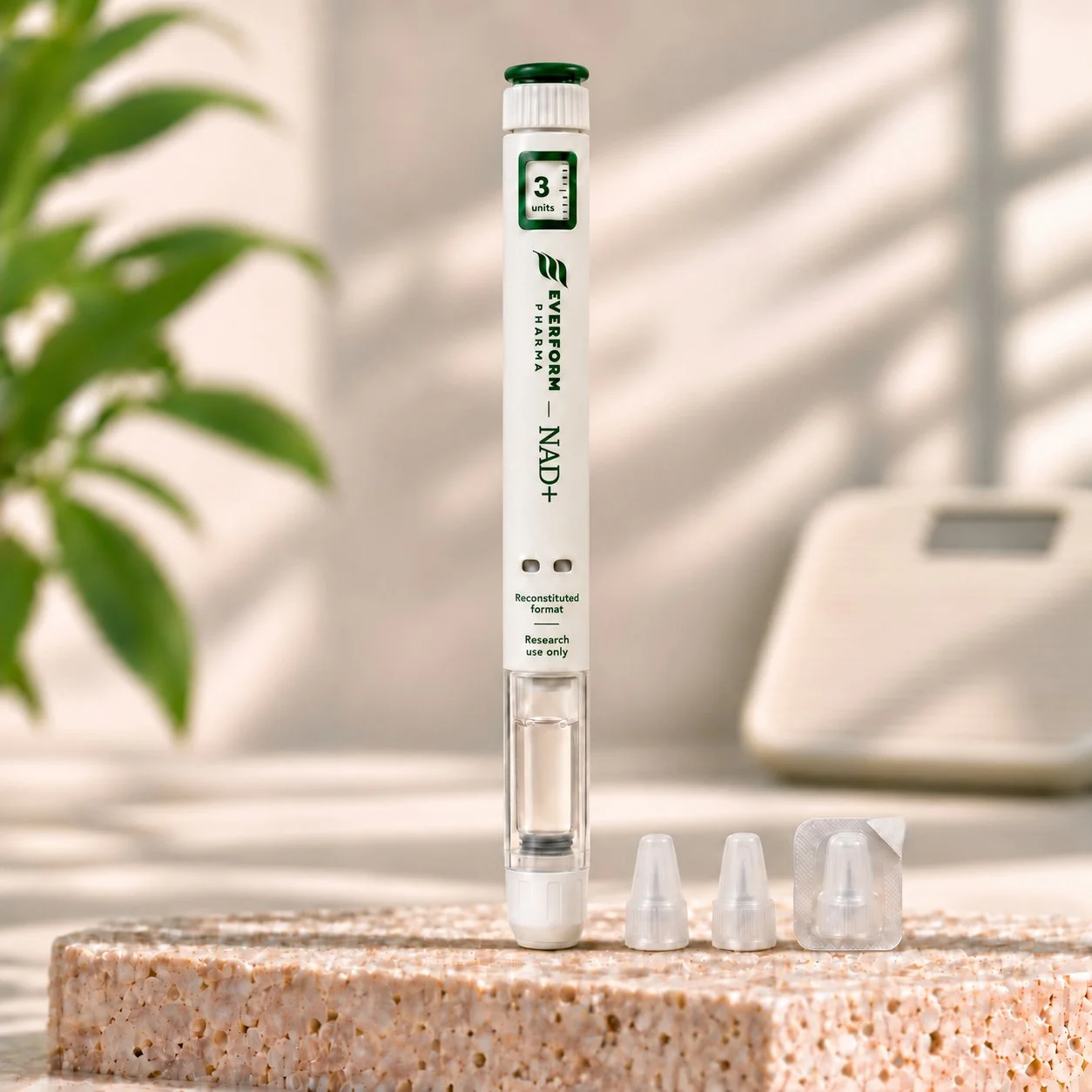
Pen + pen needles
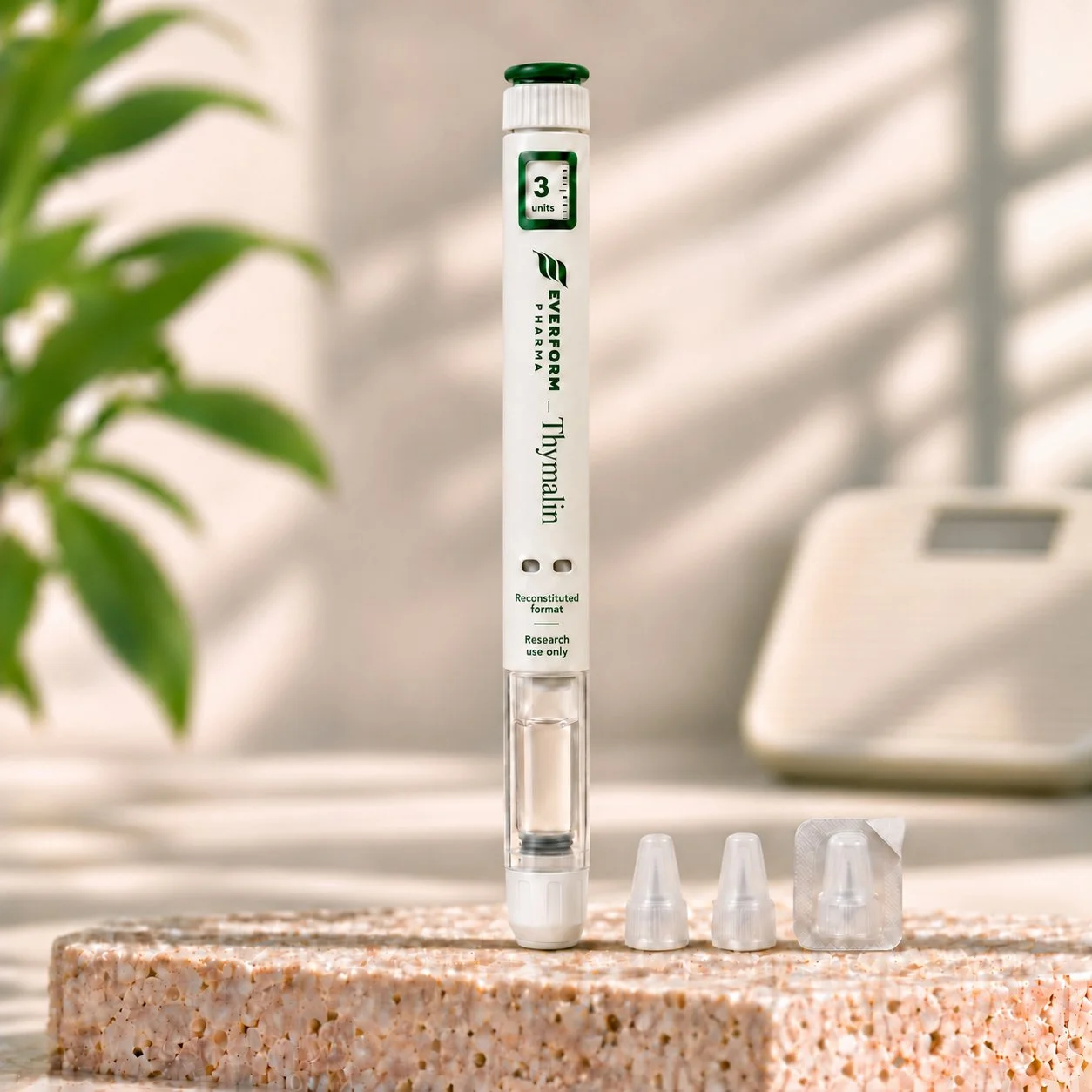
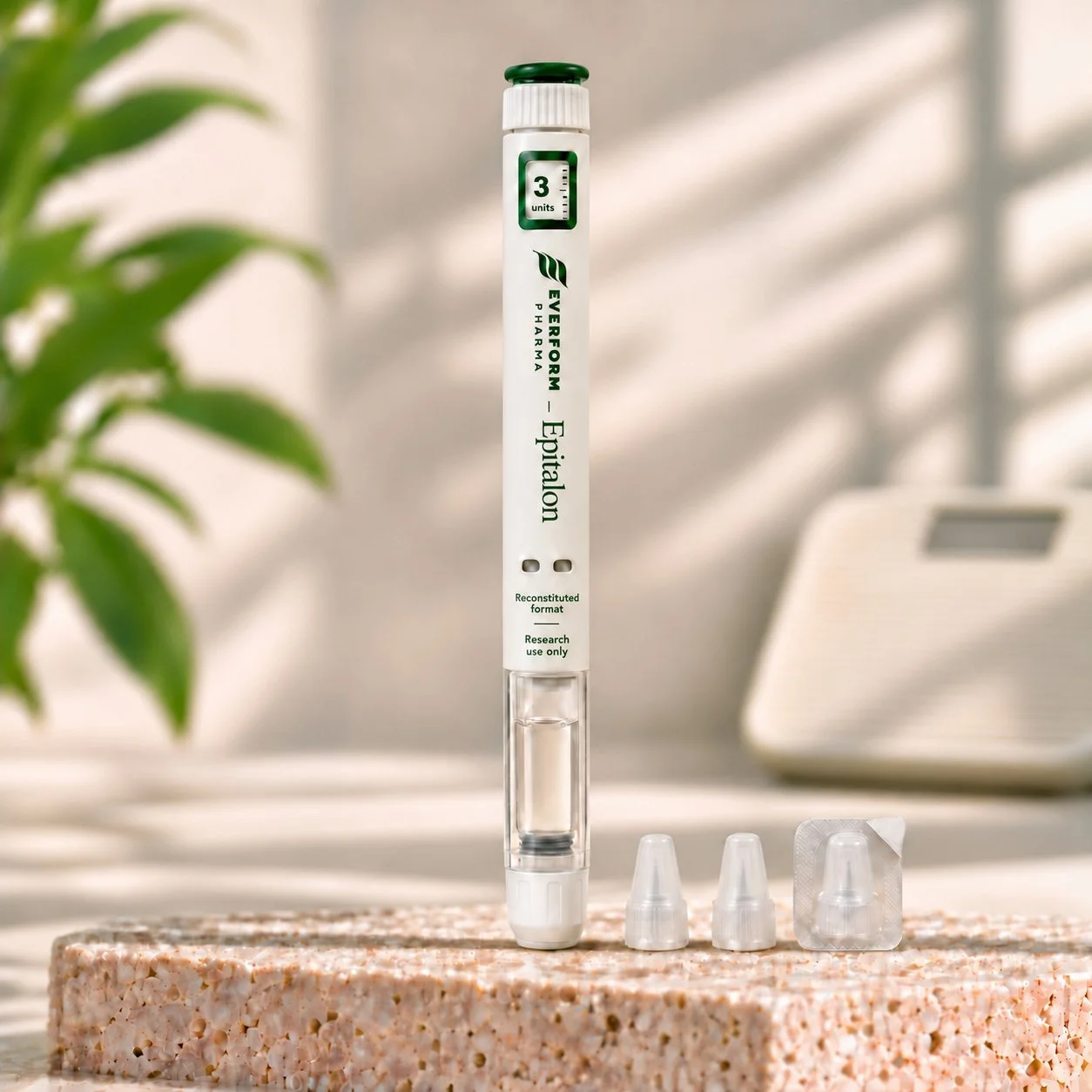
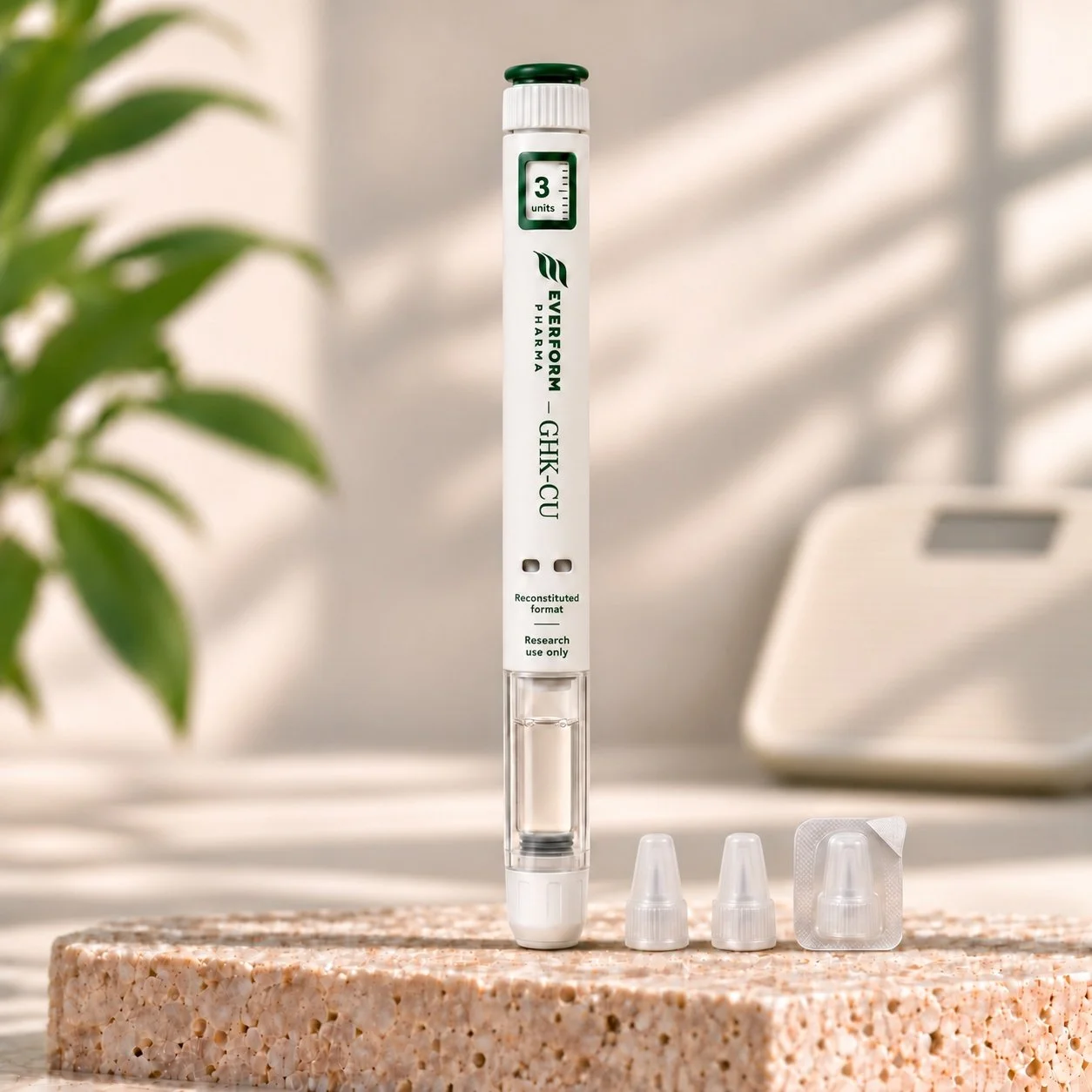
Reconstituted pen
VIETNAM ONLYPeptide solution supplied in a pen at the stated concentration, with pen needles.
For laboratory research only. Not for human or veterinary use.
Everform Pharma · Compound profile
GHK-CU.
The science beneath the surface.
A closer look at copper-peptide signalling, collagen research and the biology of tissue remodelling.
What is GHK-CU?
GHK-CU is the copper complex of glycyl-L-histidyl-L-lysine: a short peptide made from three amino acids. GHK was isolated from human plasma and has an affinity for copper ions. Its copper-bound form is studied for its effects on connective-tissue biology. [1]
At the centre of that interest is the extracellular matrix — the network surrounding cells that gives tissues structure. Understanding how that network is produced and remodelled helps explain GHK-CU’s place in skin and repair research.
How does GHK-CU work?
Fibroblasts are cells involved in building connective tissue. In culture experiments, GHK-CU stimulated collagen synthesis, making fibroblast activity an important starting point for studying its biological effects. [1]
Remodelling also involves breaking down and reorganising existing material. A separate fibroblast study found changes in matrix metalloproteinase-2 and its tissue inhibitors, TIMP-1 and TIMP-2. This suggests a more complex research story than simply increasing collagen production. [3]
MATRIX PRODUCTION
Exploring how fibroblasts produce collagen and other connective-tissue components.
MATRIX REMODELLING
Investigating the enzymes and inhibitors involved in reorganising the tissue environment.
Main research areas
GHK-CU brings together several related questions about skin structure, connective tissue and repair.
| Research area | What researchers examine |
|---|---|
| Collagen biology | Collagen synthesis by fibroblasts in laboratory cultures. [1] |
| Tissue repair | Collagen and other extracellular-matrix components in experimental rat wounds. [2] |
| Matrix turnover | Enzymes and inhibitors involved in tissue remodelling in fibroblast cultures. [3] |
| Skin appearance | Redness, wrinkles, skin quality and satisfaction in a small human study of topical products after laser resurfacing. [4] |
The study model and formulation matter: cell, animal and topical human findings answer different questions.
What published findings show
Cell studies: Maquart and colleagues reported increased collagen synthesis in fibroblast cultures. Later work by Siméon and colleagues explored enzymes and inhibitors involved in matrix turnover. Together, these studies provide a foundation for investigating connective-tissue remodelling. [1] [3]
Animal studies: In an experimental rat wound model, GHK-CU increased the accumulation of collagen and other matrix components. This was a controlled animal experiment, rather than a demonstration of faster healing in people. [2]
Human topical research: In a randomised post-laser study completed by 13 participants, the GHK-CU skincare group reported greater satisfaction. However, blinded and computer-based assessments did not find significant between-group improvements in redness, wrinkles or overall skin quality. [4]
Research on a topical skincare formulation does not establish the effects of a research vial or pen. Formulation, route and study population should remain part of any comparison.
The most useful way to explore GHK-CU is to connect each finding to the exact question studied: collagen production, tissue remodelling or a defined skin outcome.
The Everform product, at a glance
CompoundGHK-CU
Labelled vial amount50 mg
Base formatLyophilised peptide powder
Supply optionsSee the format guide above
Everform Pharma is based in Da Nang, Vietnam. Use the product selector to choose an available supply format. Complimentary BAC water is included with every order.
Explore Your format, your way →
Check the label for the full REF, expiry date and storage conditions. The security sticker on the transport package repeats the product identifier and should match the vial or pen inside. Match the full REF to the relevant documentation.
Identity, chromatographic purity and measured peptide content answer different questions on a COA. A purity percentage alone does not confirm the amount of peptide per vial.
Common questions
What does the copper component mean?
GHK is the three-amino-acid peptide; GHK-CU identifies its copper complex. Check that the compound named in a study matches the product being discussed. [1]
Is GHK-CU the same as AHK-Cu in hair research?
No. AHK-Cu contains alanine rather than glycine as its first amino acid. A frequently cited study of isolated human hair follicles tested AHK-Cu, so its findings should not be presented as a GHK-CU hair-growth result. [5]
Does “50 mg” describe a dose?
No. Here, 50 mg is the labelled amount of product in the vial. It is not a recommended dose or an administration instruction.
Is this equivalent to a finished skincare serum?
No. A lyophilised research product is different from a formulated topical cosmetic. Results from a particular serum or cream cannot automatically be transferred to a vial or pen.
Where should I check storage and identification?
Follow the storage conditions on your actual label. Check that the package security sticker matches the vial or pen, and use the full REF when requesting the matching documentation.
References
Everform Pharma · Da Nang, Vietnam
Educational product information.
For laboratory research only.
Not for human or veterinary use.