
Cellular health research
Anti-Ageing & Healthy Longevity
Exploring the biology of ageing, cellular energy and tissue resilience.
Research into mitochondrial function, metabolic signalling and tissue maintenance helps scientists investigate how biological function changes with age.
Research areas
The Science Behind Healthy Ageing

Cellular Energy
How mitochondria produce energy and how their function changes with age and stress.

Metabolic Signalling
How cells sense nutrients and adjust their energy use.

Skin & Tissue Biology
How cells remodel the extracellular matrix and respond to tissue injury.

Cellular Resilience
How cells respond to stress, and what laboratory markers can tell us about changes in function.
Research in focus
Four compounds in focus
Distinct pathways. An evidence-informed perspective.
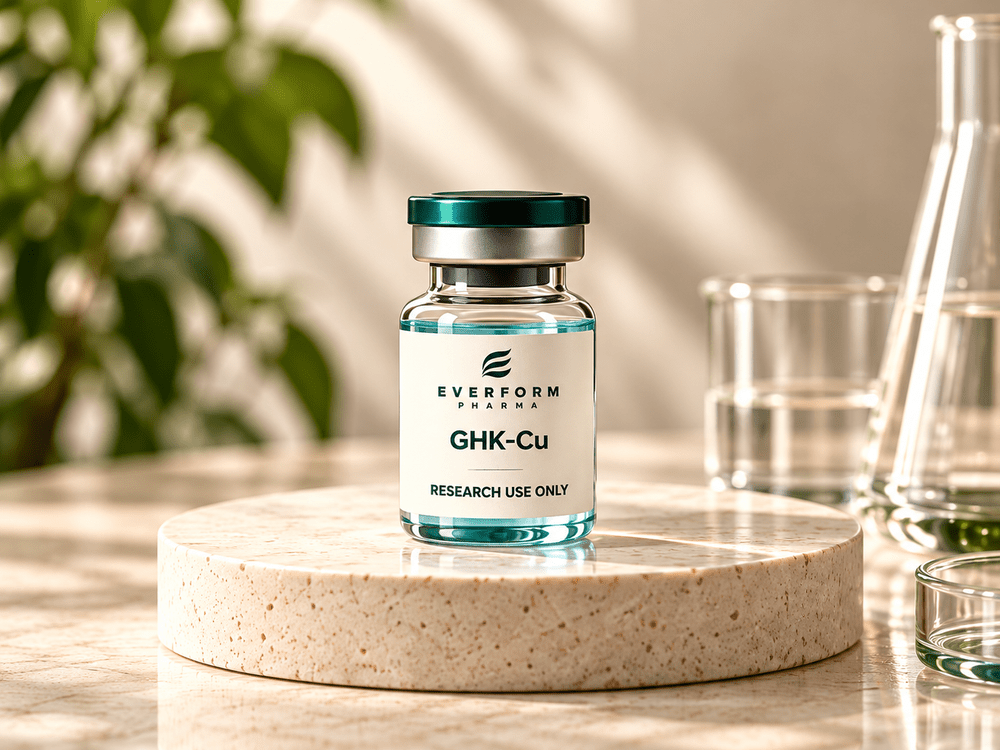
01 / Research profile
GHK-Cu
Skin and tissue research
Read the research overview
GHK-Cu is a copper-binding tripeptide studied in connection with extracellular matrix remodelling and collagen-related processes. Findings from topical formulations apply to the preparations studied.
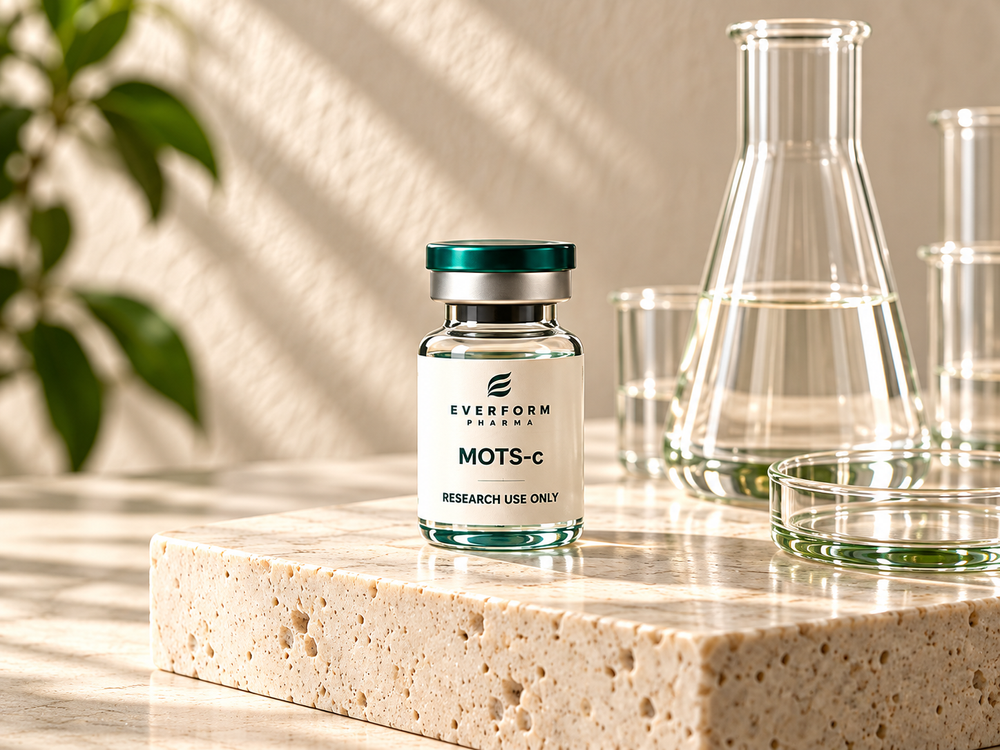
02 / Research profile
MOTS-c
Metabolic signalling
Read the research overview
Researchers investigate this mitochondria-derived peptide in relation to energy demand, metabolic signalling and stress responses. Animal intervention studies and measurements of naturally occurring MOTS-c in humans answer different questions.
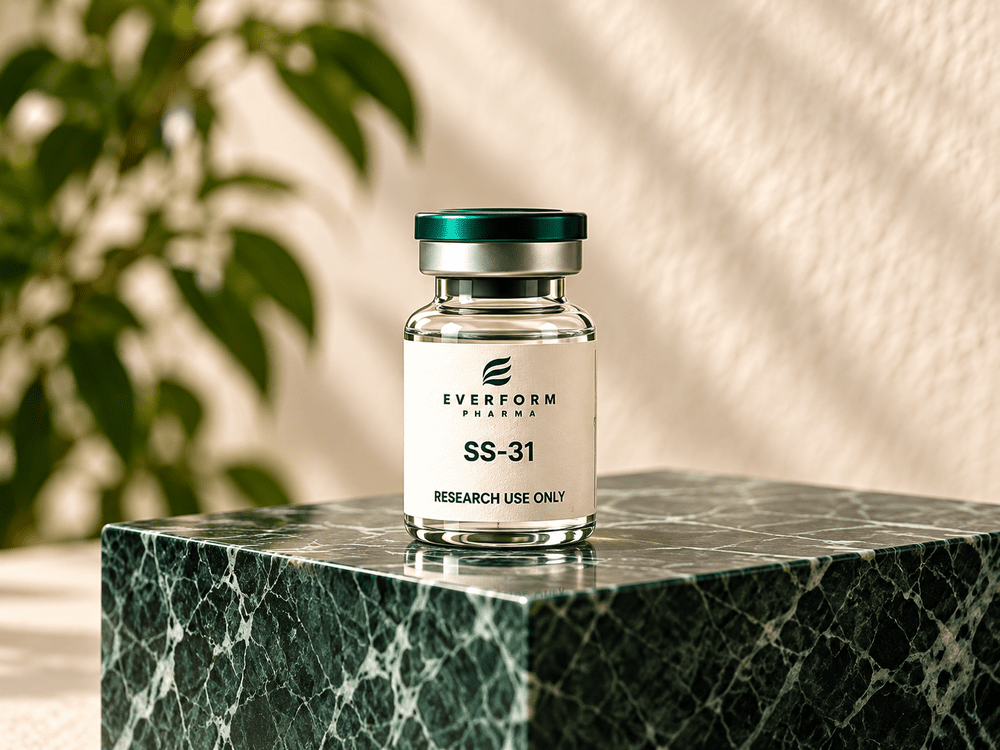
03 / Research profile
SS-31
Mitochondrial membranes
Read the research overview
Researchers study how SS-31 interacts with cardiolipin in the inner mitochondrial membrane and what that interaction can reveal about energy production and cellular stress. Results from specific clinical formulations cannot be assumed to apply to research vials.
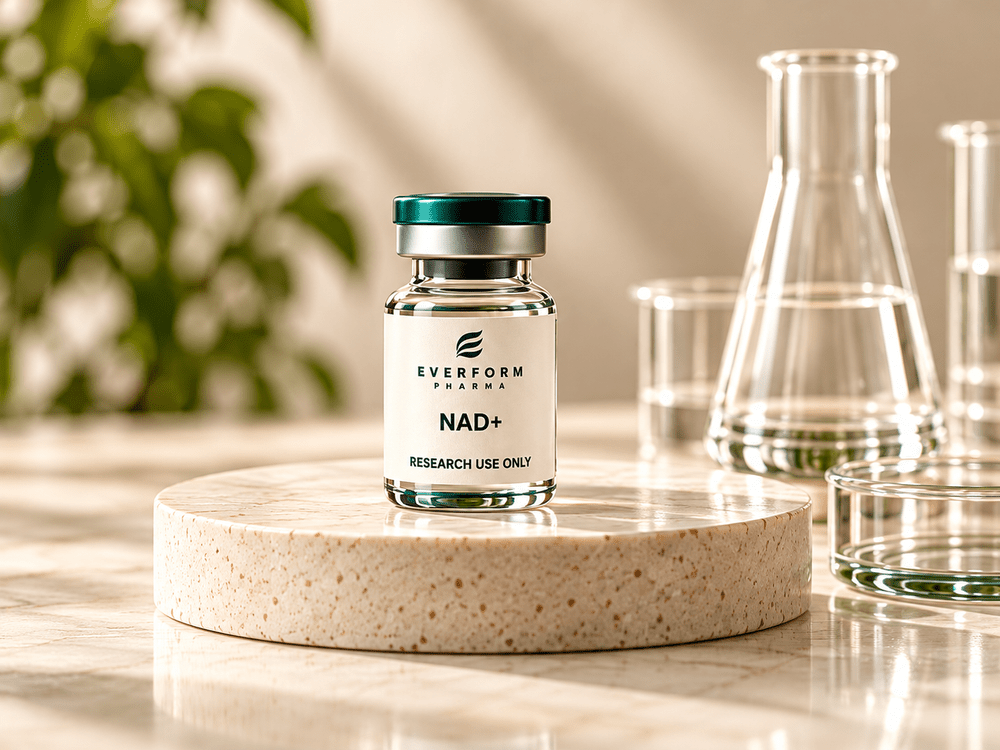
04 / Research profile
NAD+
Cellular metabolism
Read the research overview
NAD+ is a coenzyme involved in energy transfer and cellular regulation. Its role in metabolism does not establish that administering NAD+ can reverse ageing or extend lifespan.
Reading the research
Understanding the Evidence
Human lifespan extension and age reversal have not been established for these research materials. When reading a study, check which compound and formulation it used, who or what was studied, and which outcomes were measured.

Quality & transparency
Quality & Research Documentation
Review the compound identity, batch details, storage requirements and any available batch-specific Certificates of Analysis. A COA reports the tests performed on the sample and does not establish clinical safety.
Your questions
Frequently Asked Questions
Can these compounds reverse ageing?
Evidence has not established that these research-use materials reverse human ageing or extend lifespan.
Is NAD+ a peptide?
NAD+ is a coenzyme that takes part in cellular metabolism.
Does mitochondrial activity prove a longevity benefit?
A change in mitochondrial activity is a laboratory outcome. Longer life or improved health would require separate evidence.
Does research on GHK-Cu skincare apply to laboratory vials?
Interpret results in the context of the formulation, concentration, route and study conditions. A finished topical product differs from a research vial.
Are combinations proven to produce better longevity results?
Reliable comparative evidence has not established a superior combination among these compounds. Studying different pathways does not establish a combined effect.
Does a Certificate of Analysis confirm safety for human use?
A COA describes which tests a sample underwent and what they found. Clinical safety and suitability for human use require separate evidence.